
Best Temples & Shrines in Japan
Japan has 77,000 Shinto shrines and 77,000 Buddhist temples. These 15 stand out for architectural beauty, historical significance, or spiritual atmosphere. From Kyoto's golden pavilion to Tokyo's urban forest shrine, each site represents a different facet of Japanese religious architecture and practice. Visiting hours, entry fees, and crowd patterns vary wildly — this guide covers the practical details alongside the spiritual context.
Japan has tens of thousands of shrines and tens of thousands of temples, which makes any list of fifteen an argument rather than a survey. The argument this one makes is that a short list should be chosen for range rather than for rank: the entries are picked so that between them they cover the different things a religious site in Japan can be, rather than fifteen variations on the most photogenic thing one can be.
So the selection deliberately spans several axes at once. Shinto and Buddhist sites both, because they are different institutions doing different things and a list weighted to one gives a distorted picture. Sites whose interest is architectural sit alongside sites whose interest is the setting they were built into, and alongside sites that are still primarily places of active practice rather than places of visiting. Where two candidates offered the same experience, the one that added something the list did not yet have won, even when the other was the more celebrated building.
Ordering rewards a specific quality: how much of the place survives the visit. Some of the most famous religious architecture in Japan is now approached along a fixed route in a moving crowd, and the experience is closer to filing past an object than to being somewhere. Sites where you can still stand still, and where the atmosphere the building was designed to produce is available to you, rank higher than more significant buildings where that is no longer possible. Timing can defeat this — the fixed-route sites are transformed early in the morning — and where that is the case the entry says so instead of relying on the ranking to carry it.
What this list does not do is rank by religious importance, which is not a traveller's question and not one this site is placed to answer. Nor does it attempt regional balance: Kyoto and Nara are over-represented here, and that reflects where a millennium of imperial patronage actually built things. The corrective is elsewhere on the site, not a quota inside this list.
Last revised . No visitor numbers, review scores or user votes are used.
Why #1?
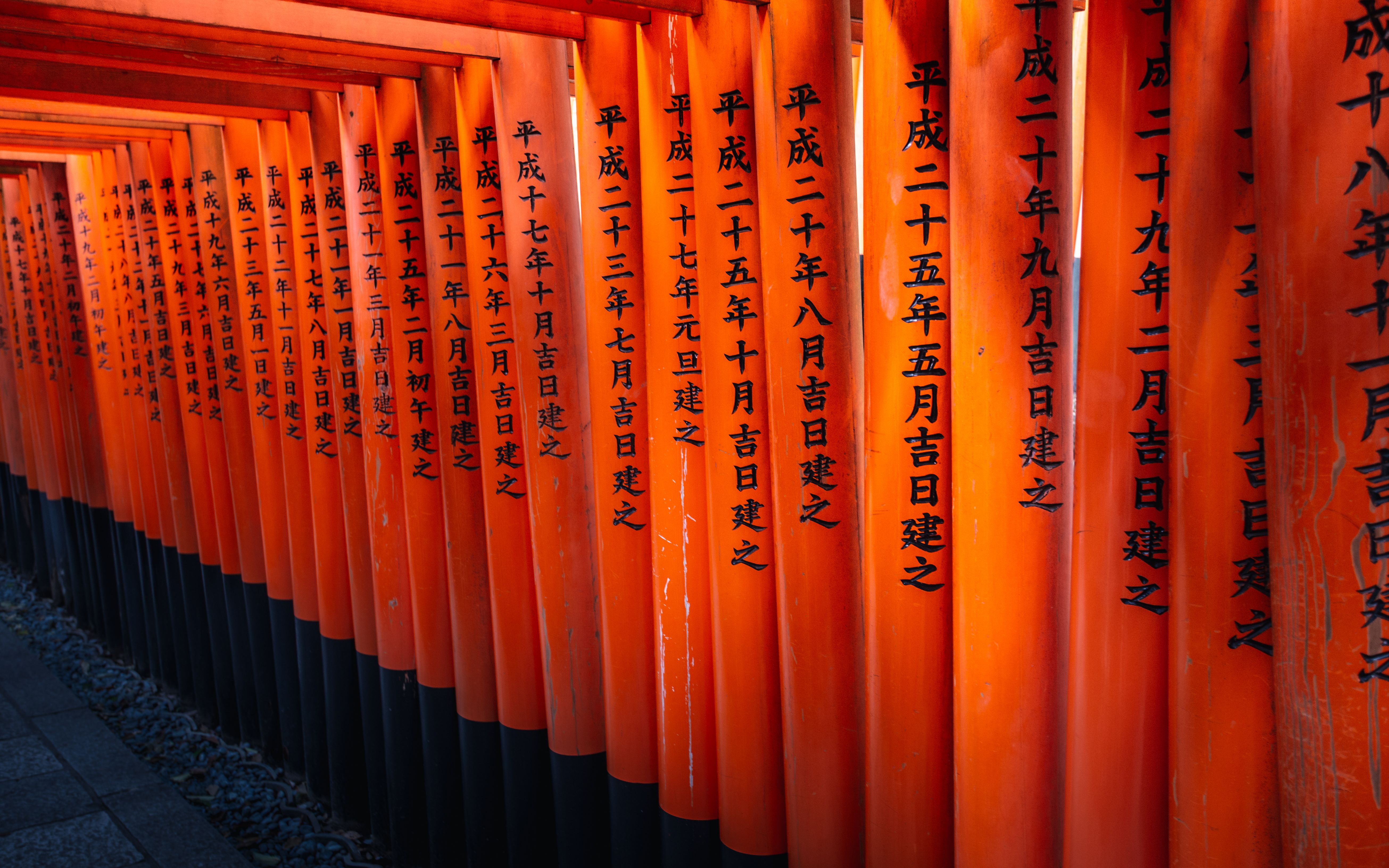
10,000 vermillion torii gates tunnel up a sacred mountain. The most visually striking Shinto shrine in Japan.
 Pexels
Fushimi Inari Taisha
FamousFushimi Inari Taisha is Kyoto's most iconic shrine, famous for the Senbon Torii (千本鳥居, 'thousands of torii gates') — a t…
Why #2?
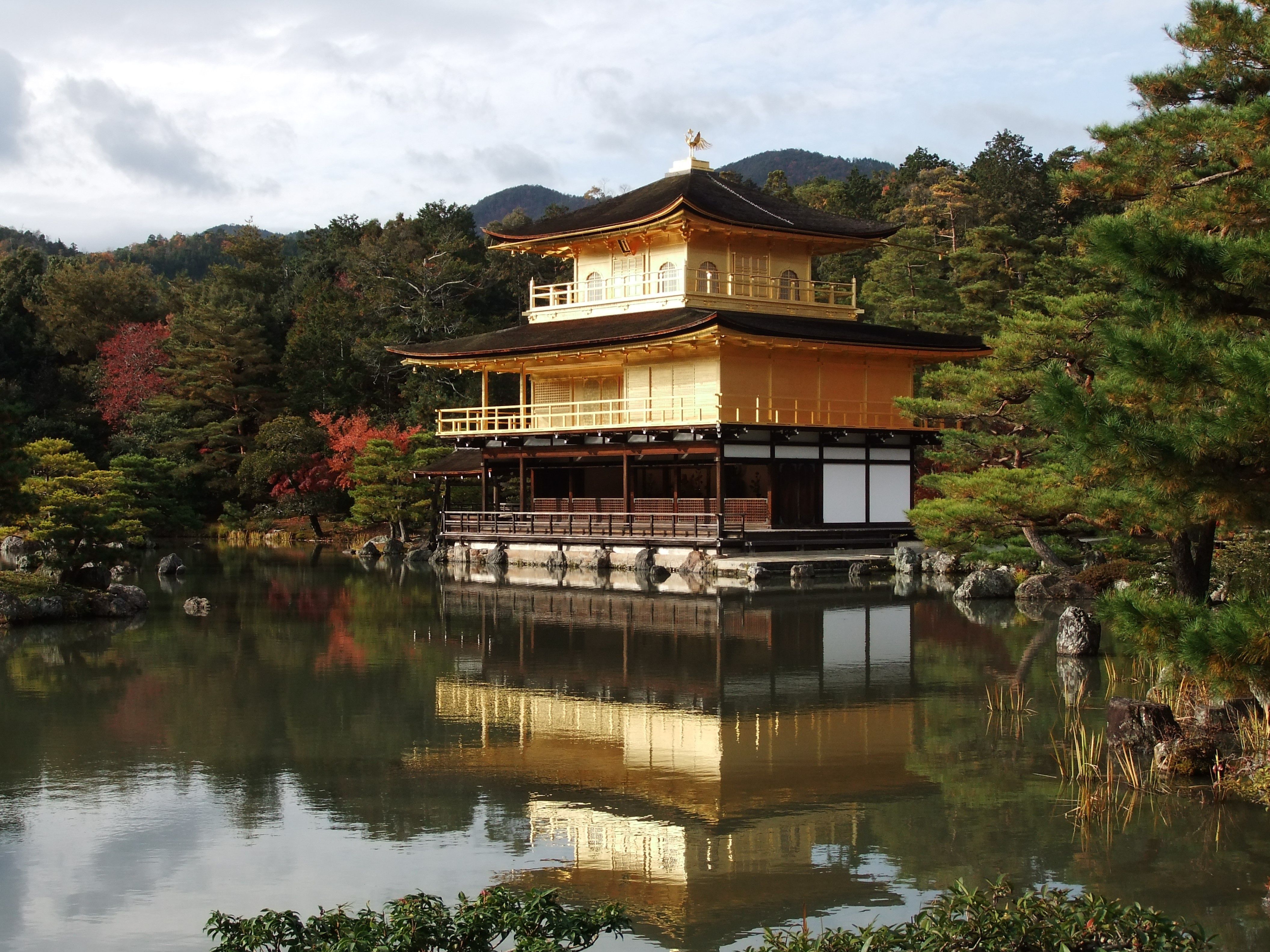
Pure gold leaf covering a three-story Zen temple reflected in a mirror pond. Kyoto's defining image.
 Pexels
Kinkaku-ji Golden Pavilion
FamousKinkaku-ji (金閣寺, 'Temple of the Golden Pavilion') is a three-story Zen Buddhist temple covered in pure gold leaf, reflec…
Why #3?
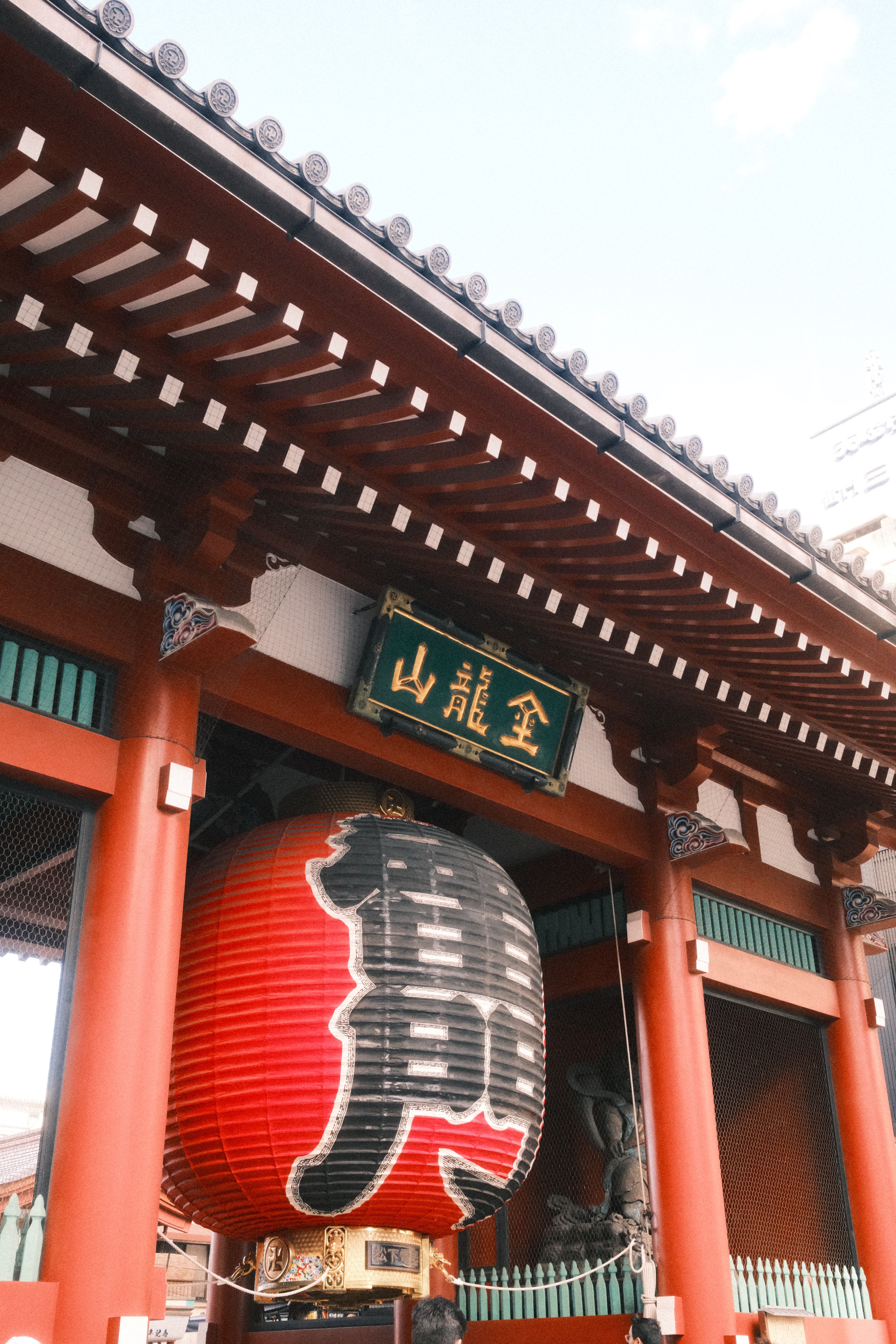
Tokyo's oldest temple (645 AD) with a massive red lantern gate and traditional shopping street approach.
 Pexels
Senso-ji Temple
FamousSenso-ji (浅草寺) is Tokyo's oldest and most significant Buddhist temple, founded in 645 AD after two fishermen discovered…
Why #4?
Shinto shrine within Tokyo's urban forest. Traditional wedding processions happen most weekends.
 kanesue / CC BY 3.0
Meiji Shrine
FamousMeiji Shrine (明治神宮, Meiji Jingu) is a Shinto shrine dedicated to Emperor Meiji and Empress Shoken, set within 175 acres…
Why #5?
Houses the world's largest bronze Buddha (15m tall) in the world's largest wooden building. 1,200+ deer roam the grounds.
 Nekosuki / CC BY-SA 4.0
Todaiji Temple
FamousTodaiji Temple (東大寺, 'Great Eastern Temple') houses the Daibutsu (大仏, Great Buddha) — a 15-meter-tall bronze statue of V…
Why #6?
Built on a hillside without nails, the wooden stage offers panoramic Kyoto views and a sacred waterfall below.
 柳田亮 / CC BY-SA 3.0
Kiyomizu-dera
FamousKiyomizu-dera (清水寺, 'Pure Water Temple') is a UNESCO World Heritage temple famous for its wooden stage (清水の舞台, Kiyomizu…
Why #7?
The floating torii gate in the sea defines Japan's three most scenic views. Best at high tide during sunset.
 z tanuki / CC BY 3.0
Itsukushima Shrine
FamousItsukushima Shrine (厳島神社) rebuilt in 1168 by Taira no Kiyomori, sits on stilts because Miyajima itself was considered to…
Why #8?
The most ornate shrine in Japan with gold leaf, intricate carvings, and the famous 'see no evil' monkey sculpture.
 ภาพประกอบ (ไม่ใช่ภาพถ่าย)
Toshogu Shrine
FamousToshogu Shrine is the mausoleum of Tokugawa Ieyasu, the founder of the Tokugawa Shogunate, and represents the absolute z…
Why #9?
The most sacred Shinto shrine, rebuilt every 20 years for 1,300 years. Simple architecture, profound spiritual weight.
 Immanuelle / CC BY-SA 4.0
Ise Jingu
FamousWalking through Ise Jingu's forest approaches feels like stepping through a curtain between worlds. The path to Naiku, t…
Why #10?
Japan's most famous rock garden — 15 rocks arranged in raked gravel. The minimalist masterpiece of Zen aesthetics.
 z tanuki / CC BY 3.0
Ryoan-ji Rock Garden
FamousRyoan-ji Temple (龍安寺) houses Japan's most famous Zen rock garden (枯山水, karesansui 'dry landscape') — a rectangular plot…
Why #11?
The Phoenix Hall on the ¥10 coin. An 11th-century Pure Land temple reflected in a lotus pond.
 Hikomi Moneru / CC BY 3.0
Byodo-in Phoenix Hall
FamousByodo-in Temple (平等院) features the Phoenix Hall (鳳凰堂, Hōōdō), a National Treasure depicted on Japan's 10-yen coin and 10…
Why #12?
117 temples in a mountain monastery town. Stay overnight in temple lodgings, eat monk cuisine, attend morning prayers.
 663highland / CC BY 2.5
Koyasan Temple Town
FamousKoyasan sits at 900 meters, a temple town of 117 buildings founded in 816 by Kukai (Kobo Daishi) as Shingon Buddhism's h…
Why #13?
Seaside temple with an 11-headed Kannon statue and hydrangeas covering the hillside in June.
 H.Hiro / CC BY 3.0
Hasedera Temple
Well knownHasedera Temple (長谷寺) is a hillside Buddhist temple famous for its 9.18-meter wooden statue of Kannon (11-faced Goddess…
Why #14?
Houses one of Japan's three sacred imperial treasures (the Kusanagi sword). Ancient forest atmosphere in urban Nagoya.
Atsuta Shrine
Well knownAtsuta Shrine (熱田神宮, Atsuta Jingu) ranks among Japan's most important Shinto shrines, housing the Kusanagi-no-Tsurugi (草…
Why #15?
A 1,400-year-old temple that allows women (historically rare). Predawn morning prayers in candlelight are unforgettable.
 くろふね / CC BY 3.0
Zenkoji Temple
Well knownZenkoji Temple (善光寺) guards Japan's first Buddhist statue, a golden Amida triad carried from Korea in 552 AD. The statue…
Explore More Rankings
Discover other curated lists to plan your perfect Japan itinerary
View All Rankings