
หน้านี้ยังไม่ได้แปล จึงแสดงเป็นภาษาอังกฤษ
Nara Hotel
ค้นคว้าและเขียนโดย Hinato

The Nara Hotel opened in 1909 when the Meiji government decided Japan needed Western-style luxury hotels to host foreign dignitaries without embarrassing the empire. Architect Tatsuno Kingo (who designed Tokyo Station) built the Honkan main wing on a hillside overlooking Nara Park, blending Western structure with Japanese craft. The lobby ceiling vaults 7 meters high, assembled from hinoki cypress beams joined by mortise-and-tenon without nails. Art Nouveau bronze light fixtures imported from France hang from hand-carved rafters. Second-floor corridors have tatami mat flooring — Western guests in 1909 requested 'authentic Japanese experience,' so some rooms combined brass beds with woven rush mats.
Albert Einstein stayed in Room 36 in December 1922, between receiving his Nobel Prize notification and the Stockholm ceremony. He wrote in the guest book: 'This hotel blends beauty of Japan with the comfort of the West most successfully.' Charlie Chaplin visited in 1932 (Room 26), the same trip where ultranationalist assassins tried to kill him in Tokyo but mistook the victim. The Imperial family used the hotel's East Wing during Nara visits until 1945. Author Yukio Mishima set scenes from his novel 'Runaway Horses' in the hotel's gardens.
The Tea Lounge overlooks deer grazing on the lawn below through windows framed by velvet curtains installed in 1909 and replaced with exact replicas every 30 years. Afternoon tea arrives on three-tier stands: cucumber sandwiches with Nara's pickled vegetables, warm scones with Hokkaido clotted cream, matcha macarons made by the hotel's French pastry chef who trained at Ladurée. The Darjeeling comes from the hotel's original 1909 supplier (Mariage Frères). You can hear temple bells from Kofukuji a half-kilometer away. The whole experience takes 90 minutes and costs ¥4,500, which is less than you'd pay for equivalent tea at Tokyo's Imperial Hotel but with better deer views.
ข้อมูลสำคัญ
เวลาเปิดทำการ
Tea Lounge (afternoon tea): 2:00 PM – 5:00 PM daily | Lobby free access: 9:00 AM – 8:00 PM | Hotel restaurant (lunch): 11:30 AM – 2:00 PM
วันหยุด: No regular closures (hotel open year-round)
ค่าเข้าชม
Afternoon tea: ¥4,500/person (1 set per guest required) | Lobby/garden exploration: free | Overnight rooms: ¥32,000-95,000/night (Honkan historic wing ¥68,000-95,000, New wing ¥32,000-48,000)
ฤดูที่ดีที่สุด
Year-round | Spring (early April) for cherry blossoms with afternoon tea and deer on lawn | Autumn (late November) for maple foliage | December for Christmas decorations in historic lobby
ระยะเวลาเที่ยวชม
90-120 minutes (afternoon tea) | 30 minutes (lobby/garden exploration only) | Overnight stay for full Honkan wing experience
การเดินทางไป
ข้อมูลการเดินทาง
การเดินทางและช่วงเวลาโดยละเอียด
สถานีที่ใกล้ที่สุด
Kintetsu Nara Station (Kintetsu Nara Line) - 20-min walk east through Nara Park | JR Nara Station - 25-min walk
เวลาเดินทาง
From Kyoto: 45 min via Kintetsu Express to Kintetsu Nara + 20-min walk | From Osaka: 50 min via Kintetsu + walk | From Tokyo: 3 hours via Shinkansen to Kyoto + Kintetsu
วิธีเดินทางไป
Walk: From Kintetsu Nara Station, walk east 20 minutes through Nara Park (past Kofukuji Temple, through deer grounds) — the scenic approach passes park's best deer-viewing areas. Taxi: 10 min from Kintetsu Nara Station (¥1,000-1,200). Hotel is on hillside at southeast edge of Nara Park. Bus: Nara City Loop Bus to Kasuga Taisha stop (¥220), then 5-min walk south to hotel.
ช่วงเวลาที่ควรไป
Afternoon tea: 2:00-3:00 PM for best light through Tea Lounge windows and deer visible on lawn. Weekend tea requires reservation 3-7 days ahead. Lobby exploration best 9:00-11:00 AM before tour groups. Room 36 (Einstein's room) books 2-3 months ahead.
เคล็ดลับเลี่ยงคนเยอะ
The hotel's location at the park's edge means deer wander the lawn throughout the day — best deer viewing from Tea Lounge 3:00-5:00 PM when deer gather near pond. Lobby is sometimes crowded with non-guests photographing the historic interior (10:00-14:00); early morning or evening visits are quieter. Afternoon tea requires dress code (no shorts, sandals, or athletic wear).
ข้อมูลที่จอดรถ
Hotel parking available for overnight guests (¥1,500/night, reservation with room booking). Day visitors for afternoon tea: limited parking on hotel grounds (¥500/2 hours, request at front desk). Nara Park's paid lots (¥1,000/day) are 10-min walk from hotel. Public transport strongly recommended.
คู่มือจากคนใน
จองที่พักใกล้เคียง
ค้นหาที่พักใกล้ Nara Hotel บนแพลตฟอร์มจองที่เชื่อถือได้เหล่านี้:
สถานที่ใกล้เคียง
สถานที่ลับที่อยู่ใกล้ Nara Hotel มากที่สุด เรียงตามระยะทางเส้นตรง
 くろふね / CC BY 3.0
Nara National Museum
Locally knownNara National Museum (奈良国立博物館) is Japan's premier museum for Buddhist art, housing over 2,000 Buddhist sculptures, paint…
 jetsun / CC BY-SA 3.0
Wakakusayama Hill
Locally knownWakakusayama (若草山, 'Young Grass Mountain') is a 342-meter grassy hill on Nara Park's eastern edge offering panoramic vie…
 Benh LIEU SONG from Torcy, France / CC BY-SA 2.0
Ukimido Pavilion
Well knownUkimido (浮見堂, 'Floating Pavilion') is a hexagonal pavilion built on stilts over Sagi-ike Pond in Nara Park's southern ar…
 helohelon / CC BY-SA 3.0
Kofukuji Temple
Well knownKofukuji (興福寺) is a UNESCO World Heritage temple founded in 669 AD as the clan temple of the powerful Fujiwara family, s…
 ภาพประกอบ (ไม่ใช่ภาพถ่าย)
Gangoji Temple
Well knownGangoji (元興寺) is one of Nara's Seven Great Temples and Japan's oldest temple, originally founded in 588 AD in Asuka befo…
Nara-machi Koshi-no-ie
Locally knownNaramachi Koshi-no-ie (奈良町格子の家) is a preserved Edo Period machiya (merchant townhouse) opened as a free museum showing t…
สถานที่อื่น ๆ ในจังหวัดนาระ
Nara Sake
Locally knownNara is the birthplace of sake brewing's key innovations — monks at Shoryakuji Temple (菩提山正暦寺) invented the bodaimoto me…
 ภาพประกอบ (ไม่ใช่ภาพถ่าย)
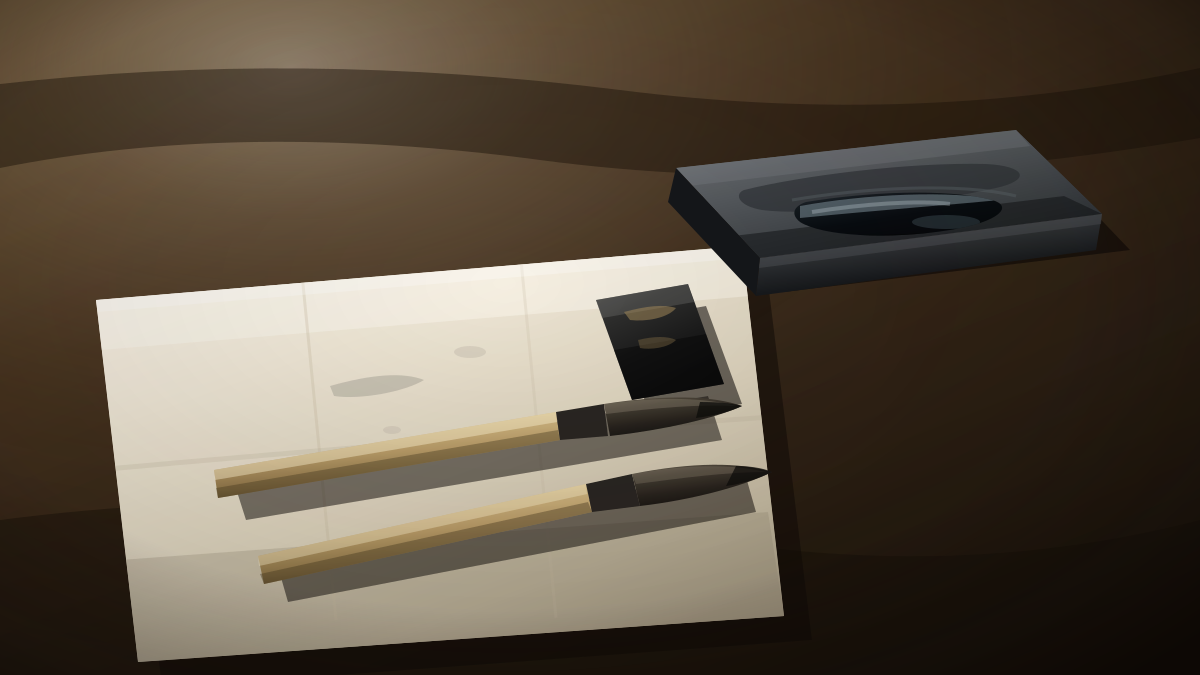
Nara Sumi Ink & Fude Brushes
Locally knownNara produces 90% of Japan's traditional sumi ink (墨, solid ink sticks) and is a major center for fude (筆, calligraphy b…
 Yoshio Kohara / CC BY 3.0
Kashihara Jingu Shrine
Little knownKashihara Jingu (橿原神宮) is a large Shinto shrine dedicated to Emperor Jimmu, Japan's legendary first emperor according to…