
本頁尚未翻譯,暫以英文顯示。
Choshi Electric Railway
調查與撰寫 Hinato

The Choshi Electric Railway runs 6.4 kilometres from Choshi to the easternmost point of the Kanto region, on rolling stock that other companies retired decades ago, through cabbage fields and fishing town backstreets. It has been on the edge of closure for most of its existence, and it survives by selling rice crackers.
That is not a joke. In 1995 a local senbei maker taught the railway how to produce nure-senbei, soft soy-soaked crackers, for nothing. When the company hit a cash crisis again in 2006, the accounting manager put a note on the website — please buy crackers, we need to repair the trains — and fifteen thousand orders came in from across Japan. The railway is now, by its own cheerful admission, a confectionery business with a railway attached, and it has leaned into it with increasingly self-deprecating product names. Riding it is a small act of participation.
What makes the crackers work as a rescue plan rather than a gimmick is that they are genuinely tied to the line itself — the railway sells them from its own stations, packages them with its own branding, and treats the business as inseparable from keeping trains running rather than as an unrelated side venture bolted on for cash. Local shokunin along the route had been making nure-senbei for generations before the railway adopted the recipe, so the crackers were never an invented novelty; they were an existing regional food that the company was taught to produce and then leaned on, hard, when ticket revenue alone proved unable to cover the cost of maintaining century-old infrastructure on a short rural line. That the strategy has worked twice, in two separate financial crises decades apart, says something about how small local railways across Japan survive at all — not through subsidy alone but through a willingness to become genuinely strange, resourceful small businesses that happen to also run trains, rather than railways in the conventional sense that occasionally sell souvenirs.
基本資訊
營業時間
Trains run through the day | Station shops keep daytime hours
公休: Operates year-round
門票
Komawari Tegata one-day pass ¥1,000 adults, ¥500 children | Ordinary fares by distance | Nure-senbei priced separately
最佳季節
Year-round | 1 January for the first sunrise at Inubosaki
建議停留
Half a day for the line and Inubosaki
如何前往
交通資訊
在地私房情報
鄰近景點
距離Choshi Electric Railway最近的私房景點,依直線距離排序。
 示意插圖(非實景照片)
Inubosaki Lighthouse
Little knownInubosaki Lighthouse, built in 1874 by British engineer Richard Henry Brunton, stands 31 meters tall on Cape Inubo — the…
Byobugaura
Locally knownTen kilometres of sea cliff, forty to fifty metres high, running south-west from Choshi along the Pacific with nothing i…
Choshi Fish Market
Little knownChoshi Port has been Japan's number one fish landing port by volume for multiple years running, processing over 250,000…
Yamasa Soy Sauce Factory
Little knownYamasa Corporation, founded in 1645, is one of Japan's oldest soy sauce breweries and the largest in Choshi — a city tha…
 Σ64 / CC BY 4.0
Ikisu Shrine
Little knownIkisu is the third and least visited of the Toogoku Sanja, the three shrines of the east that Kashima and Katori complet…
Kashima Jingu
Little knownKashima Jingu enshrines Takemikazuchi, the thunder and sword deity who in the myths subdues the land and, in later belie…
更多千葉縣的景點
 示意插圖(非實景照片)
Kamogawa Sea World
Little knownKamogawa Sea World, opened in 1970, is one of Japan's most advanced marine parks, known for its orca (killer whale) bree…
 certified / CC BY 3.0
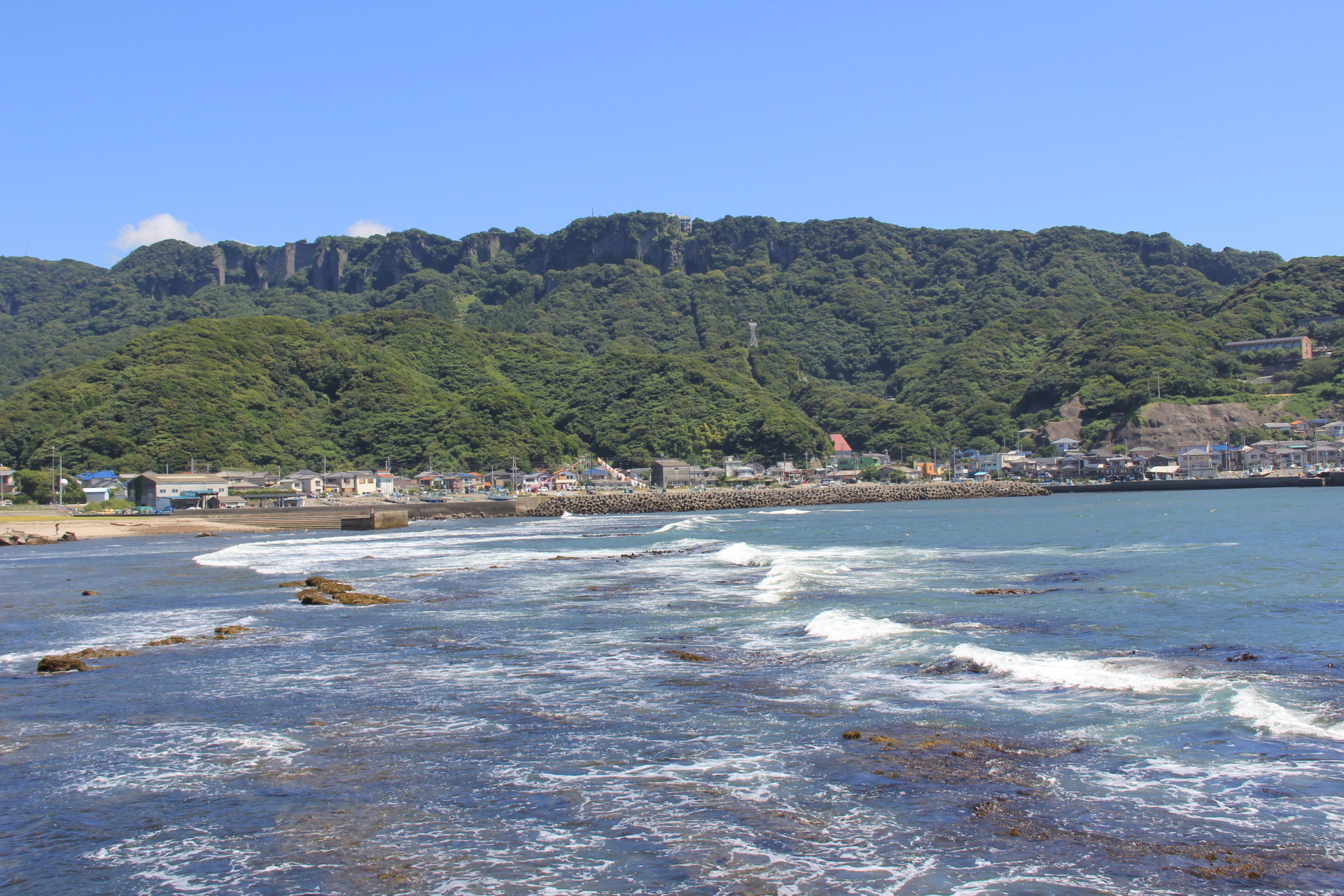
Nokogiriyama
Little knownNokogiriyama (鋸山, 'Saw Mountain,' 329m) earned its name from the jagged cliff face created by 300 years of stone quarryi…
Taibusa Cape
Little knownTaibusa Cape (太房岬) forms the southernmost tip of the Boso Peninsula, where the Pacific Ocean meets Uraga Channel. The su…