
本頁尚未翻譯,暫以英文顯示。
Nishikigoi no Sato
調查與撰寫 Hinato

Photo: Asturio Cantabrio / Wikimedia Commons (CC BY-SA 4.0) · original
Ornamental koi began here. Around two hundred years ago farmers in the Yamakoshi hills above Ojiya kept common carp in their terraced paddies as winter food, noticed colour mutations, and started breeding for them through the long snowbound months when there was nothing else to do. Every nishikigoi in the world descends from that accident, and the top Ojiya fish still sell internationally for sums that make the trade a serious export industry.
Nishikigoi no Sato is the only museum in the world devoted to it. A Japanese garden with a bridge and a waterfall holds about 200 fish across fifteen prize varieties, close enough to see how the patterns are judged, and the exhibition rooms cover the breeding history and the 2004 Chuetsu earthquake, which destroyed the hill ponds and nearly ended the industry.
基本資訊
營業時間
9:00 AM – 6:00 PM (9:00 AM – 5:00 PM December–February)
公休: Closed December 29 – January 1; occasional maintenance closures
門票
¥550 adults | ¥330 elementary and junior high school | Preschool free
最佳季節
October–November when koi come down from the hill ponds in peak condition
建議停留
1–1.5 hours
如何前往
交通資訊
在地私房情報
鄰近景點
距離Nishikigoi no Sato最近的私房景點,依直線距離排序。
 Rebirth10 / CC BY-SA 4.0
Kojimaya Sohonten
Little knownHegisoba is Tokamachi's soba, and what separates it from every other soba in Japan is the binder. Instead of wheat flour…
Bishamondo Honpo
Little knownTochio abura-age is not the thin fried tofu pouch sold everywhere in Japan. It is a slab roughly 20 centimetres long and…
 Nihongo1234 / CC BY-SA 4.0
Hoshitoge Rice Terraces
Little knownThe Hoshitoge rice terraces (星峠の棚田) are layered across a mountain ridge 600 meters above sea level in the Tokamachi high…
 Kentaro Ohno / CC BY 2.0
Matsudai Nohbutai
Little knownMatsudai Nohbutai is the working centre of the Echigo-Tsumari Art Field, the permanent art landscape that grew out of a…
Izumozaki Townscape
Little knownIzumozaki has the longest continuous run of gable-entrance houses in Japan, about four kilometres of them along the old…
 Yasuyuki_Kawano / CC BY 4.0
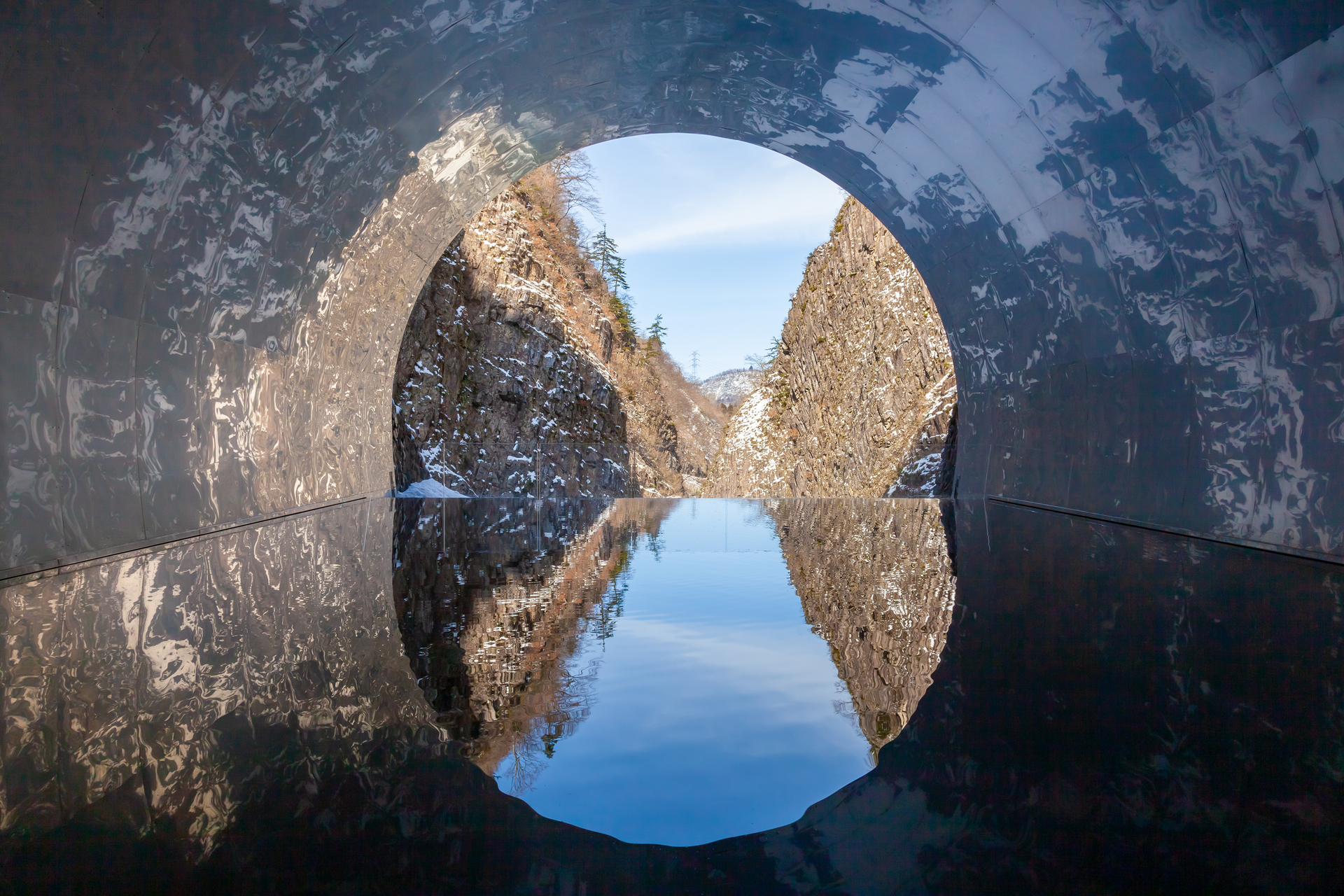
Kiyotsukyo Gorge Tunnel
Little knownKiyotsukyo Gorge is a 750-meter-long ravine carved by the Kiyotsu River through solid granite, with vertical cliffs risi…
更多新潟縣的景點
Gyokusendo
Little knownGyokusendo has been raising copper vessels by hammer since 1816. The technique, tsuiki-doki, starts from a single flat d…
 Triglav / CC BY-SA 3.0
Fossa Magna Museum
Little knownThe Itoigawa-Shizuoka Tectonic Line runs through this city — the western edge of the Fossa Magna, the enormous rift that…
Yagigahana
Little knownYagigahana is a wall of rhyolite more than 200 metres high standing directly over the Ikarashi river in the Shitada vall…