
Esta página aún no ha sido traducida y se muestra en inglés.
Aomori Apples
Investigado y escrito por Hinato

Photo: 岩浪陸 / Wikimedia Commons (CC BY 3.0) · original
Aomori Prefecture produces over 50% of Japan's apples, with vast orchards blanketing the countryside around Hirosaki and Aomori City. The region's cool climate, long daylight hours, and fertile volcanic soil create ideal conditions for apple cultivation, introduced in the 1870s during Meiji-era modernization. The most famous variety is Fuji apples (developed in Aomori in the 1960s), now grown worldwide, known for their large size, crisp texture, and balanced sweet-tart flavor.
Visitors can experience apple picking at numerous orchards (typically September-November). Most farms offer all-you-can-eat picking for ¥500-1,000 — you pick apples directly from trees and eat on-site. The apples are exceptionally fresh, with varieties unavailable outside Japan (Orin, Jonagold, Mutsu). Many orchards sell apple products: fresh-pressed cider, apple jam, dried apple chips, and apple pies.
Hirosaki is particularly famous for its apple pies — bakeries compete to create unique variations (crumble-top, custard-filled, caramelized). The 'Hirosaki Apple Pie Guide Map' lists 40+ shops offering distinct recipes, turning apple pie into a pilgrimage route for sweets lovers.
Información esencial
Horario
Orchards: September–November | Most shops: 9:00 AM – 5:00 PM
Cerrado: Apple picking season September–November only; orchards closed rest of year
Entrada
Apple picking: ¥500–1,000 (30–60 min all-you-can-eat) | Apple pie shops: ¥300–700 per slice
Mejor temporada
October (peak Fuji and Jonagold harvest) | September for early Tsugaru variety
Duración de la visita
2-3 hours (orchard visit + apple pie hopping in Hirosaki)
Cómo llegar
Información de acceso
Guía privilegiada
Lugares cercanos
Los lugares secretos más cercanos a Aomori Apples, por distancia en línea recta.
 くろふね / CC BY 3.0
Hirosaki Castle
FamousHirosaki Castle (弘前城) is one of only twelve original castle towers remaining in Japan, built in 1611 by the Tsugaru clan…
 掬茶 / CC BY-SA 4.0
Fujita Memorial Garden
Little knownFujita Kenichi was born in Hirosaki, went to Tokyo, became the first chairman of the Japan Chamber of Commerce and Indus…
 Glenn Waters / CC BY 2.0
Inakadate Rice Paddy Art
Little knownIn 1993 the village of Inakadate, looking for something to do about a declining population, planted a small design in a…
 Raita Futo from Tokyo, Japan / CC BY 2.0
Saruka Shrine
Little knownSaruka is an old shrine on the Tsugaru plain, associated with healing of the eyes and with agriculture, and it sits at t…
Myoko
Little knownKuroishi's local dish is a solution to a specific problem: what to do with yakisoba in a town where the snow reaches the…
 掬茶 / CC BY-SA 4.0
Nakamachi Komise Street
Locally knownKomise are covered wooden arcades built out from the front of a house over the public footway — a private roof over a pu…
Más en Prefectura de Aomori
 掬茶 / CC BY-SA 4.0
Juniko Aoike
Little knownJuniko is a scatter of thirty-three lakes and ponds in beech forest at the western edge of the Shirakami mountains, form…
Stairway National Route 339
Little knownNational Route 339 runs up the Tsugaru peninsula to Cape Tappi, and for 388 metres of its length it is a flight of 362 c…
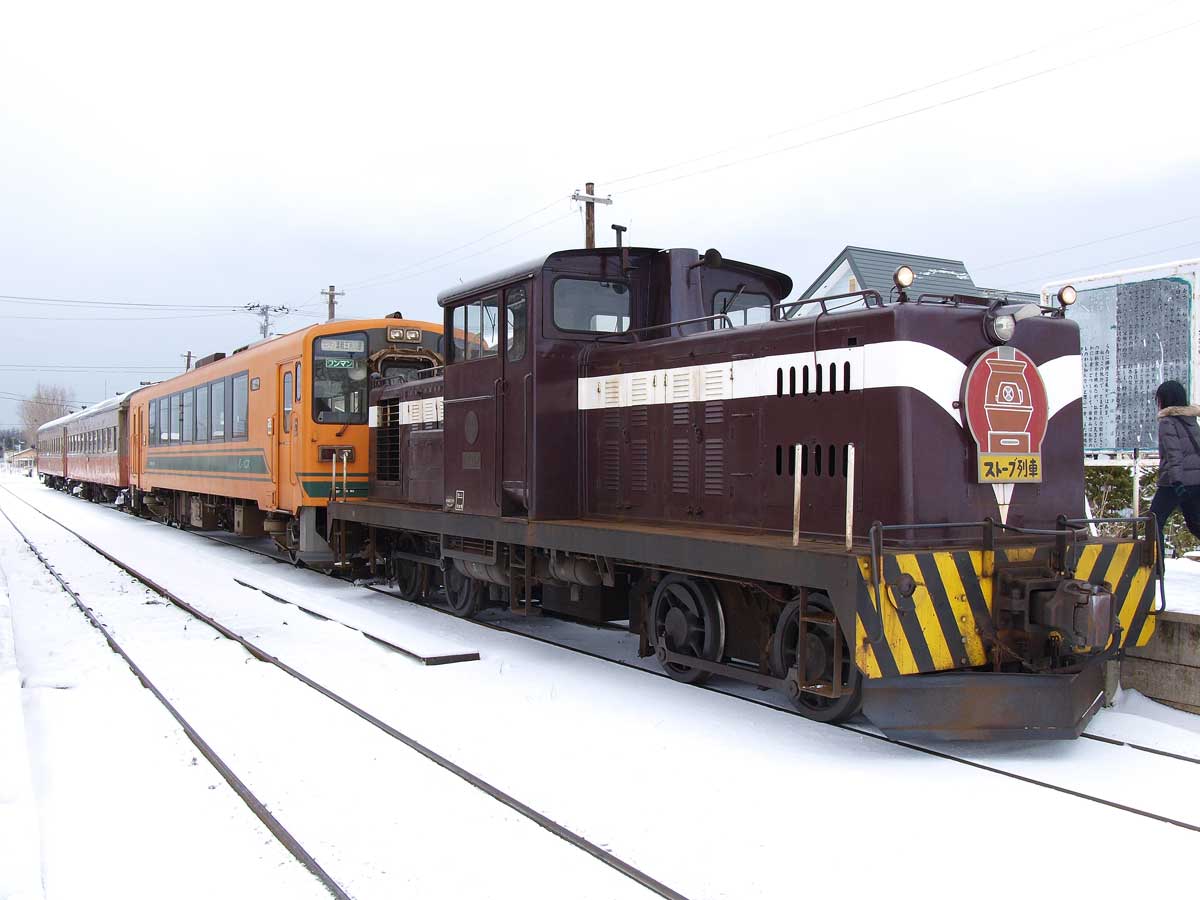 Amiden / CC BY-SA 3.0
Tsugaru Railway Stove Train
Little knownThe Tsugaru Railway runs twenty kilometres north from Goshogawara across the flat snow country of the Tsugaru plain, and…