
Esta página aún no ha sido traducida y se muestra en inglés.
Chichibu Shrine
Investigado y escrito por Hinato

Photo: Carbonium / Wikimedia Commons (CC BY 3.0) · original
Chichibu Shrine (秩父神社) claims a founding date of 2,100 years ago, though the current structures date to the 1592 reconstruction sponsored by Tokugawa Ieyasu. The shrine is famous for its intricate wood carvings covering every surface of the main hall — particularly the 'Tsunagi no Ryu' (繋の龍, 'Chained Dragon'), a relief carving showing a dragon bound by chains. The legend: the dragon once descended nightly to drink from the nearby pond, so the artist chained it in wood to prevent the nocturnal disruptions.
The shrine serves as spiritual center for the Chichibu region and headquarters for the Chichibu Night Festival (December 2–3), one of Japan's three great hikiyama festivals. The main hall's carvings — dragons, tigers, phoenixes, and scenes from Chinese legends — represent some of the finest Edo-period temple art outside Nikko. Unlike many shrines, Chichibu allows close approach to view the carving details.
Información esencial
Horario
Open sunrise to sunset. Main hall freely accessible during grounds hours.
Cerrado: Varies — confirm before visiting
Entrada
Free
Mejor temporada
Morning (8:00–10:00) for photography of north-side dragon carving; avoid December 2–3 festival dates if seeking quiet exploration
Duración de la visita
30–45 minutes for full perimeter carving tour
Cómo llegar
Información de acceso
Chichibu City. Near Seibu-Chichibu Station or Near Chichibu Railway Chichibu Station. Free entry to grounds, main hall viewing free. Open sunrise–sunset. Visit duration: 30–45 minutes. Combine with nearby Hitsujiyama Park (shibazakura fields, a short walk).
Guía privilegiada
Carving tour: The main hall's four sides each feature different themes. The north side shows the 'Chained Dragon' and 'Northern Protector' — most photographed carvings. The east side depicts tigers in bamboo forest (representing power and wisdom). The west side shows cranes and turtles (longevity). The south entrance features phoenixes and peonies (imperial symbolism). Walk the full perimeter — most visitors miss the west and south sides entirely.
Photography lighting: Morning (8:00–10:00) provides best lighting for the north-side dragon carving as sunlight illuminates the relief details without harsh shadows. The carvings are under deep eaves — ISO 800+ recommended. Tripods prohibited but image stabilization/high ISO handles this. The dragon's eye follows viewers as they move — an optical illusion created by the carving depth.
Festival timing: Chichibu Night Festival (December 2–3) transforms the shrine into the region's largest event — six massive illuminated floats parade through town, accompanied by taiko drumming and fireworks. The festival draws 200,000+ visitors; hotels book 6 months ahead. If visiting during the festival, arrive by 14:00 to secure viewing position along the parade route.
Lugares cercanos
Los lugares secretos más cercanos a Chichibu Shrine, por distancia en línea recta.
Chichibu 34 Kannon Pilgrimage
Little knownThe Chichibu 34 Kannon Pilgrimage (秩父三十四箇所観音霊場) is one of Japan's three major Kannon temple pilgrimages — a circuit of 3…
 ちちびあん / CC BY-SA 4.0
Chichibu Night Festival
Well knownThe Chichibu Yomatsuri (秩父夜祭, Night Festival, December 2–3) is one of Japan's three greatest hikiyama festivals — six ma…
 Raita Futo from Tokyo, Japan / CC BY 2.0
Hitsujiyama Park Shibazakura
Little knownEach spring, Hitsujiyama Park's hillside explodes into 400,000 pink, white, and purple shibazakura (芝桜, moss phlox) flow…
 ウィ貴公子 / CC BY-SA 4.0
Waraji Katsudon
Little knownWaraji katsudon is a pork cutlet the size and shape of a straw sandal, dipped in a soy-based sauce and laid over rice —…
 D700master / CC BY 3.0
Hodosan Shrine & Ropeway
Little knownMt. Hodo (宝登山, 497m) rises steeply above Nagatoro town, its summit accessible by a 5-minute ropeway ride that climbs 320…
Nagatoro River Rafting
Little knownNagatoro (長瀞) sits where the Arakawa River cuts through a crystalline limestone gorge, creating Class II–III rapids over…
Más en Prefectura de Saitama
Higashimatsuyama Yakitori
Little knownYakitori in Higashimatsuyama is not chicken. It is pork cheek and jaw, skewered and grilled, and eaten with a chilli-spi…
 KQuhen / CC BY-SA 4.0
Konosu Bikkuri Hina Matsuri
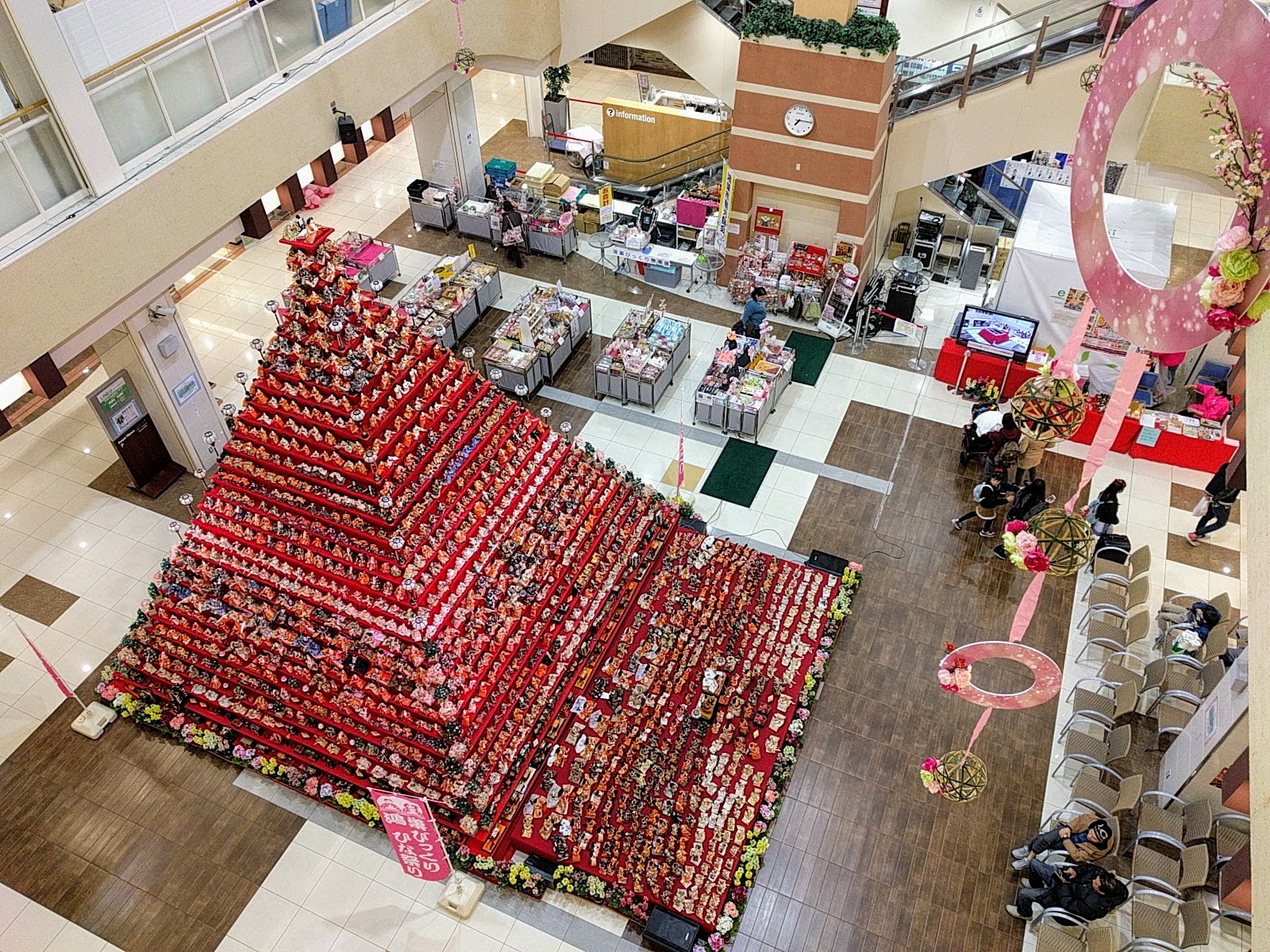
Little knownKonosu has made hina dolls for around 380 years and calls itself doll town, so when the local trade wanted to do somethi…
 Nori Norisa / CC BY 2.0
Kumagaya Uchiwa Matsuri
Little knownKumagaya's summer festival is the Yasaka Shrine's annual rite, held on 20, 21 and 22 July, and it is called the greatest…