
Fushimi Inari Taisha
Investigado y escrito por Hinato
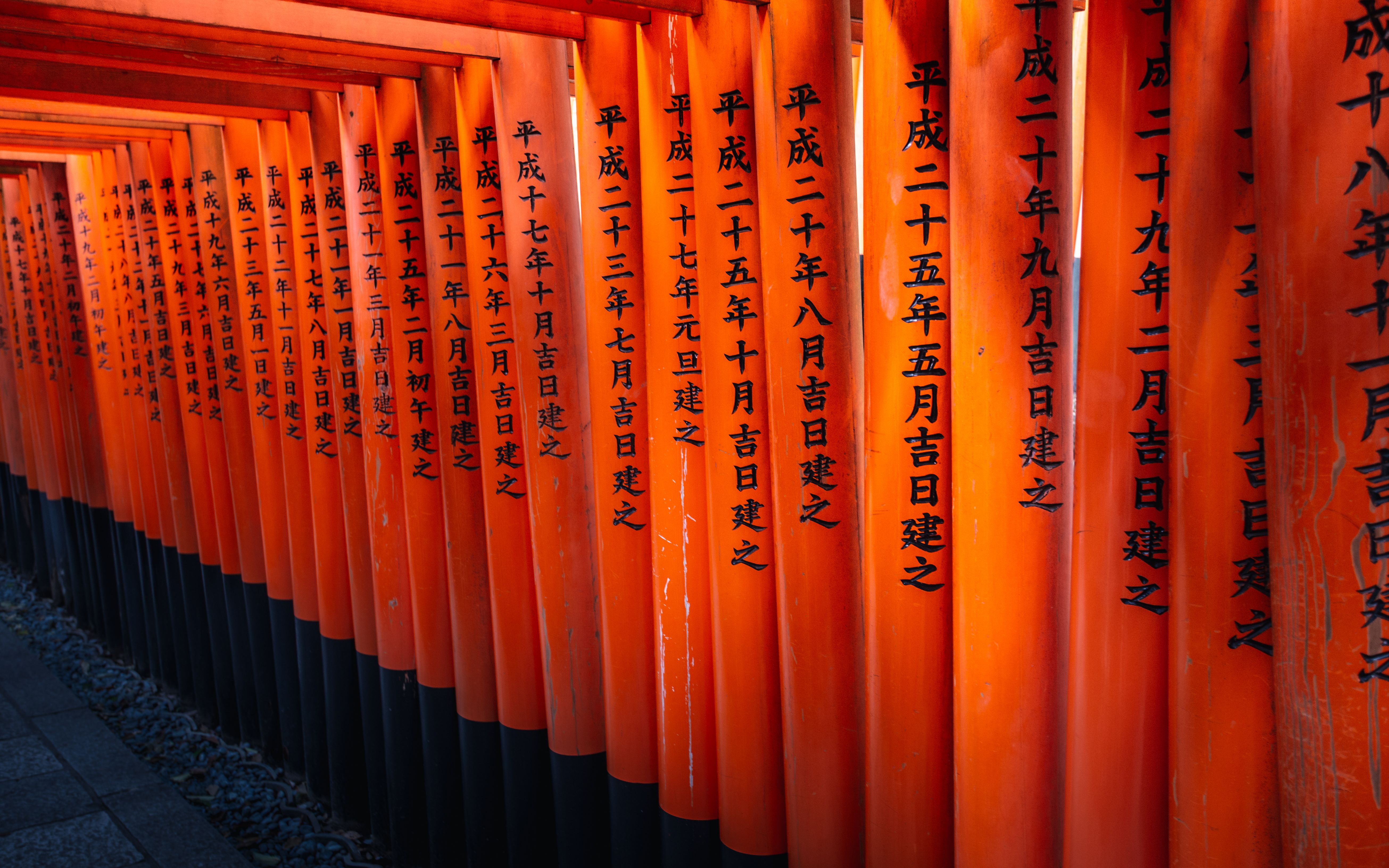
Photo: Pexels (Pexels License) · original
Fushimi Inari Taisha es el santuario sintoísta más visitado de Japón y, aun así, conserva un poder visual que no pierde impacto. Miles de torii bermellón donados por empresas y particulares forman túneles ininterrumpidos que ascienden por las laderas del monte Inari. El recorrido completo hasta la cima lleva unas dos horas y va ganando soledad a medida que se sube.
Fundado en 711, es la sede central de los más de 30 000 santuarios Inari repartidos por todo Japón, dedicados a la deidad del arroz, la fertilidad y el comercio. Las estatuas de zorros (kitsune) que flanquean cada tramo son los mensajeros del dios Inari. La entrada es gratuita y está abierto las 24 horas: el amanecer es el momento más mágico y solitario.
What this page is actually for
Fushimi Inari is free, open with no gate to close, and the single most photographed place in Japan. You do not need us to find it, and you do not need another description of the tunnel of gates. The one decision worth making in advance is how far up the mountain you intend to go, because the crowd thins with altitude and effort rather than with the hour — that is a property of the walk, not a tip we are claiming to have discovered.
The rest of what we can add is geographic. Southern Kyoto is thick with places nobody queues for, and we keep a catalogue of them with coordinates. Those are below.
Nobody else is going here
Everyone within a mile of Fushimi Inari Taisha is going to Fushimi Inari Taisha. Here are 4 places within walking or one bus ride of it that almost nobody writes about — straight-line distances from our own catalogue, not travel times.
- Sanjusangen-do ArcheryLocally known~2.3 km away · Kyoto
Every January (second Sunday), Sanjusangen-do Temple hosts Toshiya (通し矢) — a coming-of-age archery ceremony where 20-yea…
- Kyoto Station BuildingLocally known~2.4 km away · Kyoto
Kyoto Station (京都駅) is a controversial modern architectural landmark designed by Hiroshi Hara (completed 1997). The 15-s…
- Kyoto GyozaLocally known~2.4 km away · Kyoto
While gyoza (餃子, Chinese-style dumplings) originated in China, Kyoto has developed its own regional style emphasizing ve…
- Shosei-en GardenLocally known~2.6 km away · Kyoto
Shosei-en Garden (渉成園), also called Kikoku-tei, is a tranquil 10-acre stroll garden just east of Kyoto Station — remarka…
Información esencial
Horario
Abierto las 24 horas, todos los días
Cerrado: Open year-round
Entrada
Gratuito
Mejor temporada
Todo el año | Otoño (noviembre) para los arces rojos junto a los torii
Duración de la visita
1–2,5 horas (depende de cuánto se suba)
Cómo llegar
Información de acceso
Acceso detallado y horarios
Estación más cercana
JR Inari Station (JR Nara Line) - 5 min walk | Fushimi-Inari Station (Keihan Main Line) - 5 min walk
Tiempo de viaje
From Kyoto Station: 5 min via JR Nara Line (2 stops) | From Osaka: 50 min via Keihan Express | From Tokyo: 2 hours 30 min via Shinkansen to Kyoto + JR
Cómo llegar
Train: From Kyoto Station, take JR Nara Line to Inari Station (5 min, ¥150). Or take Keihan Main Line to Fushimi-Inari Station. Bus: Kyoto City Bus routes 南5 stop near shrine entrance. Taxi: 15 min from Kyoto Station (¥1,500-2,000).
Mejor momento para visitar
Early morning (before 7:00 AM) for solitude and side-lit torii photography. Evening (after 6:00 PM) when tour groups depart. Weekday mornings significantly quieter than weekends.
Consejos para evitar multitudes
Main shrine area extremely crowded 9:00 AM-5:00 PM daily. Lower torii tunnel packed 10:00 AM-4:00 PM. Continue past first 15 minutes of torii to reduce crowds by 90%. Avoid cherry blossom season (early April), Golden Week (late April-early May), and autumn foliage weekends (November). Night visits offer solitude but require flashlight for upper trails.
Información de aparcamiento
No dedicated parking. Nearby coin parking: ¥600-800/day (limited spaces). Public transport strongly recommended due to limited parking and excellent train access.
Guía privilegiada
Reserva alojamiento cercano
Encuentra alojamiento cerca de Fushimi Inari Taisha en estas plataformas de confianza:
Lugares cercanos
Los lugares secretos más cercanos a Fushimi Inari Taisha, por distancia en línea recta.
 Fumihiko Ueno / CC BY 3.0
Sanjusangen-do Archery
Locally knownEvery January (second Sunday), Sanjusangen-do Temple hosts Toshiya (通し矢) — a coming-of-age archery ceremony where 20-yea…
 Ilustración: no es una fotografía
Sanjusangen-do
FamousSanjusangen-do (三十三間堂, 'Hall with 33 Bays') is a 120-meter-long wooden hall containing 1,001 life-size golden statues of…
 くろふね / CC BY 3.0
Kyoto Station Building
Locally knownKyoto Station (京都駅) is a controversial modern architectural landmark designed by Hiroshi Hara (completed 1997). The 15-s…
Kyoto Gyoza
Locally knownWhile gyoza (餃子, Chinese-style dumplings) originated in China, Kyoto has developed its own regional style emphasizing ve…
 Yoshio Kohara / CC BY 3.0
Shosei-en Garden
Locally knownShosei-en Garden (渉成園), also called Kikoku-tei, is a tranquil 10-acre stroll garden just east of Kyoto Station — remarka…
 柳田亮 / CC BY-SA 3.0
Kiyomizu-dera
FamousKiyomizu-dera (清水寺, 'Pure Water Temple') is a UNESCO World Heritage temple famous for its wooden stage (清水の舞台, Kiyomizu…
Más en Prefectura de Kioto
 Ilustración: no es una fotografía
Miyama Kayabuki Village
Well knownThirty-eight farmhouses with roofs made of miscanthus grass, some piled a meter thick. No power lines. Miyama exists in…
 くろふね / CC BY 3.0
Kifune Shrine
Locally knownKifune Shrine (貴船神社) sits in a forested mountain valley north of Kyoto, famous for its summer river dining platforms (川床…
 くろふね / CC BY 3.0
Kurama-dera Temple
Locally knownKurama-dera Temple (鞍馬寺) sits atop Mt. Kurama (570m) in northern Kyoto, accessible by cable car or a scenic 30-minute fo…