
Kochi Hidden Gems
Kochi is the most heavily forested prefecture in Japan — around 84 per cent tree cover — and it faces the open Pacific with nothing between it and the weather. Those two facts explain most of the character. The rivers run clear because the catchments are wooded and largely undammed, and the Shimanto is often called the last clear river in Japan, crossed by low bridges built without railings so that floodwater passes over them rather than tearing them away. The rainfall is enormous and the typhoons arrive first here. Historically the isolation made Tosa a place apart, and Sakamoto Ryoma, the low-ranking samurai who brokered the alliance that ended the shogunate, is from Kochi and is treated locally as something close to a patron saint. The city itself keeps an original castle keep and runs a Sunday street market along the road to it that has been trading for three hundred years.
34 spots
Climate & Best Season
Warm, very wet and typhoon-prone; among the highest rainfall in Japan. Summer is hot; spring and autumn are best for rivers.
Famous For (Food)
- Katsuo no tataki (seared bonito)
- Sawachi platters
- Yuzu
- Sake
Signature Sights
- Kochi Castle
- Shimanto River
- Cape Ashizuri
- Katsurahama beach
When to Go
Kochi is one of the wettest places in Japan and takes the brunt of the typhoon season from August into September, when travel plans should stay flexible. It is also one of the sunniest between storms. Winters are mild with January highs near 12°C and no snow on the coast. Summers are hot above 33°C. The Yosakoi festival fills the city on August 9–12. The Shimanto is best from late spring to early autumn for canoeing and swimming, and bonito is landed most heavily in spring and again in autumn. The Sunday market runs every week of the year.
Getting Around
Kochi Airport is about 40 minutes from the city and the fastest way in, roughly an hour and a quarter from Haneda. By rail, the Nanpu limited express runs from Okayama in about two and a half hours after the shinkansen. Once here, distances are the problem: the prefecture is long, and Cape Ashizuri at the western end is over three hours from the city by train and bus, while Cape Muroto to the east has no railway at all. The Tosa Kuroshio Railway extends the network partway. For the Shimanto valley, the capes and the mountain villages, a car is effectively required.
Local Food
Katsuo no tataki is bonito seared hard over burning rice straw so the skin chars while the centre stays raw, then sliced thick and eaten with garlic and salt rather than soy — the straw is the part that matters, and the harbour at Kure is where to watch it done. Sawachi is a large communal platter of sashimi, sushi and fried food, built for drinking parties. Kochi drinks more than most of Japan and has the local breweries to match. Yuzu is grown in the mountain villages and turns up in everything from ponzu to salt.
Tatsukushi Coast
Tatsukushi is a shore of eroded sandstone laid down in the Paleogene and worked by the sea into shapes that have all acq…
Ino Paper Museum
Tosa washi is among the thinnest handmade paper in the world — the finest grades are measured in hundredths of a millime…
Befukyo Gorge
Befukyo is at the head of the Monobe river in the Tsurugi quasi-national park, an hour and twenty minutes into the mount…
Nakatsu Gorge
Nakatsu is the Niyodo gorge you can walk into. A 1.3-kilometre path runs up the ravine from the entrance to Uryu Falls,…
Yasui Gorge
Yasui runs up the north of Niyodogawa town and holds the pool that most people mean when they talk about the colour of t…
Aki Nora-dokei and Doi Kachu
In 1887 a young landowner in Aki called Hatakeyama Taichi bought a clock, took it apart to work out how it functioned, a…
Umaji Village
Umaji has about a thousand people, is ninety-six per cent forest, and is one of the best-known village brands in Japan.…
Sakawa Sake Warehouse Street
Sakawa was the castle town of the Fukao family, chief retainers of the Tosa domain, and the merchants who settled along…
Yatai Yasube
Kochi has a street-stall drinking culture that has largely disappeared from the rest of Japan, and its emblem is gyoza.…
Tojindaba Megaliths
On a plateau above Cape Ashizuri, in an area that has produced stone tools and pottery from the early Jomon period aroun…
Nikobuchi
The phrase Niyodo Blue was coined by a photographer describing this specific pool. Nikobuchi is a plunge basin at the fo…
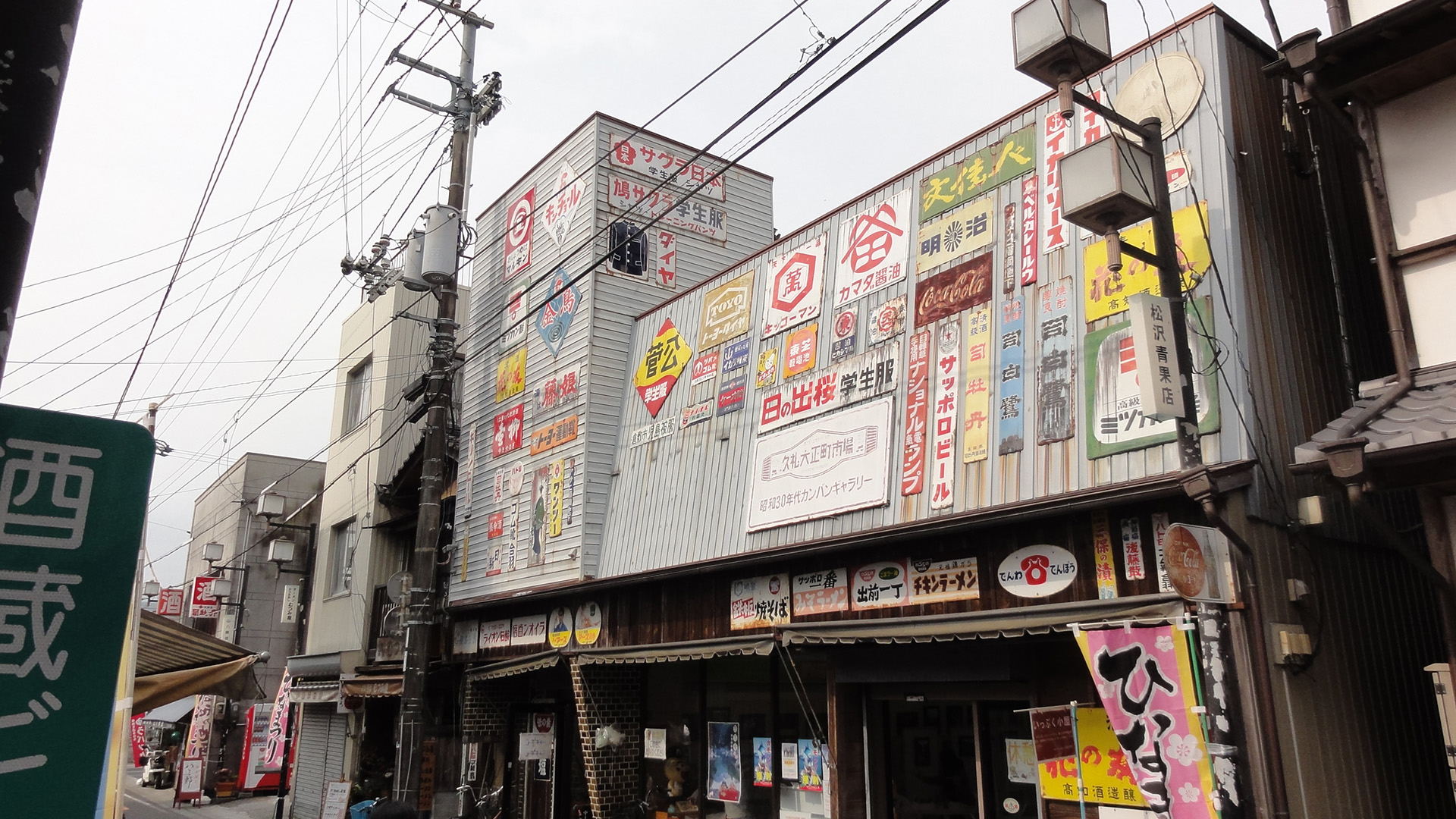
Kure Taishomachi Market
Kure is a bonito port and this market, a covered lane a hundred metres long a couple of minutes from the harbour, is whe…
Ekingura
Hirose Kinzo, known as Ekin, was a Tosa painter of the late Edo period who lost his position after an accusation of forg…
Yokogurayama Museum
Mt. Yokogura in Ochi is a limestone massif holding some of the oldest rock in Shikoku, a considerable concentration of e…
Nakaoka Shintaro Museum
Sakamoto Ryoma is on every poster in Kochi. Nakaoka Shintaro, who brokered the Satsuma-Choshu alliance alongside him and…
Muroto Cape
Muroto Cape is the southeastern tip of Shikoku, a jagged promontory of uplifted rock that juts 15 kilometers into the Pa…
Shimanto Sink Bridges
The Shimanto River is crossed by 47 chinkabashi — low-slung, railing-free concrete bridges designed to be submerged duri…
Niyodo River
The Niyodo River is often called 'Niyodo Blue' (仁淀ブルー) for the surreal, transparent turquoise color of its water — a col…
Anpanman Museum
Anpanman — the bread-headed superhero with a heart of gold — is one of Japan's most beloved characters, especially among…
Ashizuri Cape
Ashizuri Cape is the southernmost point of Shikoku, a granite headland wrapped in subtropical vegetation and surrounded…
Kashiwajima Island
Kashiwajima is a small island off the coast of Tosashimizu, surrounded by some of the clearest water in Japan. The islan…
 Illustration — not a photograph
Katsuo no Tataki
Katsuo no tataki is the soul of Kochi cuisine — fresh skipjack tuna (bonito) seared over roaring straw flames for 20 sec…

Hirome Market
Hirome Market is not a market in the conventional sense — it is a 7,000-square-meter indoor drinking and eating hall whe…
Yosakoi Festival
The Yosakoi Matsuri, held every August 9–12 in Kochi City, is one of Japan's most energetic and visually spectacular fes…
Monet's Garden Marmottan
Kitagawa Village sits in the mountains an hour east of Kochi, surrounded by cedar forest and terraced rice fields—not wh…
Ryuga Cave
Ryuga Cave (龍河洞) is one of Japan's three great limestone caves, a 4-kilometer underground system carved over 175 million…
Katsurahama Beach
Katsurahama is a crescent-shaped beach on Kochi's southeastern coast, famous for its black sand, pine-covered headlands,…

Kochi Castle
Kochi Castle is one of only twelve surviving original castles in Japan — meaning its tenshu (main keep) dates to the Edo…
Sakamoto Ryoma Memorial Museum
Sakamoto Ryoma (1836–1867) is one of the most celebrated figures in Japanese history — a low-ranking samurai from Tosa (…
Shimanto River
The Shimanto River flows 196 kilometers from the mountains of western Kochi to the Pacific, and is famously called 'Niho…
Sawachi Ryori
Sawachi ryori is Kochi's unique banquet cuisine, served on massive ceramic platters (sawachi) up to 50cm in diameter. Ea…
Nichiyoichi Sunday Market
Every Sunday since 1690, the Nichiyoichi Sunday Market unfolds along a 1.3-kilometer stretch of Otesuji Street in centra…
Makino Botanical Garden
The Makino Botanical Garden, perched on a hillside in western Kochi, is dedicated to Tomitaro Makino (1862–1957), the 'f…
Tosa Washi Papermaking
Tosa washi is handmade paper produced in Kochi using techniques that date back over 1,000 years. The paper is made from…