
Saitama Hidden Gems
Saitama is where Tokyo's suburbs give out and the Chichibu mountains begin, and the two halves have almost nothing to do with each other. Kawagoe, half an hour from Ikebukuro, kept a street of kurazukuri merchant warehouses because a fire in 1893 destroyed the wooden buildings and the rebuilt clay-walled ones proved too solid to replace; the bell tower there has marked the hours since the seventeenth century. West of that, the Arakawa cuts into the hills at Nagatoro, where the riverbed is a shelf of exposed metamorphic rock that geologists have used as a teaching site for over a century. Chichibu itself sits in a basin ringed by peaks with a shrine that has run a December night festival of floats and fireworks for three hundred years. The prefecture is landlocked and low-lying in the east, which makes for the hottest summers in the country and is the single strongest argument for spending the warm months up in the valleys instead.
16 spots
Climate & Best Season
Hot, humid summers (Kumagaya regularly tops Japan's charts) and dry, sunny winters. Spring and autumn are most comfortable.
Famous For (Food)
- Soba
- Unagi
- Sayama tea
- Kusadango
Signature Sights
- Kawagoe 'Little Edo'
- Chichibu valley & Mitsumine Shrine
- Nagatoro river boating
- Hitsujiyama Park shibazakura
When to Go
Kumagaya and the eastern plain regularly record the highest temperatures in Japan, above 38°C in July and August, and there is no sea breeze to fix it — plan the Chichibu hills for summer instead. Winters are dry, sunny and almost snow-free on the plain, with January highs near 10°C. The shibazakura at Hitsujiyama Park in Chichibu flowers from mid-April into early May. Nagatoro's river boats run from March to November. The Chichibu Night Festival falls on December 2–3 and fills every train out of the valley. Autumn colour in the Chichibu gorges peaks in mid-November.
Getting Around
This is the easiest prefecture in the country to reach without a car. Tobu, Seibu and JR all run from central Tokyo: Kawagoe is around 30 minutes from Ikebukuro, and Seibu's Laview limited express reaches Seibu-Chichibu in about 80 minutes. The Chichibu Railway then continues to Nagatoro and Mitsumineguchi, and a bus climbs from there to Mitsumine Shrine. Omiya is a shinkansen stop and a junction for six lines. Kawagoe and Chichibu town are both walkable once you arrive. Only the deeper Okuchichibu valleys and the Mitsumine back roads justify driving, and they are narrow.
Local Food
Saitama grows soba wheat in the Chichibu hills and buckwheat noodles are the standard there, often served with kurumi dipping sauce. Kawagoe built its wealth partly on sweet potatoes, and the shops along Kashiya Yokocho sell them roasted, candied and baked into everything from ice cream to beer. Sayama tea is grown in the west of the prefecture and picked from May, with a heavier roast than Uji or Shizuoka. Unagi is a Kawagoe speciality that predates refrigeration, when the town sat a river journey from the Edo fish markets.
Sakitama Kofun Park
Nine large burial mounds stand together in a field at Gyoda, including Maruhakayama, one of the largest round mounds in…
Ogawa Washi
Hosokawa paper has been made in Ogawa and the neighbouring village of Higashi-Chichibu for around 1,300 years, from kozo…
Shibusawa Eiichi Memorial Museum
Shibusawa Eiichi was born in a farmhouse here in 1840 and went on to found or help found about five hundred companies, i…
Soka Senbei and Matsubara
Soka was the second post station out of Edo on the Nikko highway, and the rice crackers sold to travellers there became…
Hachigata Castle
Hachigata was the Hojo clan's forward castle on the Arakawa, built on a natural terrace with the river cutting a cliff o…
Iwatsuki Doll Museum
Iwatsuki has made dolls since the Edo period, on the back of paulownia timber from the surrounding country and a plaster…

Yoshimi Hyakuana
A hillside outside Yoshimi is drilled with 219 openings, cut into the soft tuff between the late sixth and late seventh…

Oshi Castle
Oshi Castle held out in 1590 when Ishida Mitsunari, under Toyotomi Hideyoshi, dammed the surrounding rivers and tried to…

Metropolitan Area Outer Underground Discharge Channel
Fifty metres under a football pitch in Kasukabe is a concrete hall 177 metres long and 78 wide, held up by 59 pillars ea…
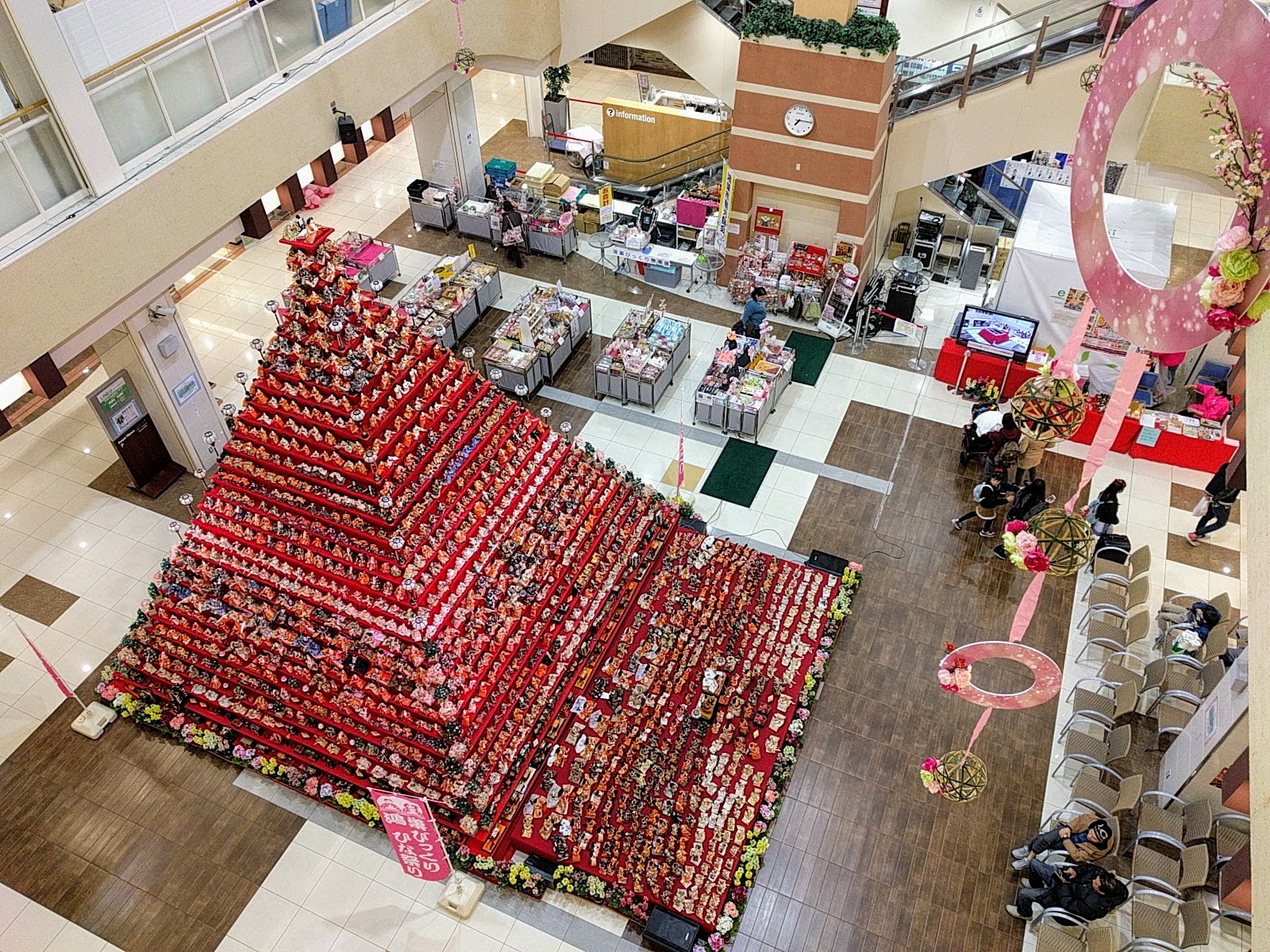
Konosu Bikkuri Hina Matsuri
Konosu has made hina dolls for around 380 years and calls itself doll town, so when the local trade wanted to do somethi…
Chichibu Night Festival
The Chichibu Yomatsuri (秩父夜祭, Night Festival, December 2–3) is one of Japan's three greatest hikiyama festivals — six ma…
Railway Museum
The Railway Museum (鉄道博物館, Tetsudo Hakubutsukan) is one of the world's finest train museums — 28,000 square meters housi…
Moomin Valley Park
Moomin Valley Park (ムーミンバレーパーク) is Japan's only theme park dedicated to Tove Jansson's beloved Moomin characters — a 40-…
Kawagoe Kurazukuri Street
Kawagoe's Kurazukuri Street (蔵造りの町並み) preserves one of Japan's most complete Edo-period merchant districts — over 30 cla…
Omiya Bonsai Village
Omiya Bonsai Village (大宮盆栽村) is a unique neighborhood dedicated entirely to bonsai cultivation — six historic nurseries…

Toki no Kane
The Toki no Kane (時の鐘, 'Bell of Time') is Kawagoe's symbol — a wooden bell tower rising 16 meters above the merchant dis…