
Jodogahama Beach

Photo: くろふね / Wikimedia Commons (CC BY 3.0)
Jodogahama (浄土ヶ浜, 'Pure Land Beach') is one of Tohoku's most scenic coastal landscapes — a protected cove with pure white pebble beaches, crystal-blue water, and dramatic volcanic rock formations covered in wind-sculpted pine trees. The name derives from an 18th-century monk who declared the view resembled Buddhist Pure Land paradise. The white pebbles are composed of rhyolite, a volcanic rock that weathers to brilliant white. The contrast between white stones, blue water, dark pine, and gray volcanic rock creates a striking color palette. The cove is sheltered from rough Pacific waves, making the water remarkably calm and clear. Visitors can walk along the beach, wade in the shallow water, or take sightseeing boats to explore sea caves and rock arches along the coast. The area is part of Sanriku Fukko National Park, established after the 2011 tsunami to support coastal recovery.
Essential Information
Opening Hours
Beach access: open 24/7 (free) | Sightseeing boat tours: 9:00 AM – 4:00 PM (April–October, weather permitting) | Visitor center: 9:00 AM – 5:00 PM
Closed: Beach: never closed | Boat tours: closed November–March and during rough weather | Visitor center: open year-round
Entrance Fee
Beach access: free | Sightseeing boat tour: ¥1,400 (40-minute cruise) | Parking: ¥500
Best Season
Summer (July–August) for swimming and boat tours | Autumn (September–October) for clearer skies and calmer seas | Spring (May–June) for fewer crowds | Morning hours for best photography light on white pebbles
Visit Duration
1–2 hours for beach walk and photography | 2–3 hours with sightseeing boat tour | Combine with Kitayamazaki Cliffs (25km north) for a full Sanriku Coast day
Getting There
Access Information
Insider Guide
Nearby Spots
The closest hidden gems to Jodogahama Beach, by straight-line distance.

Taro Kanko Hotel
Taro built the largest tsunami sea wall in Japan — two and a half kilometres of concrete, ten metres high, in an X acros…
Ryusendo Cave
Ryusendo Cave is one of Japan's three largest limestone caves, famous for its underground lakes of exceptional clarity a…
Kitayamazaki
Kitayamazaki is eight kilometres of cliff on the Sanriku coast, two hundred metres straight down to the water, and it is…
Hashino Iron Mining Site
In 1858 Oshima Takato, working from a Dutch textbook, built a Western-style blast furnace here and produced Japan's firs…
Sanriku Coast
The Sanriku Coast is a 250km stretch of dramatic Pacific coastline running through Iwate Prefecture, characterized by st…
Kamaishi Daikannon
Kamaishi Daikannon is a 48.5-meter tall statue of Kannon (Buddhist goddess of mercy) standing on a peninsula overlooking…
More in Iwate

Mt. Iwate
Mt. Iwate is a 2,038-meter stratovolcano dominating Morioka's skyline, nicknamed 'Nambu Fuji' for its symmetrical cone s…
Koiwai Farm
Koiwai Farm is Japan's largest privately-owned pasture farm, covering 3,000 hectares of rolling hills used for dairy cat…
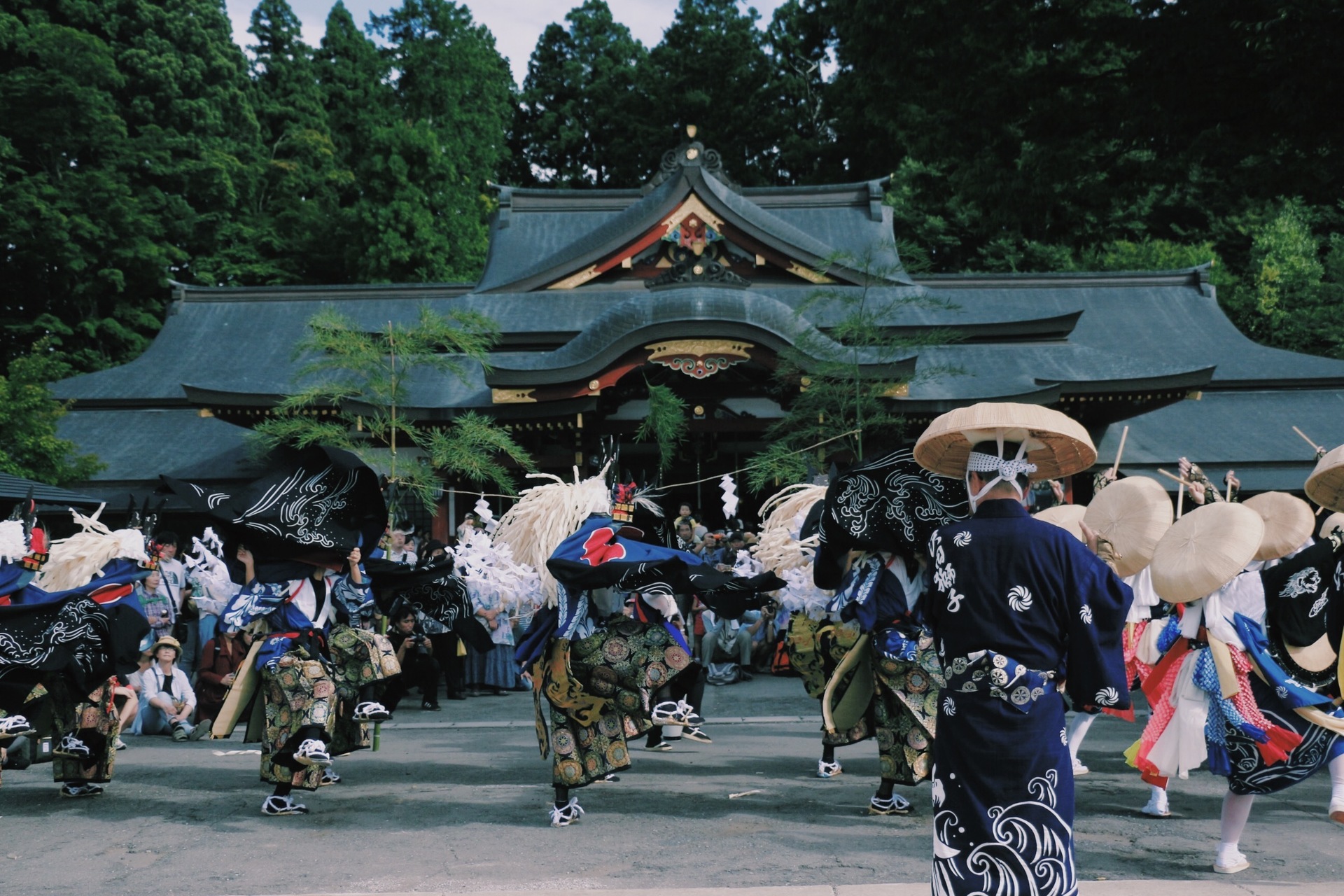
Morioka Sansa Odori
Morioka Sansa Odori is one of Tohoku's greatest summer festivals, held August 1–4 annually. The festival features mass t…