
Iwate Hidden Gems
Iwate is the second-largest prefecture and one of the emptiest, which means the drive between two things you want to see is often longer than either visit. The interior is a broad basin between two mountain ranges, with Morioka at the junction of three rivers. The Pacific side is a ria coastline of drowned valleys and cliffs, which is why the 2011 tsunami ran so high here and why the rebuilt towns now sit further up the slope than the ones they replaced. The history that justifies the journey is Hiraizumi, where the Oshu Fujiwara ran a northern capital in the twelfth century wealthy enough to rival Kyoto and to gild an entire hall; what survives is quiet in a way Kyoto is not. Morioka has kept an ironware trade going since roughly the same period, and the Sanriku Railway, rebuilt after the tsunami, runs the coast as a working local line rather than a sightseeing service.
39 spots
Climate & Best Season
Cold winters inland, cool summers on the coast; the Kitakami basin sees heavy snow. Best in late spring and autumn.
Famous For (Food)
- Wanko soba
- Morioka reimen
- Jaja-men
- Maesawa beef
Signature Sights
- Hiraizumi's Chuson-ji (UNESCO)
- Geibikei Gorge boat ride
- Sanriku coast cliffs
- Hachimantai volcanic plateau
When to Go
Iwate is cold and its season is short. Snow lies deep in the Kitakami basin from December to March, and the Hachimantai plateau road closes over winter, reopening in April. Summers are cool by Japanese standards with coastal highs around 25°C, and the Pacific fog known as yamase can pull that down sharply on the Sanriku side even in August. Sansa Odori fills Morioka in the first week of August. Autumn colour reaches Hachimantai and Geibikei in October, ahead of most of Honshu. Late April into early May is when the north's cherry blossoms finally open.
Getting Around
The Tohoku Shinkansen runs the length of the prefecture — Tokyo to Morioka takes about two and a quarter hours, and Ichinoseki is the stop for Hiraizumi and Geibikei. That spine is fast; everything east of it is not. Hanamaki Airport handles a handful of domestic routes. Reaching the Sanriku coast means either the Kamaishi line over the mountains or the Sanriku Railway along the shore, both slow and infrequent, and Hachimantai has seasonal buses only. Any itinerary combining the coast and the mountains effectively needs a car. Hiraizumi itself is walkable or cyclable from its station, so that section needs nothing at all.
Local Food
Morioka has three noodle dishes and locals will argue about all of them: wanko soba served in endless small bowls, the chewy cold reimen brought by Korean residents after the war, and jaja-men under miso paste. Maesawa beef is raised in the southern basin around Oshu. The Sanriku coast supplies oysters and wakame through the winter and sea urchin in early summer. Nambu ironware is not food, but the kettles are cast in Morioka and Oshu and they do change the water you brew with.
Goishi Coast
The Goishi coast runs about six kilometres around the end of the Massaki peninsula and is named for the beach of flat bl…

Iwate Tsunami Memorial Museum
The Sanriku coast has been hit by major tsunami repeatedly — 1896, 1933, 1960, 2011 — and this museum, opened in Septemb…
Kitayamazaki
Kitayamazaki is eight kilometres of cliff on the Sanriku coast, two hundred metres straight down to the water, and it is…
Hashino Iron Mining Site
In 1858 Oshima Takato, working from a Dutch textbook, built a Western-style blast furnace here and produced Japan's firs…
Hiraniwa Highland
Hiraniwa sits at eight hundred metres on the shoulder of Mt. Hiraniwa, on the boundary between Kuji and Kuzumaki, and it…
Zaimokucho Yoichi
Every Saturday afternoon from early April to late November, four hundred metres of Zaimokucho — a shopping street in cen…
Hachimantai Aspite Line
The Aspite Line runs twenty-seven kilometres across the Hachimantai massif from Gozaisho in Iwate to Toroko Onsen in Aki…
Goshono Jomon Site
Goshono was a large village of the middle Jomon period, occupied from roughly 5,000 to 4,200 years ago, and in July 2021…
Kuji Amber Museum
Kuji amber is around 85 million years old, from the Cretaceous, which makes it substantially older than Baltic amber and…
Tono Furusato Village
Tono is where Yanagita Kunio collected the folk tales that became Tono Monogatari, and this open-air site is where the b…
Michinoku Ajisai-en
A forestry family in the hills outside Ichinoseki planted hydrangeas among their cedar plantation, and kept planting. Th…
Toshichi Onsen
Toshichi sits at 1,400 metres on the flank of Hachimantai, the highest hot spring in the Tohoku region, and the water co…

Osawa Onsen
Osawa is a toji inn — a hot spring where people came to stay for weeks and cook for themselves, not for a night of kaise…
Miyazawa Kenji Memorial Museum
Miyazawa Kenji wrote Night on the Galactic Railroad and a body of poetry and children's stories that has never gone out…

Taro Kanko Hotel
Taro built the largest tsunami sea wall in Japan — two and a half kilometres of concrete, ten metres high, in an X acros…
Tekiseisha
About seventy per cent of Japan's domestically produced lacquer comes from Joboji in Ninohe, tapped by hand from trees i…
Mamebu
Mamebu is a dumpling of wheat dough wrapped around walnut and black sugar, boiled and served in a clear soy-based broth…
Pairon
Jajamen is one of the three noodle dishes Morioka is known for and it is the strangest. Flat warm noodles arrive with a…

Fukuda Pan
Fukuda Pan has been making koppepan — a soft split bread roll — since 1948, originally supplying school lunches, and it…
Iwate Bank Red Brick Building
Tatsuno Kingo designed Tokyo Station, and this is the only building of his left standing in the Tohoku region. It was co…
Sanriku Coast
The Sanriku Coast is a 250km stretch of dramatic Pacific coastline running through Iwate Prefecture, characterized by st…

Mt. Iwate
Mt. Iwate is a 2,038-meter stratovolcano dominating Morioka's skyline, nicknamed 'Nambu Fuji' for its symmetrical cone s…

Jodogahama Beach
Jodogahama (浄土ヶ浜, 'Pure Land Beach') is one of Tohoku's most scenic coastal landscapes — a protected cove with pure whit…
Genbikei Gorge
Genbikei Gorge is a 2km rocky gorge carved by the Iwai River, featuring dramatic boulder formations, rapids, and the fam…
 Illustration — not a photograph
Ichinoseki Mochi Culture
Ichinoseki has Japan's richest mochi (rice cake) culinary tradition, with over 300 documented mochi dishes developed ove…
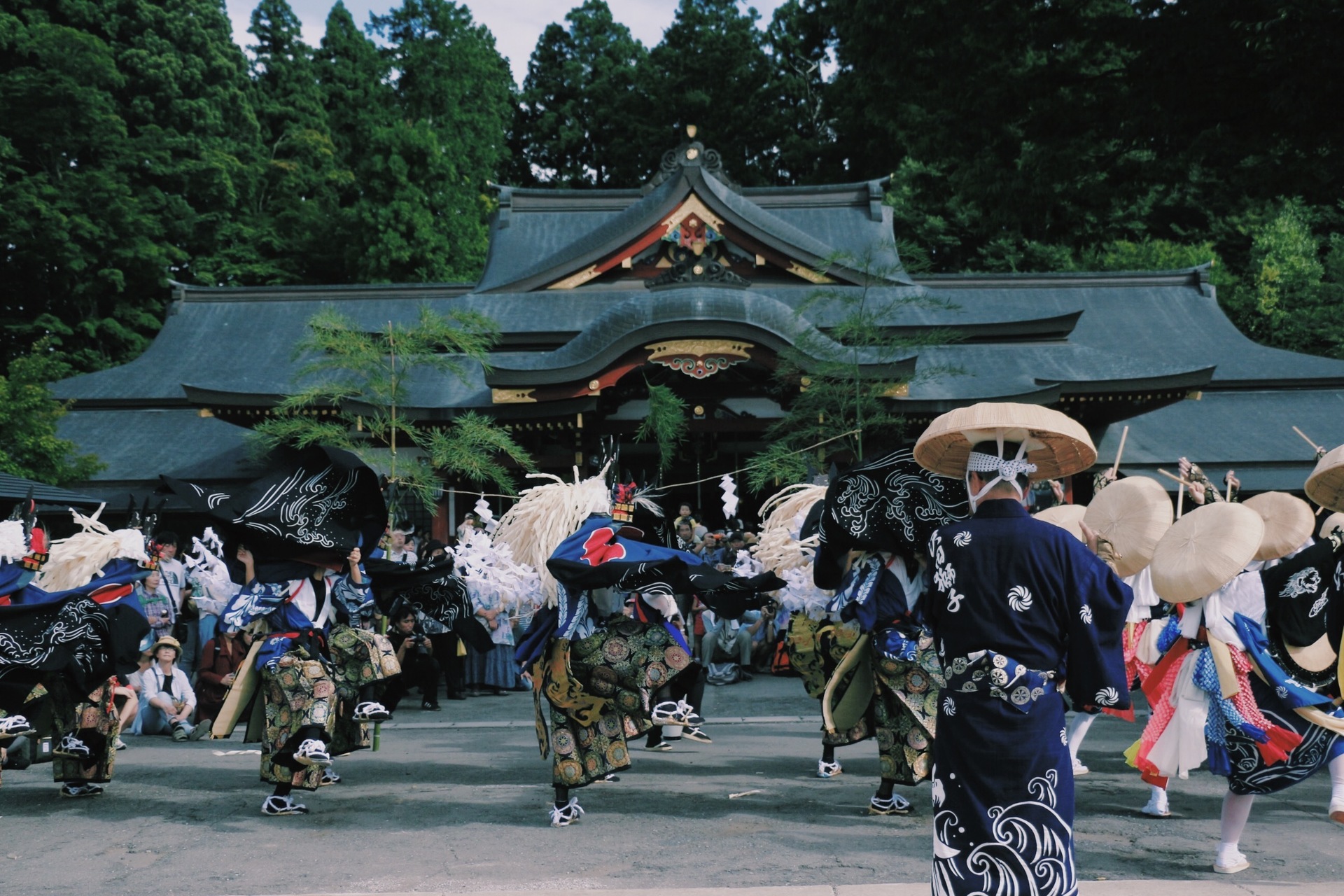
Morioka Sansa Odori
Morioka Sansa Odori is one of Tohoku's greatest summer festivals, held August 1–4 annually. The festival features mass t…
Nambu Tekki
Nambu Tekki (南部鉄器) is traditional iron casting craft originating in Morioka during the 17th century, producing iron teap…
Chusonji Temple
Chusonji Temple is the crown jewel of Hiraizumi's UNESCO World Heritage sites, founded in 850 CE and expanded in the ear…
Takkoku no Iwaya Bishamon-do
Takkoku no Iwaya Bishamon-do is a Buddhist temple built into a cliff cave, dramatically perched on a rock face 15 meters…
Motsuji Temple Garden
Motsuji Temple was once larger than Chusonji, containing 40 temple buildings and 500 monks' quarters during the Northern…
Tono Folktales
Tono is Japan's folklore capital, a rural mountain city famous for preserving traditional tales of kappa (water imps), z…
Kamaishi Daikannon
Kamaishi Daikannon is a 48.5-meter tall statue of Kannon (Buddhist goddess of mercy) standing on a peninsula overlooking…
Koiwai Farm
Koiwai Farm is Japan's largest privately-owned pasture farm, covering 3,000 hectares of rolling hills used for dairy cat…
Hanamaki Onsen
Hanamaki Onsen is a collection of hot spring resort villages in the mountains west of Hanamaki City, including Hanamaki…
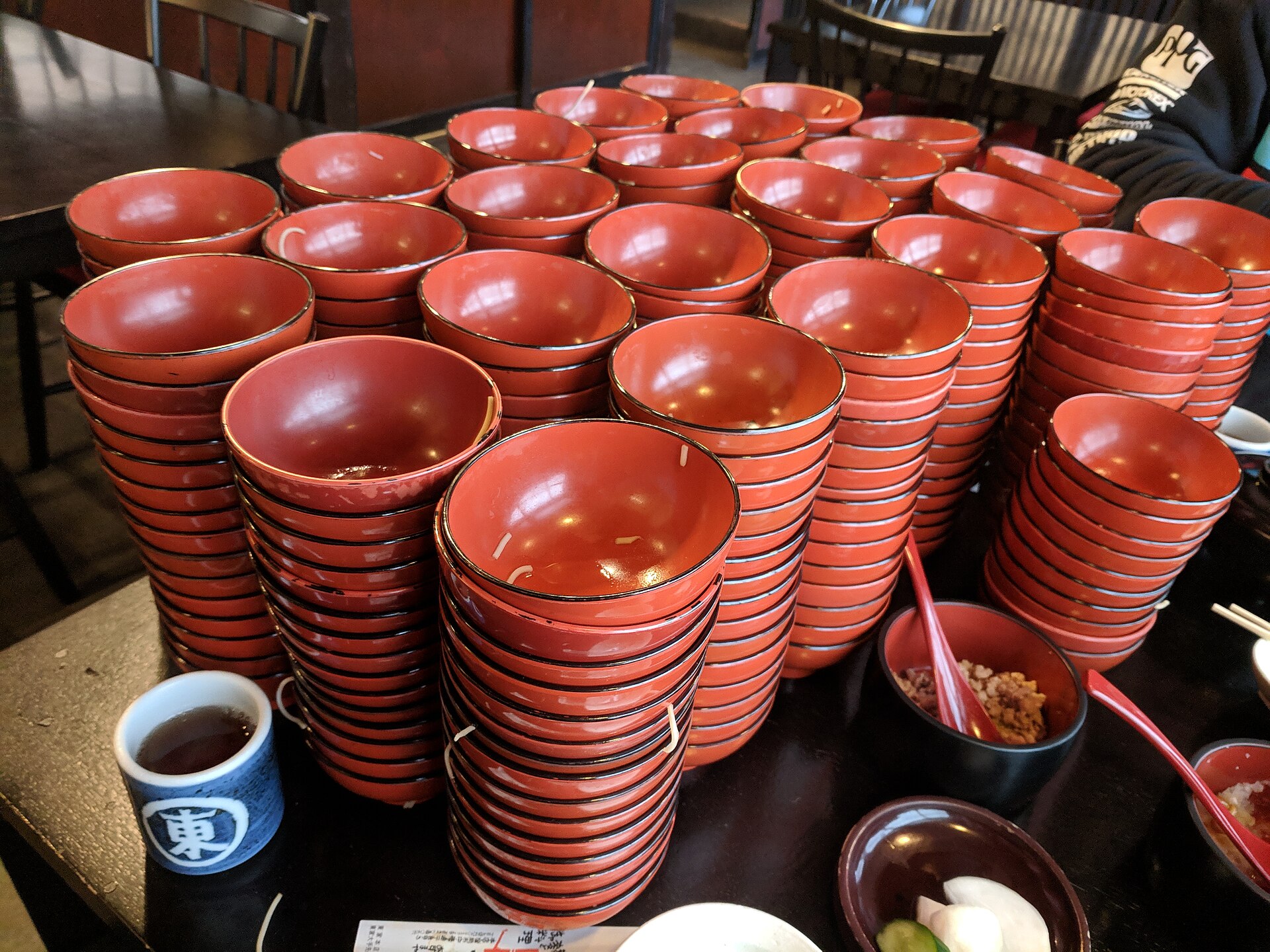
Wanko Soba
Wanko Soba is Morioka's most theatrical dining experience — an all-you-can-eat soba challenge where servers rapidly refi…
Geibikei Gorge
Geibikei Gorge is a narrow limestone gorge carved by the Satetsu River, famous for traditional flat-bottomed boat rides…

Morioka Reimen
Morioka Reimen is one of Morioka's 'Three Great Noodles' — cold buckwheat noodles in icy beef broth, topped with kimchi,…

Morioka Castle Ruins
Morioka Castle (盛岡城跡公園, now Iwate Park) was built in the early 17th century by the Nanbu clan, who ruled the Morioka Dom…
Ryusendo Cave
Ryusendo Cave is one of Japan's three largest limestone caves, famous for its underground lakes of exceptional clarity a…