
Kibi Dango
Researched and written by Hinato
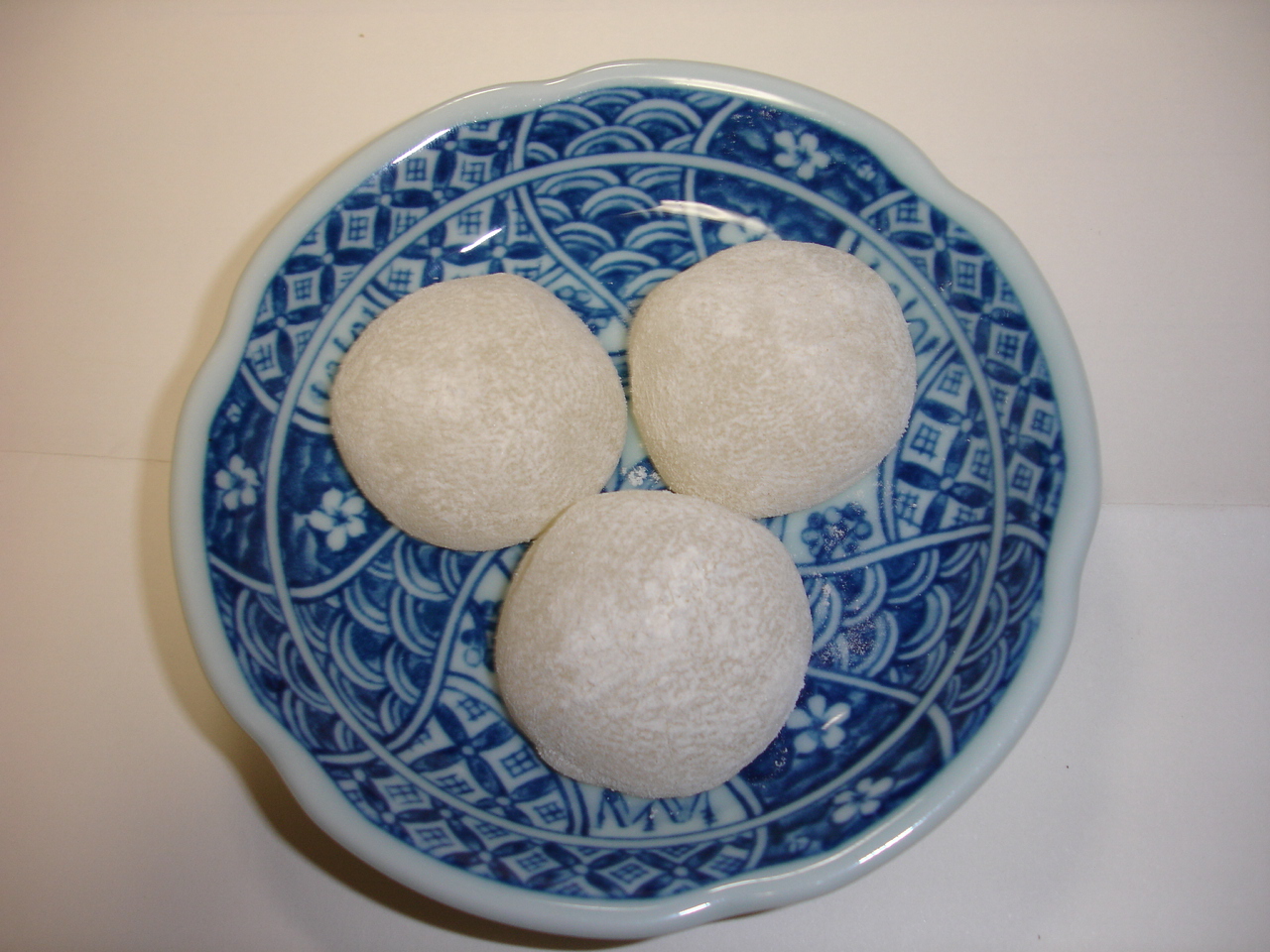
Photo: Unknown author / Wikimedia Commons (CC BY-SA 3.0) · original
Kibi dango (吉備団子) is Okayama's most iconic confection, a soft mochi-like sweet made from millet (kibi) flour, rice, sugar, and starch, with roots tracing to the Momotaro folk legend. According to the tale, Momotaro (Peach Boy) gave kibi dango to his animal companions (dog, monkey, pheasant) before battling demons, and the sweets provided them with strength and loyalty. This legend made kibi dango synonymous with Okayama, and today it's the prefecture's most famous omiyage (souvenir).
Traditional kibi dango has a delicate sweetness and soft, pillowy texture — less sticky than mochi, with a subtle grain flavor from millet. The sweets are typically individually wrapped and bite-sized (3–4cm diameter), making them ideal travel snacks. Modern variations include matcha (green tea), white peach (Okayama's other famous product), and kinako (roasted soybean powder) flavors. Kibi dango's cultural significance extends beyond taste — it symbolizes Okayama's identity, appearing on prefectural mascots, tourism materials, and even as a motif in local architecture and public art.
The Momotaro legend that gives the sweet its cultural weight is one of Japan's best-known folk tales, and Okayama has embraced the connection so thoroughly that the story functions almost as a civic identity — statues, street names, and seasonal festivals around the prefecture all draw on the same imagery of a peach-born hero setting out with his loyal companions. Local historians have long debated how much of the legend actually originated in the region versus being adopted and popularized after the fact, but the association has stuck regardless, and kibi dango is now inseparable from how Okayama presents itself to visitors.
The sweet's understated flavor is deliberate rather than a limitation — millet flour gives a gentler, more rustic taste than the glutinous rice used in standard mochi, and older recipes favored restraint over intense sweetness, reflecting the confection's origins as everyday fare rather than a luxury treat. That plainness is part of why it travels so well as a souvenir: individually wrapped pieces hold their texture for days without refrigeration, and the mild flavor pairs easily with green tea, making kibi dango as common a gift among Okayama residents themselves as among visitors passing through.
Practical details
Opening Hours
Tsurugata Main Store 10:00 AM – 6:30 PM. JR Okayama Station souvenir shops typically 7:00 AM – 9:00 PM.
Closed: Available year-round at major outlets. Individual shop hours vary.
Entrance Fee
¥600–1,200 per box (10–15 pieces). Workshop experience ¥1,500–2,000.
Best Season
Year-round availability; seasonal flavors include white peach (spring–summer), chestnut (autumn), yuzu (winter)
Visit Duration
15–30 minutes for purchase; 60 minutes for optional kibi dango-making workshop
Getting There
Access Information
Available throughout Okayama at train stations, souvenir shops, and dedicated confectionery stores. Tsurugata Main Store: Kita Ward, Okayama City (near Omotechodō Arcade), 10:00–18:30. Price: ¥600–1,200 per box (10–15 pieces). JR Okayama Station's souvenir areas offer multiple brands. Shelf life: 2–3 weeks (individually wrapped). Airport also stocks major brands.
Tips
Brand comparison: Texture is soft but maintains slight resistance, avoiding excessive stickiness. For variety, try their seasonal flavors: white peach (春~夏, spring-summer), chestnut (秋, autumn), and yuzu citrus (冬, winter). Competitor brand Tenmaya Kibi Dango offers slightly sweeter versions with modern flavors like chocolate and strawberry — less traditional but appealing to children.
Freshness note: Unlike many Japanese sweets with month-long shelf lives, premium kibi dango is best within 1 week of production when texture is softest. Check production dates (製造日) on packaging — station shops restock daily, but airport shops may have older inventory. Room temperature storage is fine (no refrigeration needed), but humidity affects texture — humid conditions make them stickier, dry conditions make them firmer.
Cultural experience: For hands-on engagement, some confectioneries offer kibi dango-making workshops (要予約, reservation required) — Tsurugata and Sumiya Honten provide 60-minute classes (¥1,500–2,000) where participants mix ingredients, shape dango, and coat them in kinako. Workshops are in Japanese but demonstrations are visual. This provides deeper appreciation for craftsmanship and makes for a unique Okayama memory beyond passive consumption.
Book Your Stay Nearby
Find accommodation close to Kibi Dango on these trusted booking platforms:
Nearby Spots
The closest hidden gems to Kibi Dango, by straight-line distance.
 takeokahp / CC BY 3.0
Okayama Castle
Little knownOkayama Castle (岡山城, Okayama-jō), nicknamed 'Crow Castle' (烏城, U-jō) for its striking black exterior, stands as one of J…
 Hajime NAKANO from Tokyo, Japan / CC BY 2.0
Okayama White Peaches
Little knownOkayama Prefecture is Japan's premier white peach (白桃, hakutou) producer, cultivating some of the world's most expensive…
 ajari / CC BY 2.0
Achi Shrine
Locally knownAchi Shrine (阿智神社, Achi Jinja) sits atop a forested hill overlooking Kurashiki's Bikan Historical Quarter, offering pano…
 663highland / CC BY-SA 4.0
Ivy Square
Locally knownIvy Square (倉敷アイビースクエア) is a beautifully preserved Meiji-era cotton spinning mill transformed into a hotel, museum, and…
 Oilstreet / CC BY 2.5
Yumeji Seika Museum
Little knownThe Yumeji Seika Museum (夢二生家記念館, Yumeji Seika Kinenkan) preserves the birthplace and childhood home of Takehisa Yumeji…
 eWikiLearner / CC BY-SA 4.0
Angel Road (Shodoshima)
Little knownAngel Road is Shodoshima Island's most romantic natural phenomenon, a mystical sandbar that emerges from the sea twice d…