

Kansai in 5 Days — The Quiet Side of the Golden Route
Kyoto, Nara, Himeji and Osaka, sequenced to miss the crowds
Late May–early June and late September–early November. Workable year-round; avoid the first week of April (peak sakura), Golden Week (Apr 29–May 5) and the Obon week in mid-August.
Roughly ¥95,000–150,000 per person for five days excluding international flights — the wide range is almost entirely accommodation.
First or second visit to Japan for travelers who want the famous sights but not the 11am crush. Comfortable walking 12–18 km per day. Not a good fit for tight mobility needs (Kyoto's east side is stairs and slopes) or for travelers who want a single base with no packing.
Why this route
The standard Kansai week fails for one structural reason: everyone runs it in the same order at the same hours. Tour coaches reach Kyoto's east side around 10am, Nara's deer park at 11am, and Fushimi Inari all afternoon. This route inverts that clock — early starts at the sights that fill up, quiet sub-temples during the peak hours, and food districts in the evening when they are supposed to be busy.
It also splits the region properly. Two nights in Kyoto, one in Nara, one in Kobe or Himeji, one in Osaka, so no day is spent doubling back to the same station. Kansai's rail density makes this cheap and forgiving: nearly every leg here is under an hour, and none of them requires a rail pass to be worth it.
The five days are deliberately unequal. Days 1 and 2 are dense because Kyoto rewards density; Day 3 in Nara is short on purpose, because the point of Nara is being there before nine and after four.
The route on a map
Every mapped stop, coloured by day and numbered in visiting order. Tap a pin to open the spot.
What makes it different
- Fushimi Inari's upper torii tunnels at first light, before the day's first coach arrives
- Daitoku-ji's Zen sub-temples during the hours when Kinkaku-ji is impassable
- Nara Park at 7am, when the deer outnumber the visitors
- Himeji Castle as a morning stop, not the afternoon queue everyone else joins
- Osaka eaten properly: Kuromon at opening, Shinsekai skewers at dusk, Dotonbori after dark
North-west Kyoto — Zen first, gold second
Start in the north-west, where Kyoto's most famous gold pavilion sits ten minutes from its quietest Zen gardens. Do the quiet ones first while everyone else queues, then take the golden view late morning, and finish downtown with market food and a riverside dinner alley.
- 08:301.5–2 hours
Daitoku-ji Temple Complex
KyotoA walled complex of independent sub-temples, several with their own dry gardens and their own admission — the calmest serious Zen in the city.
Insider noteOnly a handful of the sub-temples open to the public and they keep separate hours and separate ¥400–600 tickets; buy each at its own gate rather than looking for a combined one. Daisen-in and Ryogen-in are the reliable openers. Arrive before 9:00 and you will share the gravel with a groundskeeper.
- 10:3045 minutes
Ryoan-ji Rock Garden
KyotoFifteen stones in raked gravel — the most argued-about garden in Japan, and best understood in silence.
Insider noteThe viewing veranda goes from contemplative to shoulder-to-shoulder the moment a coach unloads. Sit on the far right end: it is the only position from which the fifteenth stone hides behind another, which is the whole point of the composition. Fifteen unhurried minutes here beats forty of shuffling.
- 11:4545 minutes
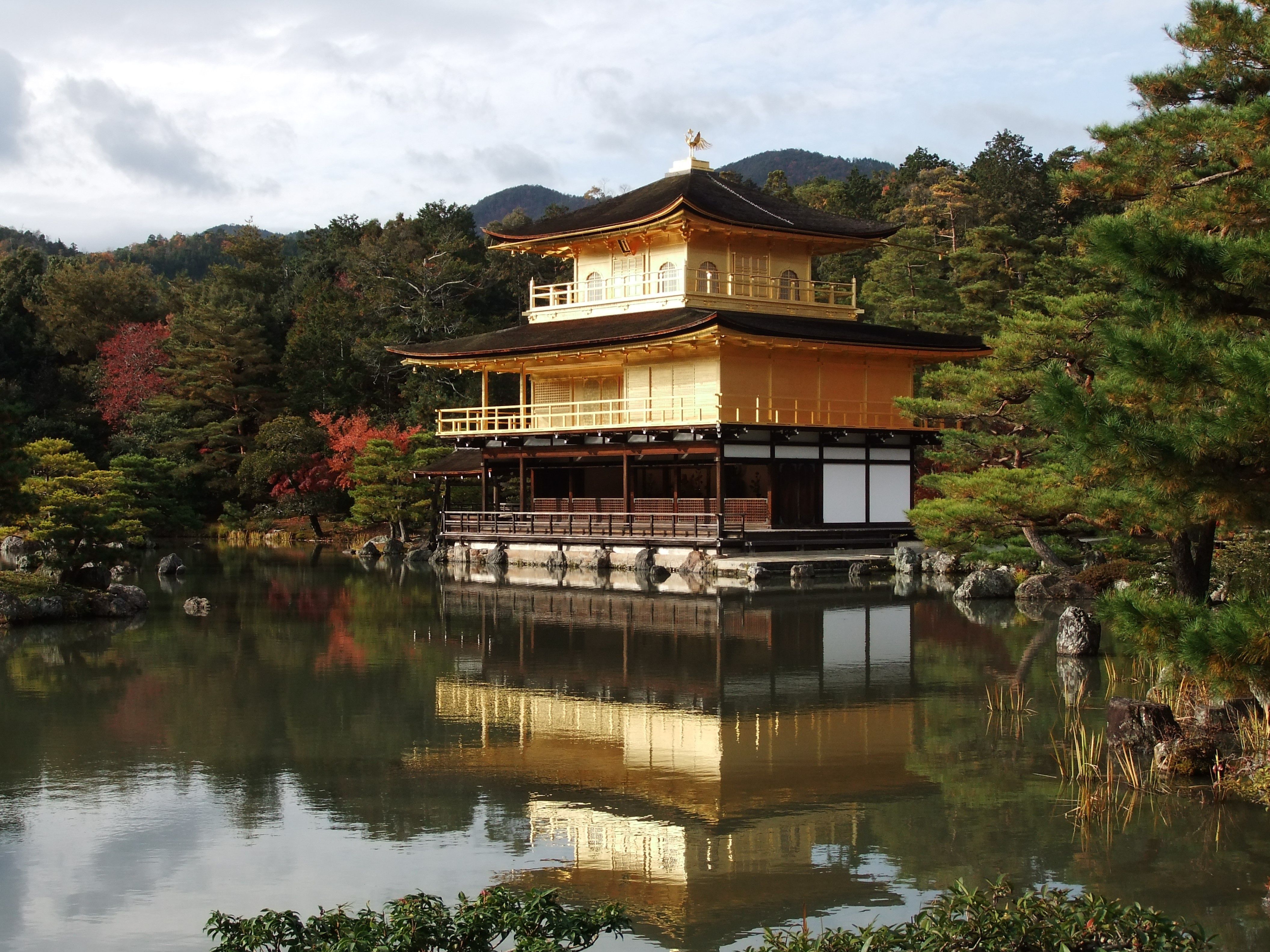
Kinkaku-ji Golden Pavilion
KyotoThe gold pavilion over its reflecting pond. A one-way loop with a single viewpoint — short by design.
Insider noteThere is no way to make Kinkaku-ji quiet; it is a fixed one-way path with one photo position. Accept that and spend twenty minutes, not two hours. Late morning gives you front light on the pavilion; an afternoon visit puts the sun behind it and your photo becomes a silhouette.
- 14:001 hour
Nishiki Market
KyotoA five-block covered lane of pickles, tamagoyaki, knives and dashi — Kyoto's kitchen for four centuries.
Insider noteEating while walking is frowned upon here and several stalls now say so on signs; buy, step to the side of the stall, finish, move on. Go in from the Teramachi (east) end — the west end near Daimaru is where the tour groups enter, and the density drops the further east you get.
- 18:302 hours
Pontocho Alley
KyotoA single lantern-lit lane, one person wide in places, running parallel to the Kamo River — dinner with the city's best atmosphere-per-metre.
Insider notePrices swing wildly between neighbouring doorways. Restaurants displaying an English menu with photographs and a greeter outside are the tourist tier; the ones with a noren, a hand-written board and no greeter are where the price-to-quality flips. If you want the riverside platform seating (May–September), that is a reservation made days ahead, not a walk-in.




- Kyoto Station → Daitoku-ji: city bus 205 or 206, ~35 min. Buses are slow and full; the subway Karasuma line to Kitaoji then a 10-min bus or 15-min walk is the more reliable version of the same trip.
- Daitoku-ji → Ryoan-ji: bus 12 or 59, ~15 min.
- Ryoan-ji → Kinkaku-ji: bus 59, ~8 min, or a flat 25-min walk along Kinukake-no-michi.
- Kinkaku-ji → downtown (Shijo/Karasuma): bus 12 or 205, ~35 min.
Breakfast at the hotel or a Kyoto-style coffee shop (the city's kissaten culture is genuinely good and opens at 7:00). Lunch is Nishiki, grazed rather than sat down. Dinner in Pontocho — budget ¥3,000–6,000 per person for izakaya, ¥12,000+ the moment kaiseki is involved.
Stay near Karasuma-Oike or Shijo-Karasuma rather than at Kyoto Station. Both sit on the subway crossing point, put you inside walking distance of dinner, and cut a 30-minute bus ride off every morning of this itinerary. Station-front hotels are cheaper and you pay the difference back in commuting.
¥5,500–9,000 per person: temple admissions ¥1,700–2,300 (Daitoku-ji sub-temples ¥400–600 each, Ryoan-ji ¥600, Kinkaku-ji ¥500), buses ¥700–900, food ¥3,000–6,000.
Fushimi at dawn, east Kyoto by afternoon
The single highest-return early start in Kansai: Fushimi Inari's torii tunnels before 7am. Then a slow drift north through the east-side temples, and an evening in the old Gion streets when the day-trippers have gone.
- 06:152–2.5 hours
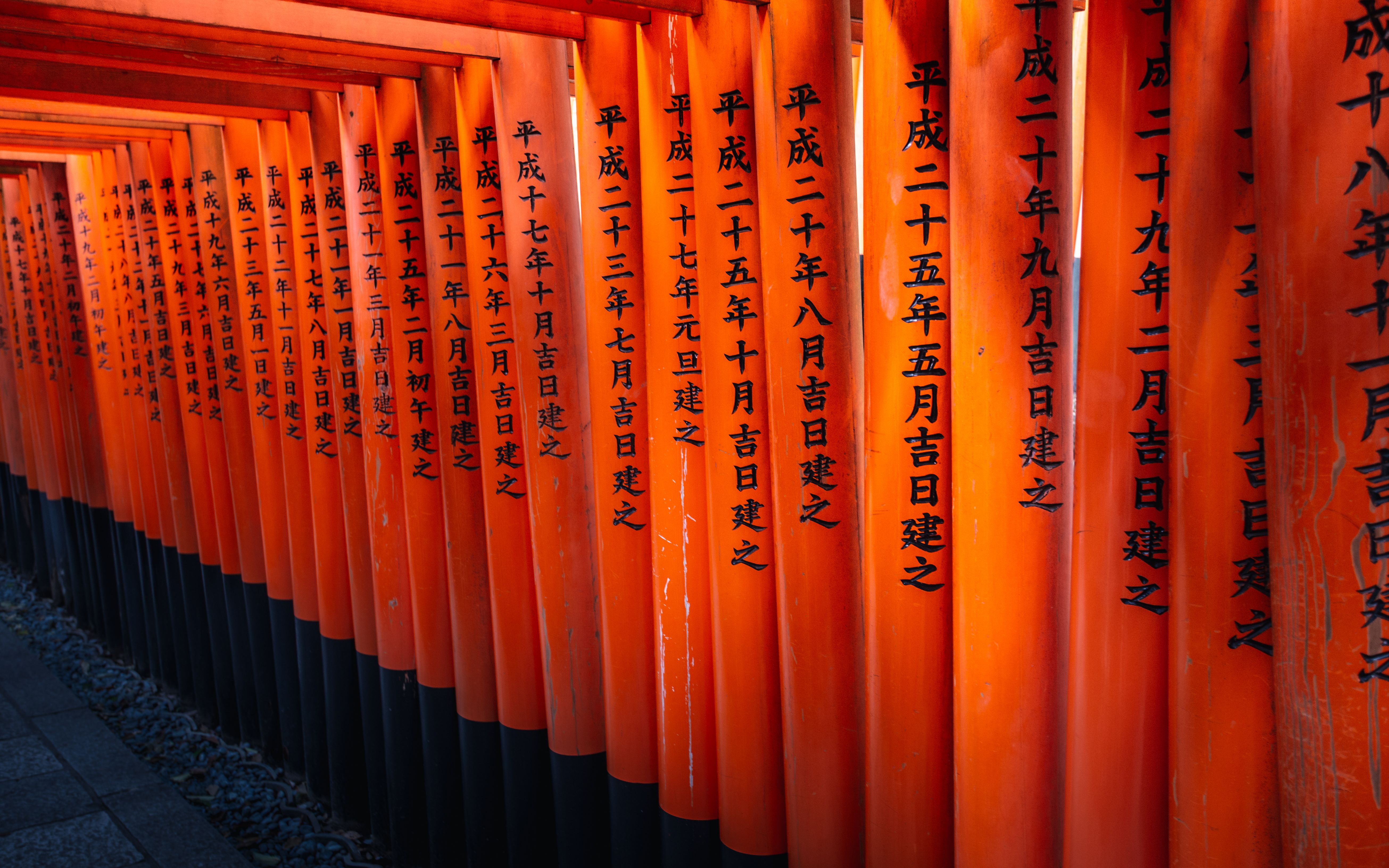
Fushimi Inari Taisha
KyotoThousands of vermillion gates climbing a wooded mountain. Open 24 hours, unstaffed, free — which is exactly why the hour you arrive decides what you experience.
Insider noteAlmost nobody climbs past the Yotsutsuji junction (about 45 minutes up), where the view opens over southern Kyoto. Above that point the crowd thins to near zero at any hour. Go up the mountain, not just through the famous lower double row; the full loop is roughly 2 hours and 4 km with real stairs. Bring water — the vending machines thin out higher up.
- 09:151 hour
Tofuku-ji Temple
KyotoA vast Zen complex whose bridge over a maple ravine is the definitive Kyoto autumn image — and a calm garden the rest of the year.
Insider noteIn late November this becomes one of the most congested places in Japan and the bridge goes one-way with a no-stopping rule. Outside that fortnight it is a quiet, large, genuinely under-visited temple. The Hojo garden's chequerboard moss-and-stone corner is the reason to buy the second ticket.
- 11:001 hour
Sanjusangen-do
KyotoA 120-metre hall containing 1,001 gilded Kannon statues in ranked rows. No photography, and the silence inside is part of the effect.
Insider noteEnter and walk the hall's full length once without stopping, then walk back slowly. The scale only registers on the return. It rains-proofs the itinerary too — it is entirely indoors, so swap it into any slot the weather ruins.
- 14:001.5 hours
Kiyomizu-dera
KyotoThe great wooden stage on its hillside, reached through the steep souvenir lanes of Ninenzaka and Sannenzaka.
Insider noteThe approach lanes are the bottleneck, not the temple. Come up the quieter Chawan-zaka (Teapot Lane) on the south side and descend through Sannenzaka, so you walk against the main flow. Kiyomizu also runs seasonal night illuminations in spring and autumn — if one is on, skip the daytime visit entirely and come after 18:00.
- 17:301.5 hours
Gion District
KyotoWooden machiya teahouses on Hanamikoji and the willow-lined Shirakawa canal — best in the blue hour just before the restaurants fill.
Insider notePrivate alleys off Hanamikoji are posted with no-photography rules and fines are actually issued; keep to the main streets and the Shirakawa canal, which is both prettier and permitted. Do not chase a maiko for a photo — most people in full dress on the street at 17:00 are tourists in rental costume anyway.
- 19:302 hours
Kamo River Noryo-yuka
KyotoSummer only (May–September): restaurants build wooden dining platforms out over the Kamo riverbank, an evening tradition unique to Kyoto.
Insider noteYuka platforms are booked, not stumbled onto — reserve at least a few days ahead, and understand the platform seat usually carries a set-menu minimum. Rain cancels the platform (you get moved indoors), so treat it as a bonus rather than the plan. Outside the season, walk the riverbank between Sanjo and Shijo instead; it is where Kyoto actually relaxes.


- Kyoto centre → Inari: JR Nara line local, 5 min from Kyoto Station, or Keihan line to Fushimi-Inari. First trains run well before 6:00.
- Inari → Tofuku-ji: one stop on the JR Nara line, 3 min.
- Tofuku-ji → Sanjusangen-do: bus 208 or a 20-min walk north.
- Sanjusangen-do → Kiyomizu-dera: bus 100 or 206 to Gojo-zaka, then a 12-min uphill walk.
- Kiyomizu → Gion: walk down Sannenzaka and Nene-no-michi, ~25 min, and the walk is a sight in itself.
Eat breakfast at Fushimi Inari — the approach street's stalls open early for pilgrims and grilled quail or inari-zushi at 8am is the local move. Late lunch near Kiyomizu is the weak link (tourist pricing); a convenience-store or bakery stop is honestly better value. Dinner is the day's spend.
Second night in the same Kyoto hotel — do not move rooms for one night.
¥6,000–11,000: Fushimi free, Tofuku-ji ¥600–1,000, Sanjusangen-do ¥600, Kiyomizu ¥400, local trains and buses ~¥1,000, food ¥3,500–8,000.
Nara — early, slow, and out by dusk
A deliberately short day. Nara's park, Great Buddha and lantern shrine sit within one walkable belt, and the whole thing is transformed by being there before nine. The afternoon is Naramachi's old merchant lanes at a much lower gear.
- 07:301 hour
Nara Park
NaraTwelve hundred free-roaming deer across an open park. At dawn they are calm and dispersed; by midday they are a crowd-fed scrum.
Insider noteBuy deer crackers only if you want to be mobbed — the deer near the vendor stalls have learned to butt and nip. Walk five minutes east toward the Kasuga forest and the same animals behave completely differently. Bow to a deer and many will bow back; it is a conditioned response to the cracker ritual, and it works.
- 08:301 hour
Todaiji Temple
NaraThe world's largest bronze Buddha inside one of the world's largest wooden buildings. The hall opens at 7:30 in summer months.
Insider noteOpening hours shift seasonally (roughly 7:30 in summer, 8:00 in winter) — being at the Nandaimon gate at opening buys you twenty minutes of a near-empty hall, which is the difference between an object and an experience. The pillar with the hole at the base is a school-trip queue by 10:00; do it first or not at all.
- 10:001.5 hours
Kasuga Taisha
NaraThree thousand stone and bronze lanterns along a cedar-forest approach to a vermillion shrine.
Insider noteThe paid inner corridor is where the bronze lanterns hang in the dark, and it is the part most day-trippers skip. The forest approach from the park side is the better of the two paths in — the road approach is a car park. Lanterns are lit only during the Mantoro festivals (early February and mid-August).
- 13:302 hours
Naramachi
NaraEdo-period merchant lanes south of the park — narrow machiya houses, small craft shops, cafés, and almost no coaches.
Insider noteThis is where Nara stops being a day-trip and starts being a town. Several machiya are open as free museum houses; the deep, narrow floorplan (taxed by street frontage) is the thing to notice. Afternoon is the right slot precisely because the shops open late and close by 17:00–18:00.
- 17:0030 minutes
Ukimido Pavilion
NaraA hexagonal pavilion standing on Sagiike pond, best at sunset when the water goes still.
Insider noteFree, unstaffed, and almost always empty at dusk — it is the reason to sleep in Nara rather than day-trip from Kyoto or Osaka. Ten minutes' walk from Naramachi. Bring a mosquito defence in summer.


- Kyoto → Nara: Kintetsu limited express from Kintetsu-Kyoto, roughly 35–45 min with a reserved-seat surcharge, arriving at Kintetsu Nara which is a 5-min walk from the park. The JR Nara line rapid takes about 45 min and lands you a 20-min walk further out. Confirm current timetables.
- Everything in Nara today is on foot — the full loop is about 8 km.
- Leave your bag at the Kintetsu Nara station coin lockers if your hotel will not take it before check-in.
Lunch in Naramachi. Kakinoha-zushi (persimmon-leaf-wrapped sushi) is the local specialty and travels well — buy a box as tomorrow's train breakfast. Dinner options in Nara are thin after 21:00; eat by 19:30.
One night in Nara is the point of this day. The town empties at 17:00 when the day-trippers leave, and the park at dusk is the payoff. Budget business hotels near Kintetsu Nara run ¥8,000–14,000; the historic Nara Hotel is the splurge at several times that.
¥4,500–8,000: Todaiji ¥800, Kasuga inner corridor ¥500–700, Kintetsu express from Kyoto ~¥1,300, food ¥2,500–5,000.
Himeji Castle in the morning, Kobe after dark
One shinkansen hop west to the only original castle keep in Japan that looks like the poster, timed to beat the entry queue. Then back east to Kobe for a compact port city evening and the mountain night view.
- 09:002–2.5 hours
Himeji Castle
HyogoA surviving 17th-century keep, six storeys of white plaster, reached by climbing the actual defensive spiral its designers built.
Insider noteThe keep interior is a stair queue with a numbered-ticket system on busy days, and it is the one part that cannot be rushed — steep wooden stairs, one-way, socks required (shoes go in a bag you carry). Be at the gate at opening. The castle is fully visible from the approach and the free outer grounds, so a queue-averse traveler can honestly skip the interior and lose less than expected.
- 11:301 hour
Kokoen Garden
HyogoNine walled Edo-style gardens on the castle's former samurai residences, immediately west of the moat.
Insider noteBuy the combined castle + Koko-en ticket at the castle gate; it costs barely more than the castle alone. The tea house here serves matcha overlooking the pond garden for a few hundred yen — the cheapest legitimate tea-house experience in this itinerary.
- 12:451 hour
Himeji Tegai Yaki Anagomeshi
HyogoGrilled conger eel over rice, Himeji's own answer to unagi — lighter, and a fraction of the price.
Insider noteAnago is the local station-town specialty and several shops sell it as a boxed ekiben; buying it at the station and eating on the train saves the day's tightest hour. If you sit down instead, do it before 12:00 or after 13:30 — the castle crowd hits the restaurant street in one wave.
- 15:301 hour
Kobe Chinatown (Nankinmachi)
HyogoA dense three-block Chinatown of street food stalls — buta-man, small dumplings, and a lot of queuing locals.
Insider noteThis is a grazing stop, not a dinner. The queue length outside a stall is a reliable quality signal here, and turnover is fast enough that a long line moves in minutes. Keep your appetite: the beef is later.
- 16:451 hour
Kitano Ijinkan
HyogoThe hillside district of Meiji-era Western merchant houses, several open as museums.
Insider notePaying to enter three or four houses gets repetitive; pick one (the Weathercock House is the landmark) and otherwise walk the slopes for free. It is uphill from Sannomiya — 15 minutes up, and the walk down at dusk toward the harbour lights is the better half.
- 19:002 hours
Mt. Rokko Night View
HyogoThe city and bay laid out below from the Rokko ridge — one of Japan's three classic night panoramas.
Insider noteCheck the last downward cable car and bus times before you go up; being stranded on the ridge is the standard mistake, and a taxi down is expensive. Rokko and Maya (Kikuseidai) are two different viewpoints on the same range — Maya is the wider view, Rokko the easier access. Cold on the ridge year-round: bring a layer even in August.


- Kyoto → Himeji: Hikari shinkansen, roughly 50 min (Nozomi is faster but is the service a Japan Rail Pass does not cover). Sanyo/Hanshin limited express is the slow, cheap alternative at ~90 min.
- Himeji Station → castle: a straight 15-min walk up Otemae-dori, or the loop bus.
- Himeji → Kobe (Sannomiya): shinkansen to Shin-Kobe ~15 min, or JR Special Rapid ~40 min for a third of the price — take the rapid.
- Sannomiya → Mt. Rokko: city bus to the cable car base, cable car up, then the ridge bus. Allow 60 min each way and check the final descent time.
Kobe beef is the obvious dinner and the obvious tourist trap in equal measure. A teppanyaki counter at a proper steakhouse runs ¥12,000–25,000 per person at dinner; the same restaurants often serve a lunch course at half that. If the budget matters more than the ceremony, a lunch steak on Day 5 in Osaka is the smarter buy and Nankinmachi covers you tonight.
Sleep in Kobe near Sannomiya, not Himeji — Himeji empties after the castle closes, while Sannomiya puts you 30 minutes from Osaka tomorrow with a real dinner scene tonight.
¥9,000–20,000: shinkansen legs ~¥3,500–5,000, castle + Koko-en ¥1,050, Rokko cable car and buses ~¥2,000, food ¥3,000–12,000 depending on the beef decision.
Osaka — market, old town, neon
The last day is food-shaped. A market at opening, the city's oldest temple, the retro working-class district for skewers, and finally the neon canal that everyone photographs — arriving there at the one hour it actually looks like the photograph.
- 09:301 hour
Kuromon Market
OsakaOsaka's kitchen since 1822 — a covered market of fish, wagyu skewers, fruit and grill-it-in-front-of-you stalls.
Insider noteGo at opening, when the market is still supplying restaurants rather than performing for visitors; by noon it is an eat-while-you-walk theme park with the prices to match. Cash moves faster than cards at the older stalls. Eat standing at the stall you bought from — that is the etiquette here.
- 11:001 hour
Shitennoji Temple
OsakaFounded in 593 CE — Japan's first state-sponsored Buddhist temple, rebuilt many times, laid out in its original 6th-century plan.
Insider noteThe outer grounds are free and the paid inner precinct and garden are worth the few hundred yen only if you care about the layout. The 21st of each month brings a large flea market across the grounds — antiques, tools, kimono — and if your day 5 lands on a 21st, reshape the morning around it.
- 13:001.5 hours
Shinsekai & Tsutenkaku Tower
OsakaA 1912 'new world' district frozen in mid-century signage, built around the Tsutenkaku tower — and the home of kushikatsu.
Insider noteThe one rule that matters: no double-dipping in the communal sauce pot. Use the cabbage to scoop if you want more. Shinsekai reads as seedy in photos and is entirely fine by day; it genuinely gets rougher late at night, which is another reason it belongs in this afternoon slot rather than the evening one.
- 13:30included above
Kushikatsu Deep Dive
OsakaDeep-fried skewers, ordered a few at a time, in the district that invented them as workers' food.
Insider noteOrder in rounds of three or four rather than a set — the point is to keep eating what comes out hottest. Beef, quail egg, lotus root and asparagus are the calibration order. A counter seat beats a table; you get them faster.
- 17:301.5 hours
Dotonbori
OsakaThe canal of mechanical crabs, running men and reflected neon. Loud, commercial, and unmissable exactly once.
Insider noteThe photograph everyone wants is taken from Ebisu-bashi bridge looking north, and it works from about 30 minutes after sunset, when the sky still holds colour behind the signs. Full dark flattens it. The restaurants directly on the canal are the weakest food in Osaka — eat one street back.
- 20:001.5 hours
Floating Garden Observatory Nighttime Visit
OsakaTwo towers joined by a floating open-air roof garden 170 m up — the best-designed viewpoint in the city.
Insider noteThe escalator crossing the void between the towers is half the experience, so take it up rather than the lift. The rooftop deck is open-air and genuinely cold and windy at night. Buy tickets online for a time slot if you are going on a weekend; the ground-floor queue is where the hour disappears.


- Kobe (Sannomiya) → Osaka (Namba): Hanshin line direct, ~40 min, or JR to Osaka Station ~25 min then subway.
- Namba → Shitennoji: subway Midosuji to Tennoji, 6 min, then a 10-min walk.
- Tennoji → Shinsekai: 10-min walk — they adjoin.
- Shinsekai → Dotonbori: subway Midosuji, 5 min.
- Namba → Umeda: subway Midosuji, 9 min. This one line covers almost the entire day.
Osaka is the one city on this route where the plan should be 'eat five small things, not two big ones'. Kuromon in the morning, kushikatsu in the afternoon, takoyaki from a street window as a snack, okonomiyaki as the sit-down dinner one street back from the canal.
If you fly out of Kansai International, sleep in Namba: the Nankai Rapi:t runs airport-direct in about 38 minutes from there. For an Itami departure, Umeda is the better base.
¥6,000–10,000: subway day pass ~¥820, Umeda Sky ¥2,000, Shitennoji inner precinct ¥300–500, food ¥3,000–6,000.
Book before you leave home
- 1Accommodation for the Nara night first — the town has far fewer rooms than Kyoto and it is the night that makes this route work.
- 2Kyoto hotel for two nights near Karasuma-Oike or Shijo, 2–3 months ahead for October–November and late March–early April.
- 3A Pontocho dinner reservation if you want riverside platform seating (May–September) — several days ahead minimum.
- 4Kobe beef teppanyaki, if you are doing it: reserve, and check whether the lunch course is the same beef at half the price.
- 5Nothing else needs pre-booking. Do not buy a national Japan Rail Pass for this route — every leg here is short-distance, and the pass will not come close to breaking even.
- 6Download an offline map of Kyoto's bus network. The buses are the one part of Kansai transport that punishes improvisation.
Where the money goes
| Accommodation (4 nights)Business hotels at the low end; a ryokan night or the Nara Hotel pushes the top. | ¥40,000–90,000 |
| Rail & local transportIncludes the Kyoto→Himeji and Himeji→Kobe legs; no rail pass. | ¥12,000–15,000 |
| AdmissionsTemples, castle, gardens, two viewpoints. | ¥6,000–8,000 |
| FoodAssumes one splurge meal; drops sharply without the Kobe beef dinner. | ¥25,000–45,000 |
| ContingencyTaxis, an unplanned museum, weather changes. | ¥10,000 |
Per person unless a line says otherwise. Excludes international flights.
Shorter, longer, or a different season
- Cutting to 4 days: drop Day 4 and treat Himeji as a half-day round trip from Kyoto, sleeping in Kyoto three nights. You lose Kobe, which is the least distinctive day.
- Cutting to 3 days: Kyoto Days 1–2 plus Nara as a day trip. Do not attempt Osaka and Kyoto in the same day; the transit is easy but the days are tonally incompatible.
- Extending to 7: add Koyasan (a night in a temple lodging, reached from Namba) and either Kinosaki Onsen or Amanohashidate on the Sea of Japan side — both are 2.5–3 hours from the core and both need their own overnight.
- Travelling in deep winter: swap the Mt. Rokko night view for Kobe's harbour front. The ridge is genuinely cold and the last-bus risk rises.
- Travelling with children: Day 2's dawn start is unrealistic. Move Fushimi Inari to 16:00–18:00 instead, when the day crowd thins again and the lower gates light up.
Journey times, fares and opening hours come from each spot's access information and are typical rather than guaranteed. Timetables, seasonal closures and volcanic alert levels change — confirm the legs your day depends on. Last revised 2026-07-24.
Related Links
Spots on this route
Other itineraries
- Kyushu in 6 Days — Volcano, Onsen and the Christian Coast
- Japan Alps to the Sea of Japan — 5 Days
- Tohoku in 5 Days — The Quiet North
- The Golden Route in 7 Days — Tokyo, Hakone, Kyoto, Osaka
- 5 Days in Kyushu — Volcanoes, Sand Baths and the Myth Coast
- 10 Days Beyond the Golden Route — San'in, Setouchi and Shikoku