
Hiking
Trails, mountains, and outdoor adventures
52 spots
Hiking spans everything from an hour's walk to a waterfall to multi-day treks across the Japan Alps, and the infrastructure reflects that range — well-marked, gently graded trails aimed at casual visitors exist alongside serious alpine routes with mountain huts, chain-assisted scrambles and routes that are genuinely dangerous without the right gear and season. Trail difficulty is not always obvious from a spot's description alone, so checking recent trail condition reports matters more here than for most other categories.
Season is the biggest single factor. Most of the higher mountain trails — the Alps, Tohoku's peaks, Hokkaido's national parks — are only realistically hikeable between roughly June and October; outside that window they carry snow, ice or require winter mountaineering skill most visitors do not have. Mount Fuji's official climbing trails are open only during a short summer season, typically early July to early September, and are officially closed the rest of the year regardless of weather. Lower-elevation and coastal trails are usable year-round but can still be muddy or exposed depending on rain and wind.
Mountain huts (yamagoya) on multi-day routes typically require reservations, particularly on peak summer weekends, and many charge for both bunks and meals. Water sources, trail marking density and mobile signal all thin out quickly past the trailhead, so route planning tends to matter more here than for a typical day-trip nature spot. The Japan Alps (Nagano, Gifu, Toyama), Tohoku and Hokkaido's national parks carry the country's most serious hiking; Kyushu and the Kansai hills offer gentler year-round options.
Shiraito Falls (Itoshima)
High on the granite flanks of Mt. Raizan (955m), Shiraito Falls drops 24 meters in a single white ribbon into a deep eme…
Amago Falls
In the mountain river valleys of Asakura, the Amago River has carved a narrow gorge where the water drops through a seri…
Homan-zan Jinguji
Homan-zan (829m) has been sacred simultaneously to both Buddhism and Shinto since the 8th century — a mountain deity-hab…
Higashimatsuura Peninsula Cycling Route
The Higashimatsuura Peninsula, north of Karatsu, is a 40km circuit of dramatic coastal scenery accessible by bicycle — r…
Hiratani Valley
Hiratani Valley, in the mountains between Ureshino and Nagasaki, follows the upper Hiratani River through a narrow gorge…
Sefuri-san Mountain
Sefurisan (1,077m), on the border between Saga and Fukuoka prefectures, is the highest peak in northern Kyushu and carri…
Kumagawa River Rafting
The Kumagawa River, flowing through the mountains of southern Kumamoto, is called 'Japan's three fastest-flowing rivers'…
Kikuchi Valley
Kikuchi Valley is a 4km walking trail following the Kikuchi River through a gorge of broadleaf forest, designated as one…
Beppu Ropeway to Mt. Tsurumi
Mt. Tsurumi (1,375m) overlooks Beppu from the west, and the Beppu Ropeway ascends 800 meters in 10 minutes to an observa…
Mt. Yufu Hiking
Mt. Yufu (1,584m) dominates Yufuin's skyline with its distinctive twin peaks (東峰 East Peak 1,583m and 西峰 West Peak 1,584…
Yakushima Ancient Cedar Forest
Yakushima is a subtropical island 60km off Kagoshima's coast, covered in primeval forest where Japanese cedars (杉, sugi)…
Ebino Kogen Plateau
Ebino Kogen (えびの高原, 1,200m elevation) is a volcanic highland plateau in the Kirishima range, featuring a collection of c…
Minoo Park
Minoo Park (箕面公園) is a forested valley from central Osaka, famous for Minoo Falls (33m waterfall) and autumn maple color…
Day Trip to Mount Koya
The cable car climbing Mount Koya tilts at 26 degrees — steep enough that my feet pressed hard against the floor as we a…
Mt. Fuji Yoshida Trail
The Yoshida Trail is the most popular of the four official Mt. Fuji climbing routes, accounting for over 60% of all summ…
Shosenkyo Gorge
Shosenkyo Gorge, carved by the Arakawa River through the granite mountains north of Kofu, stretches 5km through vertical…
Aokigahara Forest
Aokigahara, also known as the 'Sea of Trees' (樹海, Jukai), is a dense virgin forest that spreads across 30 square kilomet…
Mount Hakusan White Mountain
Mount Hakusan (白山, 'White Mountain', 2,702m) is one of Japan's three sacred mountains alongside Mount Fuji and Mount Tat…
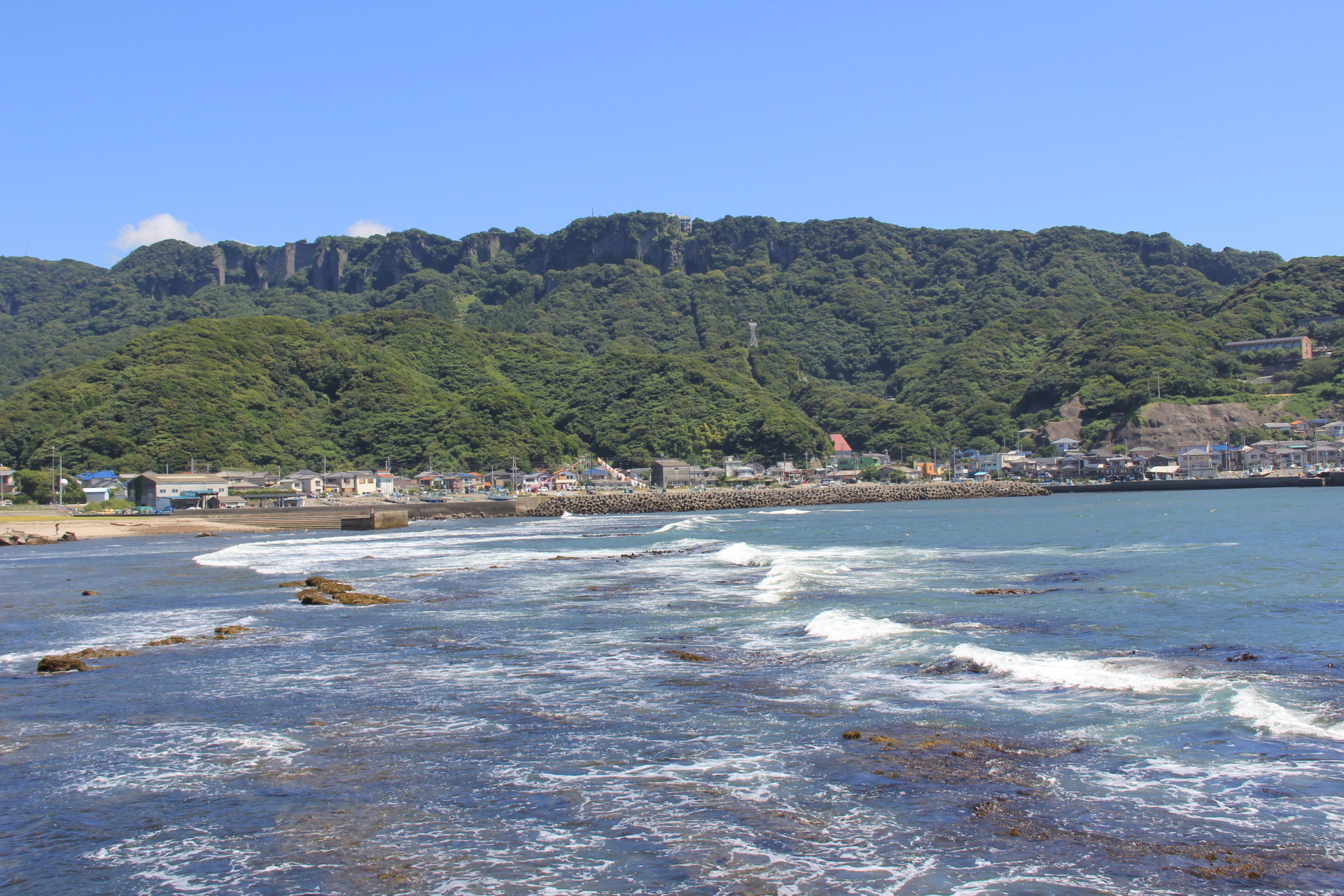
Nokogiriyama
Nokogiriyama (鋸山, 'Saw Mountain,' 329m) earned its name from the jagged cliff face created by 300 years of stone quarryi…
Mt. Daisen
Mt. Daisen (1,729m) rises in near-perfect symmetry above the western Tottori plains, earning the nickname 'Mount Fuji of…
Mount Ishizuchi
Mount Ishizuchi (石鎚山, 1,982m) is the highest peak in western Japan and one of Japan's seven sacred mountains, a Shugendo…

Mt. Tsurugi
Mt. Tsurugi (剣山, 'Sword Mountain,' 1,955m) is Shikoku's second-highest peak, featuring alpine meadows, dwarf bamboo slop…
Michinoku Coastal Trail
The Michinoku Coastal Trail stretches over 1,000 kilometers along the Pacific coast from Aomori Prefecture through Iwate…
Kumano Magaibutsu
Two figures are cut into a rock face in the hills of the Kunisaki peninsula: a Dainichi Nyorai about 6.7 metres high and…
Tadewara Marsh
Tadewara is one of the largest intermediate marshes in Japan, sitting at about 1,000 metres on the Handa highland at the…
Futagoji
Futagoji sits at the centre of the Kunisaki peninsula, on the slopes of Mount Futago, which is the volcanic cone the who…
Ebino Kogen
Ebino Kogen is a plateau at around 1,200 metres in the Kirishima volcanic range, and it is the base for the climb up Kar…
Daisekirinzan
The limestone at the northern tip of Okinawa was laid down about two hundred and fifty million years ago and has weather…

Mount Ibuki
Ibuki stands 1,377 metres on the Shiga and Gifu border, alone rather than in a range, which is why it takes the full for…
Azuchi Castle Ruins
Oda Nobunaga built Azuchi between 1576 and 1579 on a hill over Lake Biwa and it stood for three years. The keep was seve…
Tomogashima
Tomogashima is a group of uninhabited islands in the strait between Wakayama and Awaji, and from the 1890s the army fort…
Kamikura Shrine
Kamikura is where, in the Kumano tradition, the gods first came down to earth — before Hayatama, before Hongu, before an…
Akame 48 Waterfalls
Forty-eight is a figure of speech meaning a great many; there are more than twenty named falls along this gorge, strung…

Magose Pass
Magose is the most walked section of the Kumano Kodo Iseji, and the reason is the paving. Two kilometres of stone laid t…
Kasugayama Castle Ruins
Kasugayama was Uesugi Kenshin's castle, and it is a mountain rather than a building. Nothing above ground survives excep…

Naena Falls
Naena Falls drops 55 metres off a wall of columnar basalt on the Sekikawa river, right on the border between Niigata and…
Karikomi Pond
A pond four hundred metres around and four and a half metres deep, at the foot of Mt. Gankyoji in the Hakusan national p…
Awamata Falls
Awamata is a broad shallow fall about thirty metres high on the upper Yoro river, and it is unlike most Japanese waterfa…

Oiwa Shrine
Mt. Oiwa is described in local record as the oldest sacred mountain in the old province of Hitachi, and the shrine at it…
Ryuokyo Gorge
Around twenty-two million years ago this was seabed, and undersea volcanism laid down the rock that the Kinugawa has sin…
Hacchonoyu
There are four inns in the Okukinu hot spring group, at the head of the Kinugawa valley inside Nikko National Park, and…
Usui Third Bridge
The Usui Third Bridge is a four-arch brick viaduct finished in 1892, 91 metres long and 31 metres high, and it is the la…
Mt. Iwabitsu
Mt. Iwabitsu is 802 metres of broken rock rising straight out of the Agatsuma valley, with a sheer south face that makes…
Kinojo
Kinojo sits on a 397-metre ridge above the Kibi plain and is an ancient mountain fortress of a type built in western Jap…
Nageiredo
Nageiredo is a small hall wedged into a cliff hollow on Mt. Mitoku, held up on stilts of unequal length, and it is a Nat…
Karakama Shrine
Karakama Shrine is reached by squeezing through a gap in a rock. The approach climbs a steep flight of stone steps into…
Gassantoda Castle
Gassantoda was the seat of the Amago, one of the great warlord houses of western Japan, and it is generally counted amon…
Ura-Hikimi Gorge
Hikimi is the mountainous inland part of Masuda, up against the Hiroshima border, and the gorge system there splits into…
Omogo Gorge
Omogo is the gorge at the foot of Mt. Ishizuchi, the highest mountain in western Japan, cut into granite so that the riv…
Iwayaji
Iwayaji is the forty-fifth station of the Shikoku pilgrimage and one of the hardest — the walk up from the road is twent…
Nakatsu Gorge
Nakatsu is the Niyodo gorge you can walk into. A 1.3-kilometre path runs up the ravine from the entrance to Uryu Falls,…
Jododaira
The Bandai-Azuma Skyline climbs from Fukushima City into the Azuma volcanic range and tops out at Jododaira, 1,600 metre…