
Esta página aún no ha sido traducida y se muestra en inglés.
Daizenji Taisekiji Temple
Investigado y escrito por Hinato
Prefectura de Yamanashi · Koshu
35.6397°N, 138.8828°E
Daizenji Taisekiji Temple, nestled in the Katsunuma wine valley, has an unusual claim: it houses a 1,200-year-old wooden statue of Yakushi Nyorai (Medicine Buddha) holding a bunch of grapes instead of the traditional medicine jar. This unique iconography links the temple to Katsunuma's ancient grape cultivation history — grapes have been grown in this valley since the 8th century, predating Western wine techniques by over a thousand years. The temple has become a pilgrimage site for wine industry workers who pray for good harvests.
The temple grounds feature a massive wisteria trellis (estimated 1,200 years old, matching the temple's founding) that blooms in late April, creating a purple canopy over the entire courtyard. Autumn brings equally spectacular foliage — the temple's Japanese maple trees (over 100 specimens) turn crimson in mid-November, and the temple operates a small café serving grape juice and grape-based sweets during the grape harvest season (September–October).
Información esencial
Horario
9:00 AM – 4:30 PM
Cerrado: Open year-round
Entrada
¥500 (includes main hall and treasure hall)
Mejor temporada
Late April–early May for wisteria bloom (200 sq meter canopy); mid-November for autumn maple foliage; September–October for grape harvest café
Duración de la visita
1 hour for main hall, wisteria trellis, and grounds; extend to 2 hours combined with nearby winery visits
Cómo llegar
Información de acceso
Daizenji Taisekiji Temple: 2438 Katsunuma-cho Katsunuma, Koshu City. Near Katsunuma-Budokyo Station (JR Chuo Line). Entry: ¥500 (includes main hall and treasure hall). Wisteria bloom: late April. Autumn foliage: mid-November. Visit duration: 1 hour.
Guía privilegiada
Medicine Buddha with grapes: The statue is displayed behind glass and designated an Important Cultural Property. The connection between Buddhism and viticulture is unique to this region — farmers traditionally prayed to this Buddha for grape harvest success. Photography inside the hall is prohibited.
Wisteria bloom season: The ancient wisteria trellis covers approximately 200 square meters of the temple courtyard. Peak bloom occurs late April to early May (approximately April 25–May 5). The purple clusters hang 50–100cm long, creating a canopy that filters sunlight into purple-tinted light. Arrive at opening (9:00) on weekdays for minimal crowds.
Autumn foliage: The color contrasts with the temple's white walls and dark wooden architecture. The temple operates a temporary café (November only) serving grape soft-serve ice cream (¥500) and Koshu wine by the glass (¥600–800) from local wineries. The café seating overlooks the maple-covered garden.
Grape harvest timing: Several wineries within walking distance (Marufuji Winery, Kurambon Wine) offer tastings.
Lugares cercanos
Los lugares secretos más cercanos a Daizenji Taisekiji Temple, por distancia en línea recta.
Kofu Wine Wineries
Little knownKofu Basin in central Yamanashi is Japan's premier wine-producing region, responsible for 40% of domestic wine productio…
 Naokijp / CC BY-SA 4.0
Erin-ji Temple
Little knownErin-ji Temple, located in the mountains east of Kofu, served as the family temple of the Takeda clan during the Warring…
 Ilustración: no es una fotografía
Yamanashi Fruit Picking
Little knownYamanashi Prefecture is Japan's fruit basket — the nation's top producer of grapes and peaches, and second for cherries.…
 1i1ian / CC BY-SA 4.0
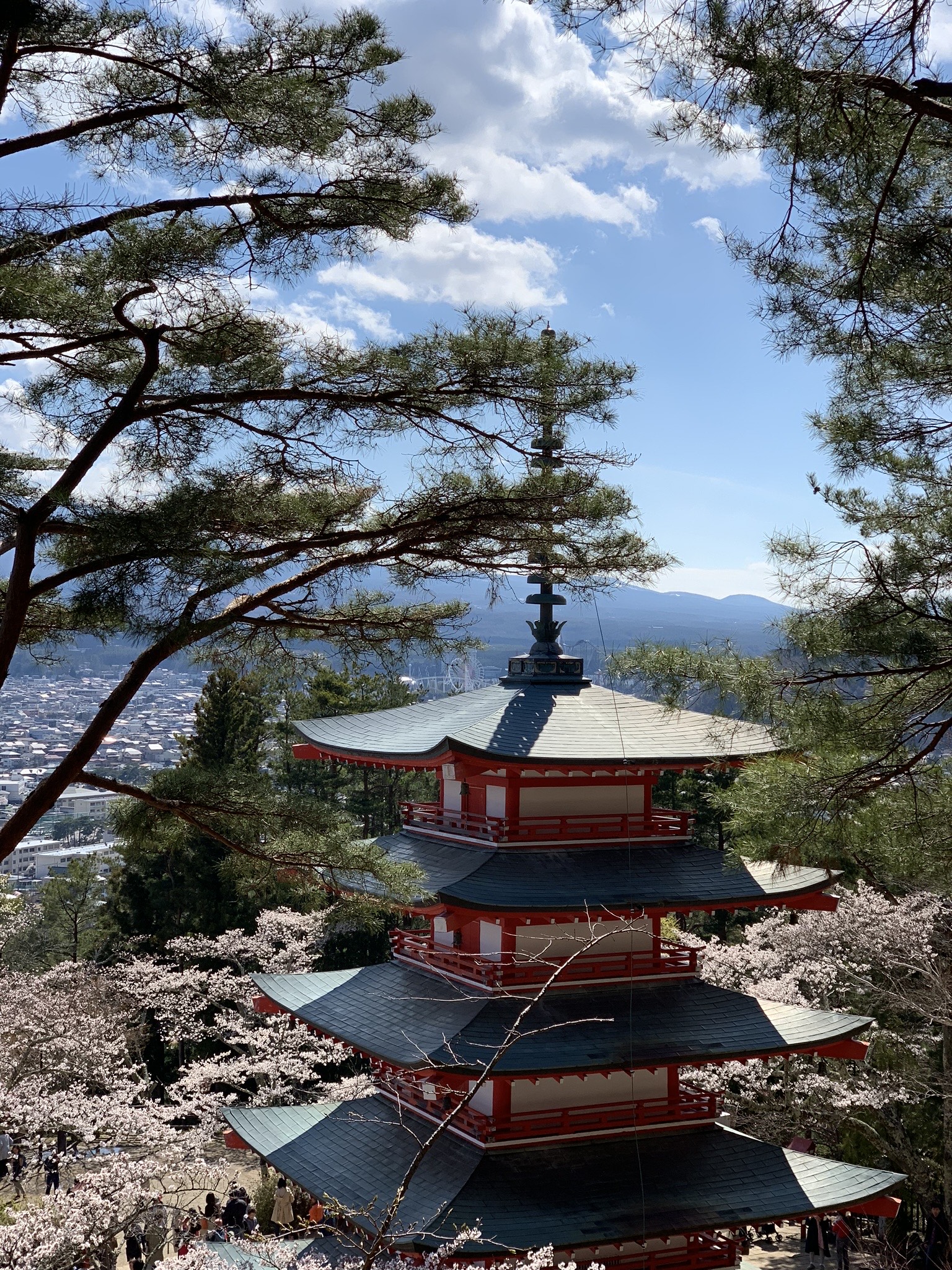
Chureito Pagoda
FamousThe Chureito Pagoda, a five-story vermillion structure perched on the hillside above Fujiyoshida City, offers the postca…
Lake Kawaguchiko
FamousLake Kawaguchiko is the most accessible and developed of the Fuji Five Lakes, offering the clearest reflection views of…
Momiji Kairo Maple Corridor
Little knownThe Momiji Kairo (紅葉回廊, 'Maple Corridor') is a 150-meter pathway along the northern shore of Lake Kawaguchiko lined with…
Más en Prefectura de Yamanashi
 Sakaori ( talk ) / CC BY-SA 3.0
Lake Saiko Bat Cave and Forest
Little knownLake Saiko, the fourth-largest of the Fuji Five Lakes, remains the quietest and least developed — no lakeshore hotels, m…
 くろふね / CC BY 3.0
Maizuru Castle Park
Little knownMaizuru Castle Park occupies the grounds of historic Kofu Castle (舞鶴城), built in 1583 by Toyotomi Hideyoshi's vassal and…
Lake Shojiko and Lake Motosuko
Little knownLake Shojiko (西湖) and Lake Motosuko (本栖湖) are the westernmost of the Fuji Five Lakes, connected by a 2km walking path th…