
Tanesashi Coast
Researched and written by Hinato

Photo: Gfievet / Wikimedia Commons (CC BY-SA 4.0) · original
The unusual thing about Tanesashi is that the grass runs to the rocks. Natural turf — grazed by horses for centuries, which is why it is turf and not scrub — comes right down to the shoreline and stops at the tide line, so that you walk out of a meadow onto black rock with the Pacific in front of you. There is nothing else quite like it on the Japanese coast, and it is part of the Sanriku Fukko National Park.
At the northern end sits Kabushima, formerly an island and now joined to the shore, which is a designated national natural monument for a specific reason: it is a black-tailed gull breeding colony, some thirty thousand birds, nesting on the ground around a shrine, at head height, without any regard for the people walking through them. From February to August the noise is continuous. Umbrellas are provided, and you should use one.
The grazing history behind the turf is not incidental — horses were worked along this coast for generations, and the low, dense grass that resulted is ecologically distinct from the scrub and brush that colonizes most undisturbed Japanese coastline left to its own devices. That distinction is why the area was folded into Sanriku Fukko National Park rather than left as an ordinary stretch of shore, and why walking it feels closer to crossing open pastureland in the British Isles than to hiking a typical Japanese coastal trail. The black pillow lava and jointed volcanic rock exposed where the grass ends adds a second layer of interest for visitors who know a little geology, since the rock formations along this section of coast record volcanic activity distinct from the younger formations found elsewhere in the prefecture. Kabushima's gull colony, meanwhile, has been documented on this same low rock for well over a century, and the shrine at its center, dedicated to the goddess of good fortune, has coexisted with the nesting birds long enough that the relationship between shrine visitors and the wildlife is now treated as part of the site's character rather than an inconvenience to be managed away.
Practical details
Opening Hours
Coast open at all times | Information centre keeps daytime hours
Closed: Open year-round
Entrance Fee
Free
Best Season
February–August for the gull colony | May–October for the grassland and walking
Visit Duration
2–3 hours for the coast walk | 1 hour for Kabushima alone
Getting There
Access Information
Same-machi and Tanesashi, Hachinohe. Tanesashi-Kaigan Station on the JR Hachinohe Line is from the Tanesashi Coast Information Center by the Umineko-go sightseeing bus, or a short walk. Kabushima is near Same Station on the same line. Free to visit. The Yodo pine grove trail runs about 1.5 km, roughly 30–40 minutes, south to the natural grassland.
Tips
February to August is the gull season, and it is intense. Take one.
Sit on the grass. The natural turf reaching the shoreline is what makes this coast different, and locals treat it as a place to lie down, picnic and do nothing. That is the correct use.
Eat at the morning market first. The Sunday market at Tatehana wharf is twenty minutes away and finishes at nine, which pairs neatly with a morning on the coast.
Book Your Stay Nearby
Find accommodation close to Tanesashi Coast on these trusted booking platforms:
Nearby Spots
The closest hidden gems to Tanesashi Coast, by straight-line distance.
 ゆりのき橋 / CC BY 3.0
Jogakura Bridge
Little knownJogakura Bridge (城ヶ倉大橋) is a 360-meter-long arch bridge spanning Jogakura Gorge at a height of 122 meters, making it Jap…
 z tanuki / CC BY 3.0
Aomori Bay Bridge
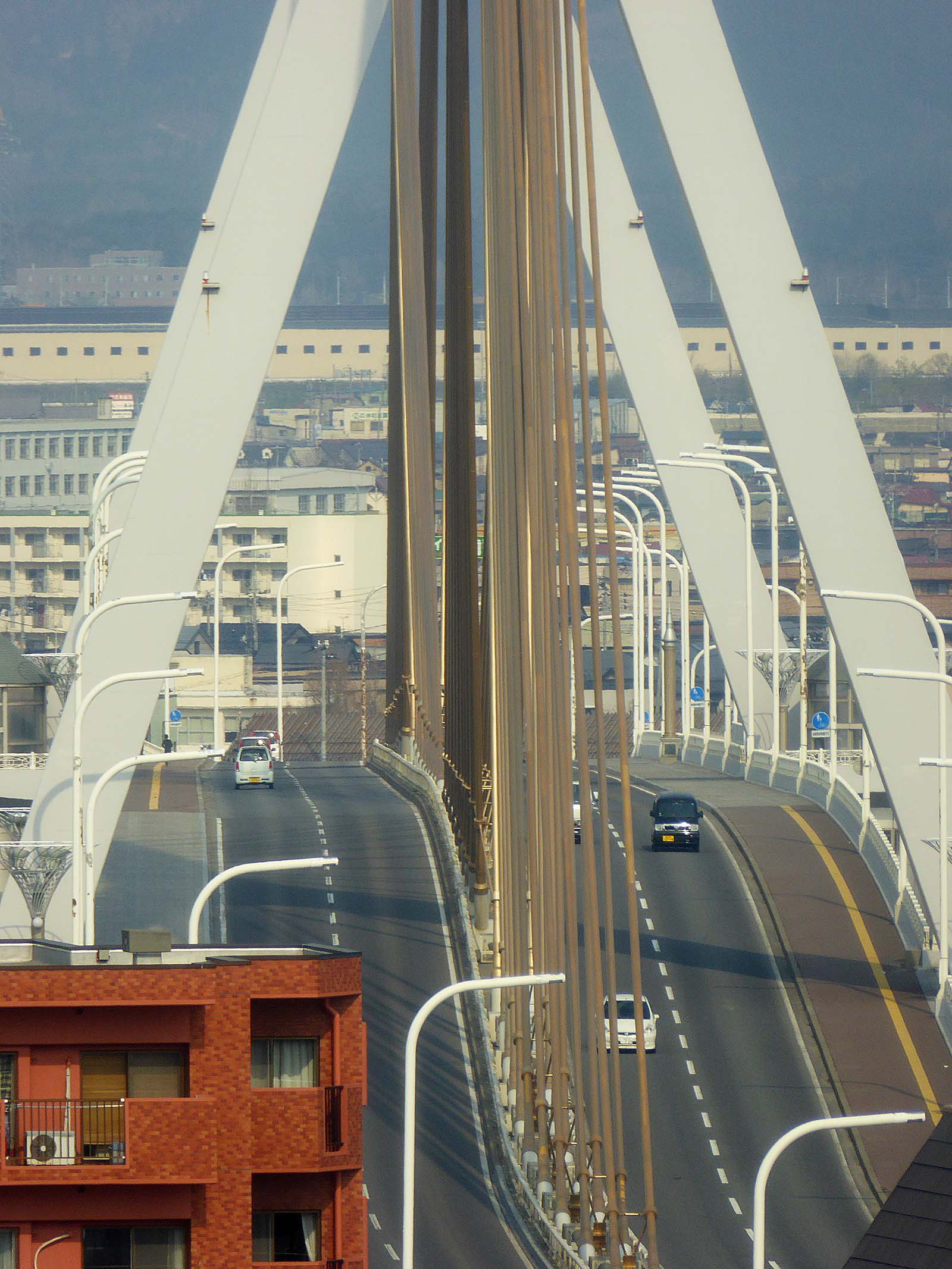
Little knownThe Aomori Bay Bridge (青森ベイブリッジ) is a 1.2-kilometer cable-stayed bridge spanning Aomori Harbor, completed in 1994 as par…
 あおもりくま / CC BY-SA 3.0
Mount Osore
Little knownMount Osore (恐山, Osorezan — 'Dread Mountain') sits on Shimokita Peninsula as one of Japan's three holiest Buddhist sites…
 Koltonsmith / CC BY-SA 4.0
Wanko Soba
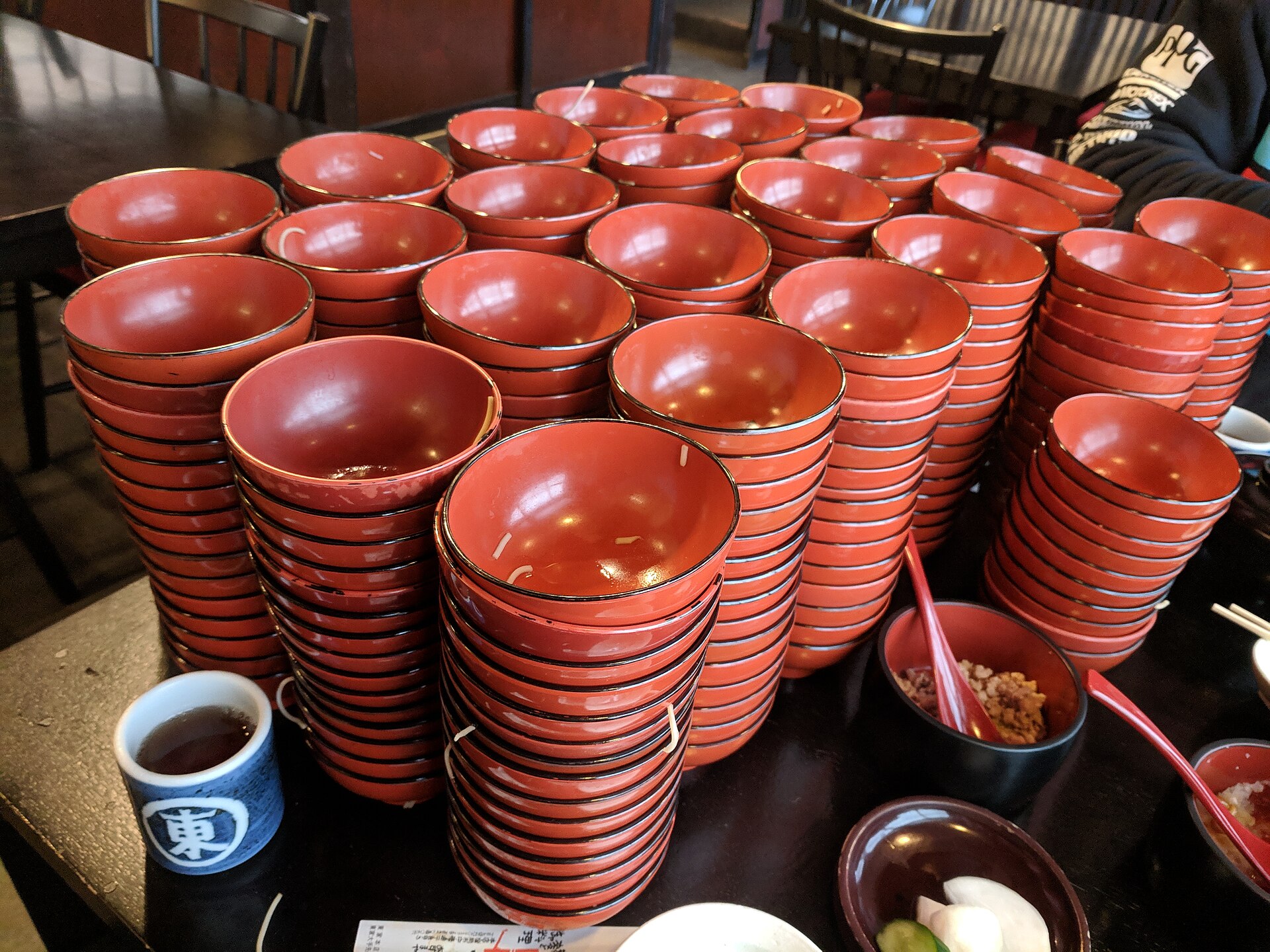
Little knownWanko Soba is Morioka's most theatrical dining experience — an all-you-can-eat soba challenge where servers rapidly refi…
 D-Chillz / CC BY-SA 4.0
Takayama Inari Shrine
Little knownEveryone photographs the tunnel of torii at Fushimi Inari in Kyoto, packed shoulder to shoulder. Takayama Inari has some…
 Wc018 / CC BY-SA 4.0
Akita Nairiku Line
Little knownThe Akita Nairiku Line runs ninety-four kilometres north to south through the middle of the prefecture, from Takanosu to…
