
หน้านี้ยังไม่ได้แปล จึงแสดงเป็นภาษาอังกฤษ
Kakinoha-zushi
ค้นคว้าและเขียนโดย Hinato
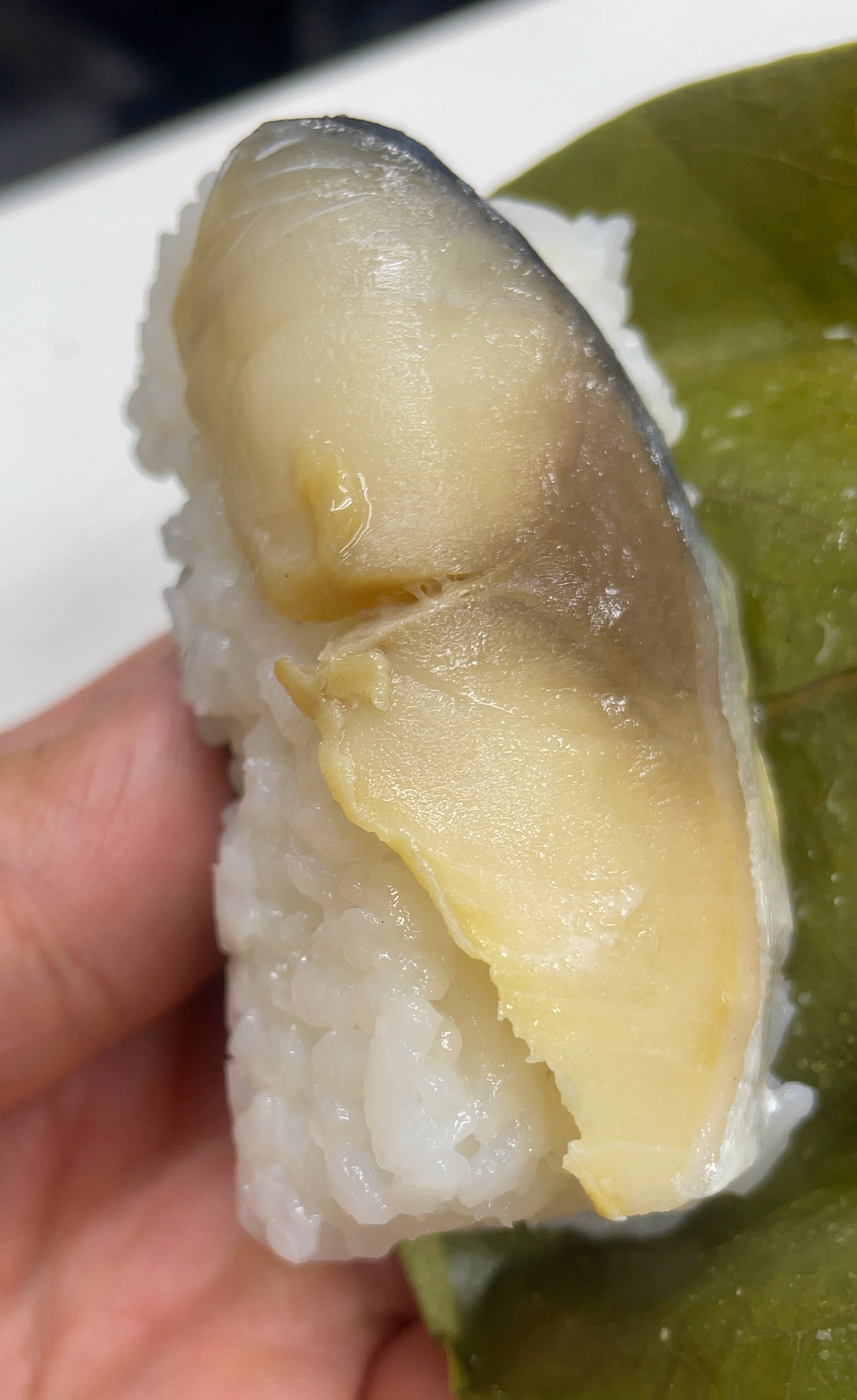
Photo: Kyu3a / Wikimedia Commons (CC BY-SA 4.0) · original
Kakinoha-zushi (柿の葉寿司) is Nara's signature pressed sushi: vinegared rice topped with mackerel, salmon, or sea bream, wrapped in persimmon leaves, and pressed for 1–2 days. The persimmon leaf's natural tannins have antimicrobial properties that preserve the fish and impart a subtle, earthy fragrance to the rice. The sushi originated in the Edo Period as a preservation method for transporting seafood from the coast to landlocked Nara.
Kakinoha-zushi is eaten leaf and all — you unwrap each piece before eating, but the leaf leaves its mark on the flavor and aroma. The texture is denser than nigiri sushi due to pressing, and the rice is more vinegary to aid preservation. Major producers include Tanaka (田中), Hiraso (平宗), and Yamatoya (大和屋), all with shops in Naramachi and Nara Station. The sushi comes in beautiful wooden boxes, making it a popular gift item. Persimmon leaf harvest occurs in June–July; shops stockpile and salt-preserve leaves to use year-round.
The dish's origins reflect Nara's landlocked geography as directly as any food in the region — before refrigeration, fresh mackerel caught along the Kii Peninsula coast had to travel inland by cart or on foot over mountain roads, and by the time it reached Nara it had typically been lightly salted to slow spoilage, which gave the fish a firmer texture and more concentrated flavor than truly fresh catch. Wrapping the salted, pressed sushi in persimmon leaves was a practical solution developed by local families and later refined by specialist shops, using a plant that grew abundantly in the region's orchards rather than anything imported or rare. Over time, what began as a necessity of geography became a source of regional pride, with the leaf's faint fragrance now considered an essential part of the dish's character rather than an incidental wrapping. Because the technique relies on gentle pressure and time rather than heat, kakinoha-zushi retains a cooler, denser mouthfeel than most sushi styles, and many Nara families still consider it a natural food to bring along on train journeys or to serve at home gatherings precisely because it travels and keeps so well.
ข้อมูลสำคัญ
เวลาเปิดทำการ
Tanaka Honten (Kintetsu Nara Station): 9:00 AM – 7:00 PM
วันหยุด: Varies by shop; most open daily including weekends
ค่าเข้าชม
No entry fee | Kakinoha-zushi sets: ¥1,200–2,500 (6–8 pieces)
ฤดูที่ดีที่สุด
Year-round | Autumn–winter for mackerel season (fattest fish, best flavor)
ระยะเวลาเที่ยวชม
15–30 minutes (purchase and eat fresh)
การเดินทางไป
ข้อมูลการเดินทาง
คู่มือจากคนใน
จองที่พักใกล้เคียง
ค้นหาที่พักใกล้ Kakinoha-zushi บนแพลตฟอร์มจองที่เชื่อถือได้เหล่านี้:
สถานที่ใกล้เคียง
สถานที่ลับที่อยู่ใกล้ Kakinoha-zushi มากที่สุด เรียงตามระยะทางเส้นตรง
 daniel julià lundgren from barcelona, catalonia / CC BY-SA 2.0
Narazuke Pickles
Locally knownNarazuke (奈良漬) are vegetables pickled in sake kasu (酒粕, sake lees — the fermented rice solids left after sake brewing),…
Nara Sake
Locally knownNara is the birthplace of sake brewing's key innovations — monks at Shoryakuji Temple (菩提山正暦寺) invented the bodaimoto me…
 ภาพประกอบ (ไม่ใช่ภาพถ่าย)
Nara Sumi Ink & Fude Brushes
Locally knownNara produces 90% of Japan's traditional sumi ink (墨, solid ink sticks) and is a major center for fude (筆, calligraphy b…
 ภาพประกอบ (ไม่ใช่ภาพถ่าย)
Day Trip to Nara
Locally knownNara, Japan's capital from 710–794 CE, is from Osaka by train and offers one of Japan's best day trips. The city's main…
 Roman SUZUKI / CC BY 3.0
Heijo Palace Site
Well knownHeijo Palace (平城宮跡, Heijo-kyo) was the imperial palace during Nara's time as Japan's capital (710–784 AD), occupying 120…
 663highland / CC BY 2.5
Toshodaiji Temple
Well knownWhen the Chinese monk Jianzhen finally reached Japan in 754 AD after five shipwrecks, pirate attacks, and twelve years a…
สถานที่อื่น ๆ ในจังหวัดนาระ
 ภาพประกอบ (ไม่ใช่ภาพถ่าย)
Gangoji Temple
Well knownGangoji (元興寺) is one of Nara's Seven Great Temples and Japan's oldest temple, originally founded in 588 AD in Asuka befo…
 Yoshio Kohara / CC BY 3.0
Kashihara Jingu Shrine
Little knownKashihara Jingu (橿原神宮) is a large Shinto shrine dedicated to Emperor Jimmu, Japan's legendary first emperor according to…
 ภาพประกอบ (ไม่ใช่ภาพถ่าย)
Isonokami Jingu Shrine
Little knownIsonokami Jingu (石上神宮) is one of Japan's oldest Shinto shrines, established in the 4th century as a repository for sacre…