
本頁尚未翻譯,暫以英文顯示。
Himeji Tegai Yaki Anagomeshi
調查與撰寫 Hinato
兵庫縣 · Himeji
34.8272°N, 134.6917°E
Anagomeshi (穴子飯) is Himeji's ekiben (station bento) specialty — grilled saltwater eel (anago, 穴子) over seasoned rice in a ceramic box. The dish originated at Himeji Station in the early 1900s when fresh anago from nearby Seto Inland Sea was grilled with tare sauce and packed for train travelers. The ceramic container (tegai, 手柄) is reusable, becoming a keepsake after the meal.
Himeji's anago is sweeter and less fatty than freshwater unagi (鰻), with delicate white meat that flakes easily. The fish is grilled to caramelized edges, brushed with sweet soy-based tare, and layered over rice infused with eel-cooking juices. The dish is served warm, though it's also eaten cold as traditional ekiben. Multiple shops around Himeji Station sell variations, with the ceramic box version being most iconic.
基本資訊
營業時間
Himeji Station shops: 8:00 AM – 8:00 PM (hours vary)
公休: Open year-round
門票
Free | Anagomeshi ¥1,200–1,500 (ceramic box version)
最佳季節
Year-round
建議停留
30–45 minutes (including purchase and eating)
如何前往
交通資訊
Available at Himeji Station and specialty shops. Top vendor: Manneki (まねき, multiple station locations, ¥1,200–1,500). Also: Ichibanya Ekiben (いちばんや, ¥1,300). Best eaten fresh/warm but also sold as take-out ekiben. Combine with castle visit — buy before/after touring.
在地私房情報
Ceramic box significance: The tegai container is part of the anagomeshi tradition — after eating, you take the ceramic box home as souvenir. The boxes are simple but functional (reusable for leftover storage, desk organizers). Some collectors visit Himeji multiple times to accumulate different designs. The box adds ¥300–500 to the price versus disposable containers but becomes memento of Himeji visit.
Anago vs unagi difference: Anago is also cheaper — anagomeshi costs ¥1,200–1,500 versus unaju (unagi donburi) at ¥2,500–4,000. The flavor is more subtle; some prefer anago's delicacy while unagi fans find it less satisfying. If you've only had unagi (common in Tokyo/Kyoto), anagomeshi provides interesting comparison.
Eating context: Ekiben culture means anagomeshi is designed for train eating — compact, balanced meal, not messy, reheating not required. Many visitors buy it at Himeji Station before boarding Shinkansen to Kyoto/Osaka, eating en route. Alternatively, buy it after visiting Himeji Castle and picnic in Kokoen Garden or on castle grounds (outside areas). The dish is best warm but remains good at room temperature for 3–4 hours.
鄰近景點
距離Himeji Tegai Yaki Anagomeshi最近的私房景點,依直線距離排序。
 漱石の猫 / CC BY-SA 4.0
Himeji Oden
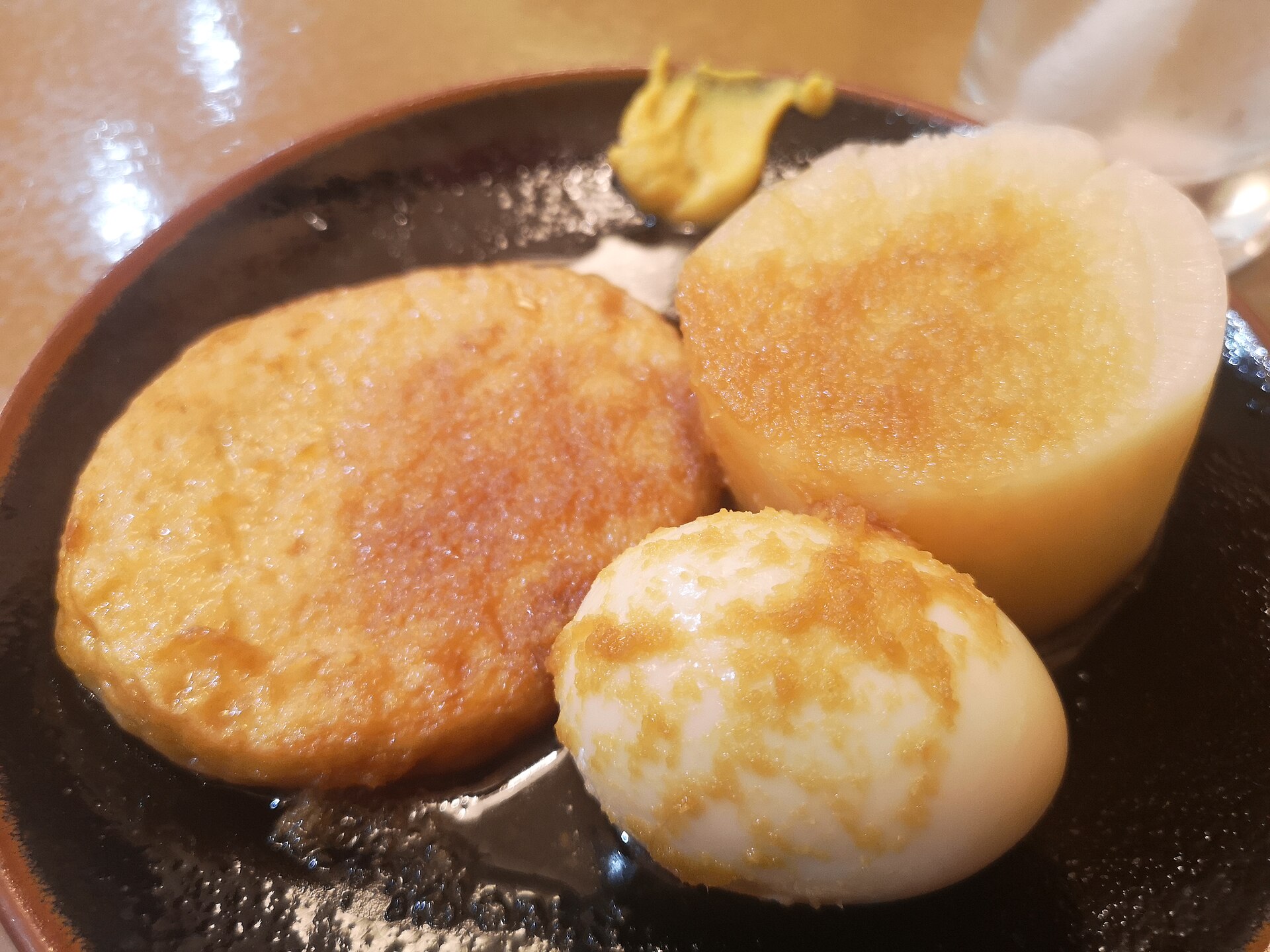
Locally knownHimeji oden (姫路おでん) is the city's soul food — simmered fish cakes, daikon radish, boiled eggs, and konnyaku served with…
 Maechan0360 / CC BY-SA 3.0
Kokoen Garden
Well knownKokoen Garden (好古園) is a collection of nine separate Edo-period style gardens built on the former site of samurai reside…
 663highland / CC BY 2.5
Shoshazan Engyoji Temple
Locally knownEngyoji Temple (円教寺) sits atop Mt. Shosha (書写山, 371m), a sprawling mountain monastery founded in 966 CE. The complex inc…
 Martin Lewison / CC BY-SA 2.0
Himeji Central Park Safari
Locally knownHimeji Central Park (姫路セントラルパーク) is a combined safari park and amusement park where visitors drive through wildlife encl…
 kcomiida / CC BY-SA 3.0
Akashi Castle Ruins & Sakura Park
Little knownAkashi Castle (明石城) is a partially-preserved castle built in 1619, with two original three-story turrets (巽櫓 and 坤櫓) rem…
 示意插圖(非實景照片)
Akashi Fish Market & Octopus Takoyaki
Little knownAkashi (明石) sits on the Akashi Strait where strong tidal currents create nutrient-rich waters, producing some of Japan's…
更多兵庫縣的景點
 Tzuhsun Hsu / CC BY-SA 2.0
Arima Onsen
Little knownArima Onsen (有馬温泉) is Japan's oldest onsen resort, with 1,400-year bathing history documented since 631 CE. The town is…
 Wei-Te Wong from Taipei City, Taiwan, Republic of China / CC BY-SA 2.0
Kitano Ijinkan
Well knownKitano Ijinkan (北野異人館) is a hillside district of European-style mansions built in the 1880s–1900s for Western merchants,…
 sailko / CC BY-SA 3.0
Kobe Beef Teppanyaki
Well knownWalking into Mouriya's fourth-floor dining room, you hear the sizzle before you see it. The chef slides a 120g cut of ri…