
Esta página aún no ha sido traducida y se muestra en inglés.
Hamamatsu Sand Dunes
Investigado y escrito por Hinato
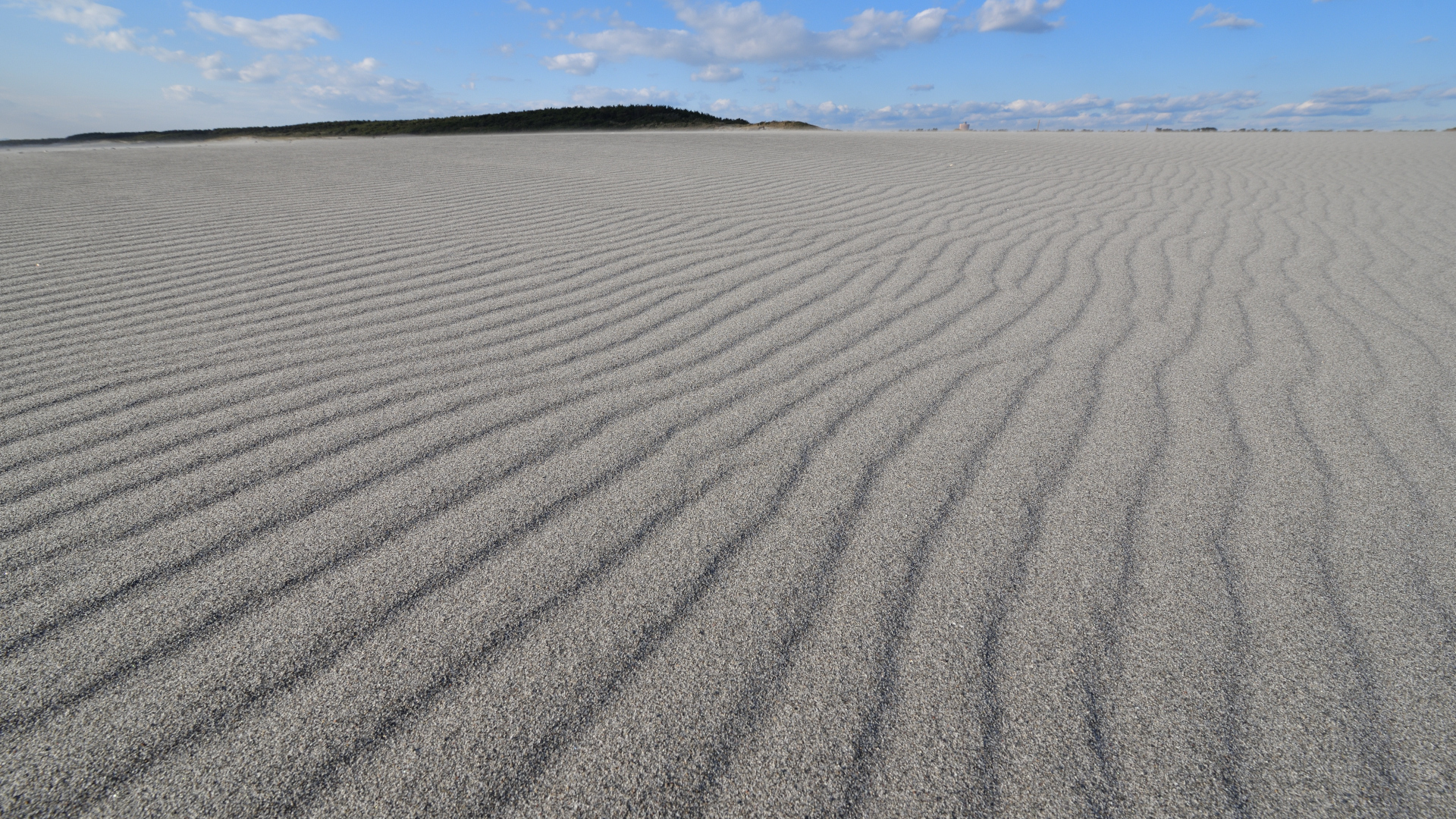
Photo: SUN / Wikimedia Commons (CC BY 4.0) · original
Nakatajima Sand Dunes (中田島砂丘) are Japan's three largest coastal sand dunes, stretching 4km along the Pacific coast with dunes reaching up to 15 meters high. The windswept landscape creates rippled patterns in the sand and sparse vegetation clinging to dune edges. The dunes are formed by Tenryu River sediment deposited offshore and blown inland by prevailing winds — an ongoing geological process that maintains the desert-like environment.
The dunes are also an important ecological site — Loggerhead sea turtles (アカウミガメ) nest here May–August, the northernmost nesting site for this species. Conservation efforts protect nesting areas while allowing public access to most of the dunes. Sunrise over the Pacific from the dune crests is particularly photogenic, and the area attracts photographers capturing the interplay of sand, grass, and ocean.
Información esencial
Horario
Open 24/7
Cerrado: Open year-round
Entrada
Free | Sea Turtle Museum ¥300 | Parking ¥400
Mejor temporada
June–July (sea turtle nesting season) | Winter (dramatic wind patterns, fewest crowds)
Duración de la visita
45–90 minutes
Cómo llegar
Información de acceso
Guía privilegiada
Lugares cercanos
Los lugares secretos más cercanos a Hamamatsu Sand Dunes, por distancia en línea recta.
 Ariga / CC BY-SA 4.0
Hamamatsu Music Box Museum
Little knownHamamatsu Museum of Musical Instruments (浜松市楽器博物館) houses 1,300+ musical instruments from around the world, spanning anc…
Hamamatsu Gyoza
Little knownHamamatsu is one of Japan's two gyoza capitals (alongside Utsunomiya in Tochigi Prefecture), and local gyoza style empha…
 Wei-Te Wong from Taipei City, Taiwan, Republic of China / CC BY-SA 2.0
Unagi no Kabayaki
Little knownHamamatsu is Japan's eel capital, producing 40% of the nation's farmed unagi (freshwater eel) from Lake Hamana's brackis…
 Hunini / CC BY-SA 4.0
Hamamatsu Air Base Festival
Little knownHamamatsu Air Base (浜松基地) is Japan Air Self-Defense Force's (JASDF) largest air base, home to the Blue Impulse aerobatic…
 Dr.yellow / CC BY-SA 4.0
Lake Hamana Eel Farming
Little knownLake Hamana (浜名湖) is Japan's eel farming center, producing 40% of the nation's farmed unagi (freshwater eel) using tradi…
 Bariston / CC BY-SA 4.0
Gamagori Laguna Ten Bosch
Little knownLaguna Ten Bosch (ラグーナテンボス) is a seaside resort complex in Gamagori combining a theme park (Lagunasia), hot spring facil…
Más en Prefectura de Shizuoka
 alonfloc / CC BY 3.0
Joren Falls
Little knownJoren Falls (浄蓮の滝, Joren-no-taki) is a 25-meter waterfall cascading through columnar basalt formations in the forested m…
 江戸村のとくぞう / CC BY-SA 4.0
Kunozan Toshogu Shrine
Locally knownKunozan Toshogu Shrine (久能山東照宮) is a lavishly decorated Shinto shrine dedicated to Tokugawa Ieyasu, the shogun who unifi…
Izu Kogen
Little knownIzu Kogen (伊豆高原, 'Izu Highlands') is an elevated plateau on the eastern Izu coast, known for art museums, craft gallerie…