
Fushimi Inari Taisha
Recherche et rédaction Hinato
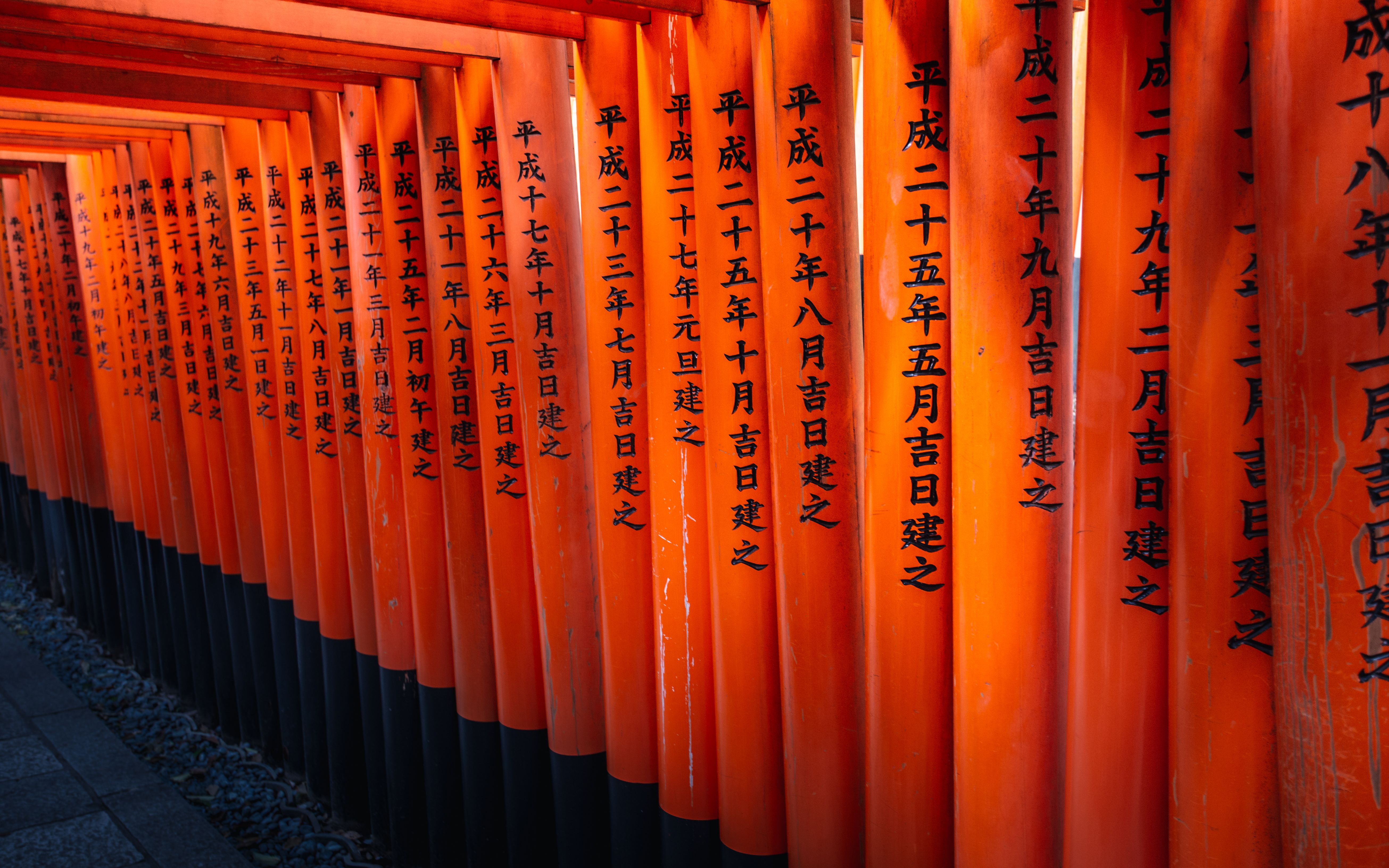
Photo: Pexels (Pexels License) · original
Fushimi Inari Taisha est le sanctuaire shinto le plus visite du Japon et, malgre tout, conserve une puissance visuelle qui ne faiblit pas. Des milliers de torii vermillon offerts par des entreprises et des particuliers forment des tunnels ininterrompus qui gravissent les pentes du mont Inari. Le parcours complet jusqu'au sommet prend environ deux heures et gagne en solitude au fur et a mesure de l'ascension.
Fonde en 711, il est le siege central des plus de 30 000 sanctuaires Inari repartis dans tout le Japon, dedies a la divinite du riz, de la fertilite et du commerce. Les statues de renards (kitsune) qui flanquent chaque section sont les messagers du dieu Inari. L'entree est gratuite et le site est ouvert 24 h/24 : l'aube est le moment le plus magique et le plus paisible.
What this page is actually for
Fushimi Inari is free, open with no gate to close, and the single most photographed place in Japan. You do not need us to find it, and you do not need another description of the tunnel of gates. The one decision worth making in advance is how far up the mountain you intend to go, because the crowd thins with altitude and effort rather than with the hour — that is a property of the walk, not a tip we are claiming to have discovered.
The rest of what we can add is geographic. Southern Kyoto is thick with places nobody queues for, and we keep a catalogue of them with coordinates. Those are below.
Nobody else is going here
Everyone within a mile of Fushimi Inari Taisha is going to Fushimi Inari Taisha. Here are 4 places within walking or one bus ride of it that almost nobody writes about — straight-line distances from our own catalogue, not travel times.
- Sanjusangen-do ArcheryLocally known~2.3 km away · Kyoto
Every January (second Sunday), Sanjusangen-do Temple hosts Toshiya (通し矢) — a coming-of-age archery ceremony where 20-yea…
- Kyoto Station BuildingLocally known~2.4 km away · Kyoto
Kyoto Station (京都駅) is a controversial modern architectural landmark designed by Hiroshi Hara (completed 1997). The 15-s…
- Kyoto GyozaLocally known~2.4 km away · Kyoto
While gyoza (餃子, Chinese-style dumplings) originated in China, Kyoto has developed its own regional style emphasizing ve…
- Shosei-en GardenLocally known~2.6 km away · Kyoto
Shosei-en Garden (渉成園), also called Kikoku-tei, is a tranquil 10-acre stroll garden just east of Kyoto Station — remarka…
Informations essentielles
Horaires d'ouverture
Ouvert 24 h/24, tous les jours
Fermé: Open year-round
Tarif d'entrée
Gratuit
Meilleure saison
Toute l'annee | Automne (novembre) pour les erables rouges le long des torii
Durée de visite
1 – 2,5 heures (selon la distance parcourue)
Comment s'y rendre
Informations d'accès
Accès détaillé et horaires
Gare la plus proche
JR Inari Station (JR Nara Line) - 5 min walk | Fushimi-Inari Station (Keihan Main Line) - 5 min walk
Temps de trajet
From Kyoto Station: 5 min via JR Nara Line (2 stops) | From Osaka: 50 min via Keihan Express | From Tokyo: 2 hours 30 min via Shinkansen to Kyoto + JR
Comment y aller
Train: From Kyoto Station, take JR Nara Line to Inari Station (5 min, ¥150). Or take Keihan Main Line to Fushimi-Inari Station. Bus: Kyoto City Bus routes 南5 stop near shrine entrance. Taxi: 15 min from Kyoto Station (¥1,500-2,000).
Meilleur moment pour visiter
Early morning (before 7:00 AM) for solitude and side-lit torii photography. Evening (after 6:00 PM) when tour groups depart. Weekday mornings significantly quieter than weekends.
Conseils pour éviter la foule
Main shrine area extremely crowded 9:00 AM-5:00 PM daily. Lower torii tunnel packed 10:00 AM-4:00 PM. Continue past first 15 minutes of torii to reduce crowds by 90%. Avoid cherry blossom season (early April), Golden Week (late April-early May), and autumn foliage weekends (November). Night visits offer solitude but require flashlight for upper trails.
Informations de stationnement
No dedicated parking. Nearby coin parking: ¥600-800/day (limited spaces). Public transport strongly recommended due to limited parking and excellent train access.
Guide d'initié
Réserver un hébergement à proximité
Trouvez un hébergement près de Fushimi Inari Taisha sur ces plateformes de confiance :
Lieux à proximité
Les lieux secrets les plus proches de Fushimi Inari Taisha, par distance à vol d'oiseau.
 Fumihiko Ueno / CC BY 3.0
Sanjusangen-do Archery
Locally knownEvery January (second Sunday), Sanjusangen-do Temple hosts Toshiya (通し矢) — a coming-of-age archery ceremony where 20-yea…
 Illustration — il ne s'agit pas d'une photographie
Sanjusangen-do
FamousSanjusangen-do (三十三間堂, 'Hall with 33 Bays') is a 120-meter-long wooden hall containing 1,001 life-size golden statues of…
 くろふね / CC BY 3.0
Kyoto Station Building
Locally knownKyoto Station (京都駅) is a controversial modern architectural landmark designed by Hiroshi Hara (completed 1997). The 15-s…
Kyoto Gyoza
Locally knownWhile gyoza (餃子, Chinese-style dumplings) originated in China, Kyoto has developed its own regional style emphasizing ve…
 Yoshio Kohara / CC BY 3.0
Shosei-en Garden
Locally knownShosei-en Garden (渉成園), also called Kikoku-tei, is a tranquil 10-acre stroll garden just east of Kyoto Station — remarka…
 柳田亮 / CC BY-SA 3.0
Kiyomizu-dera
FamousKiyomizu-dera (清水寺, 'Pure Water Temple') is a UNESCO World Heritage temple famous for its wooden stage (清水の舞台, Kiyomizu…
Plus de lieux à Préfecture de Kyoto
 Illustration — il ne s'agit pas d'une photographie
Miyama Kayabuki Village
Well knownThirty-eight farmhouses with roofs made of miscanthus grass, some piled a meter thick. No power lines. Miyama exists in…
 くろふね / CC BY 3.0
Kifune Shrine
Locally knownKifune Shrine (貴船神社) sits in a forested mountain valley north of Kyoto, famous for its summer river dining platforms (川床…
 くろふね / CC BY 3.0
Kurama-dera Temple
Locally knownKurama-dera Temple (鞍馬寺) sits atop Mt. Kurama (570m) in northern Kyoto, accessible by cable car or a scenic 30-minute fo…