
Cette page n'a pas encore été traduite et s'affiche en anglais.
Nanzen-ji Temple
Recherche et rédaction Hinato

Photo: 雷太 / Wikimedia Commons (CC BY 2.0) · original
Nanzen-ji (南禅寺) ranks as the head temple of the Rinzai Zen sect's Nanzen-ji school, with a massive Sanmon gate (三門, 22 meters tall) offering panoramic city views from the upper story. The temple is famous for its surprising brick aqueduct (Suirokaku, 水路閣) — a Meiji-period (1890) Roman-style aqueduct that cuts through the temple grounds, still carrying water from Lake Biwa to Kyoto.
The temple's sub-temples include Nanzen-in with its pond garden, and Konchi-in with a famous rock garden. The grounds are sprawling (multiple sub-temples spread across 100+ acres), requiring 2–3 hours to explore fully.
Informations essentielles
Horaires d'ouverture
8:40 AM – 5:00 PM (December–February until 4:30 PM)
Fermé: Open year-round
Tarif d'entrée
Grounds: Free | Sanmon gate: ¥600 | Hojo garden: ¥600 | Sub-temples: ¥400–500 each
Meilleure saison
Autumn (November, maple foliage framing the aqueduct) | Spring (April, cherry blossoms) | Year-round for aqueduct
Durée de visite
2–3 hours (main temple + sub-temples)
Comment s'y rendre
Informations d'accès
Nanzenji Fukuchicho, Sakyo Ward. Near Keage Station. Entry: Temple grounds free; Sanmon gate ¥600, Hojo garden ¥600, sub-temples ¥400–500 each. Yudofu (tofu) restaurants in temple grounds.
Guide d'initié
Aqueduct photography: The brick aqueduct provides Kyoto's most Instagram-worthy contrast — Western industrial architecture amid Zen temple forest. Walk beneath the arches (free access) for dramatic perspective shots. Early morning (8:00–9:00) or late afternoon (16:00–17:00) light creates better shadows than harsh midday sun. Cherry blossoms (April) and autumn maples (November) frame the aqueduct beautifully.
Sanmon gate climb: The Sanmon gate's upper story (¥600, steep stairs) offers 360° views over Kyoto's eastern mountains and the temple's vast grounds. The gate appears in kabuki play Sanmon Gosan no Kiri where outlaw Ishikawa Goemon admires cherry blossoms from this vantage while declaring 'the view is priceless.' The same view, 400 years later.
Yudofu lunch: Nanzen-ji originated yudofu (湯豆腐, simmered tofu) — Buddhist vegetarian cuisine now synonymous with Kyoto. Tofu is Kyoto-style (silky, delicate), simmered in kombu broth, eaten with ponzu and condiments. Reservation recommended for window seats.
Lieux à proximité
Les lieux secrets les plus proches de Nanzen-ji Temple, par distance à vol d'oiseau.
 Illustration — il ne s'agit pas d'une photographie
Eikan-do Temple
Locally knownEikan-do Temple (永観堂), officially Zenrin-ji, is renowned for its autumn night illuminations (mid-November) when 3,000 ma…
 kanesue / CC BY 3.0
Heian Shrine
Locally knownHeian Shrine (平安神宮) was built in 1895 to commemorate Kyoto's 1,100th anniversary, recreating the original Heian Imperial…
Kyoto Handicraft Center
Well knownKyoto Handicraft Center (京都ハンディクラフトセンター) is a seven-floor department store specializing in traditional Kyoto crafts: cer…
 そらみみ / CC BY-SA 3.0
Philosopher's Path
FamousThe Philosopher's Path (哲学の道, Tetsugaku no Michi) is a 2-kilometer stone walkway following a canal lined with hundreds o…
 Donatingpictures / CC BY-SA 4.0
Kyoto Kaiseki
FamousWalk into Kikunoi and the room falls silent except for water trickling in the courtyard garden. Your server places a lac…
 Legolas1024 / CC BY-SA 4.0
Yasaka Shrine
Well knownYasaka Shrine (八坂神社) anchors the eastern end of Gion, serving as Gion Matsuri's spiritual headquarters and guardian of t…
Plus de lieux à Préfecture de Kyoto
 Pexels
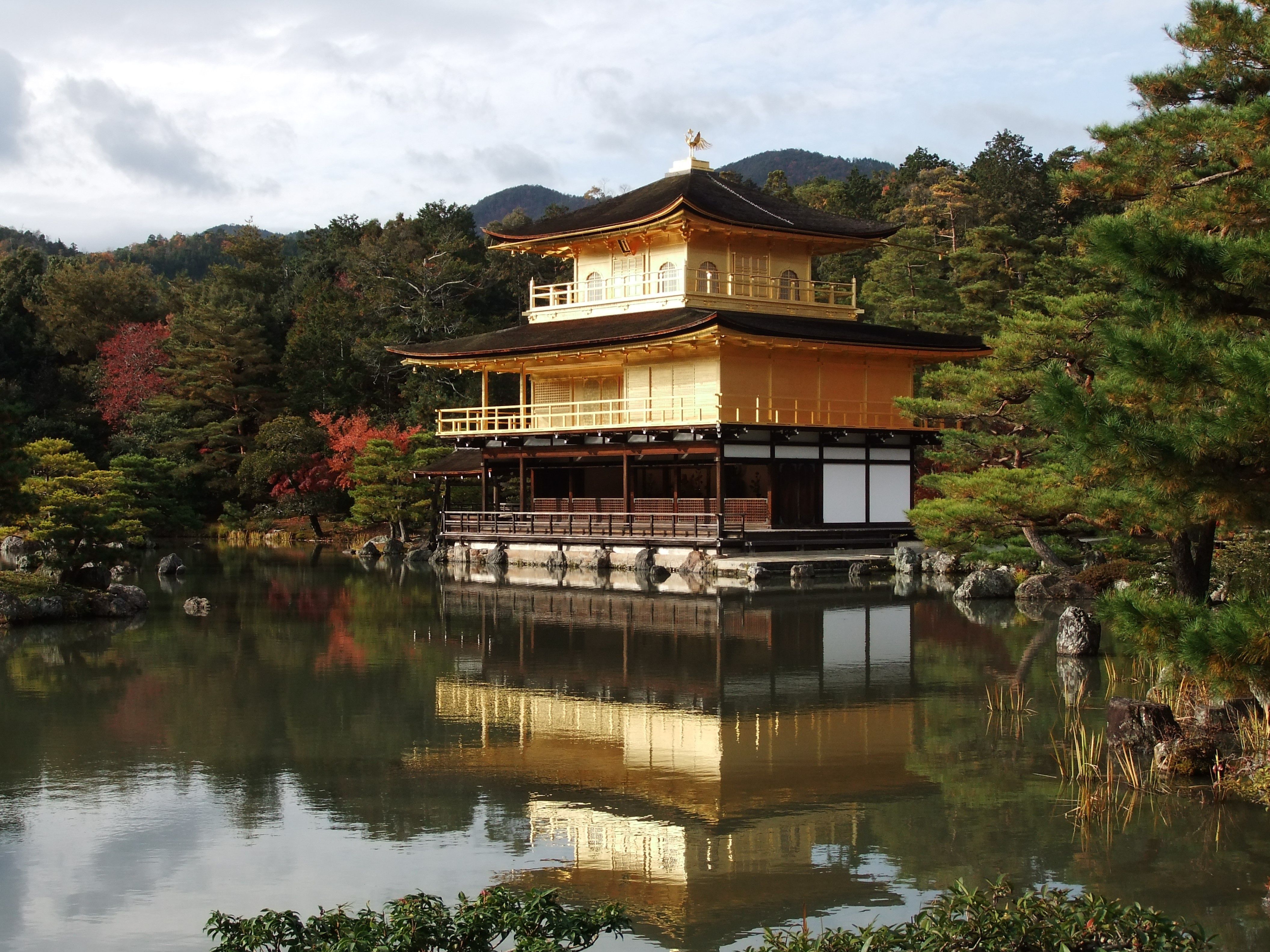
Kinkaku-ji Golden Pavilion
FamousKinkaku-ji (金閣寺, 'Temple of the Golden Pavilion') is a three-story Zen Buddhist temple covered in pure gold leaf, reflec…
 Unsplash
Arashiyama Bamboo Grove
FamousThe Arashiyama Bamboo Grove (嵯峨野の竹林) is a path through thousands of towering bamboo stalks that create a natural cathedr…
 alonfloc / CC BY 3.0
Gion District
FamousGion (祇園) is Kyoto's most famous geisha district (hanamachi, 花街 'flower town'), where traditional wooden machiya townhou…