

5 Days in Kyushu — Volcanoes, Sand Baths and the Myth Coast
Kagoshima to Takachiho, through the half of Kyushu the tour buses skip
Late October–early December and March–early May. Southern Kyushu is subtropical: June's rainy season is genuinely heavy, July–September combines humidity with typhoon risk, and the Kirishima and Takachiho days are the ones that get cancelled. Winter is mild, clear and the quietest time to come.
Roughly ¥90,000–150,000 per person for five days excluding flights to Kagoshima. A rental car for days 2–5 is ¥25,000–35,000 including fuel and tolls, and it is the difference between this route working and not.
Second-time visitors, or first-timers who would rather see volcanoes than temples. Best with a driver's licence — days 3 and 5 are difficult by public transport and Day 5 is close to impossible. Not the route for travellers who want cities, nightlife or dense rail coverage.
Why this route
Kyushu's standard circuit runs Fukuoka, Nagasaki, Kumamoto, Beppu — the northern half. The southern half gets a fraction of the visitors and has the more dramatic landscape: an active volcano that drops ash on a city of 600,000 every few days, a beach where you are buried in naturally heated black sand, a caldera of crater lakes, and the gorge where Japan's creation myth is set.
The route runs as one clockwise arc from Kagoshima, down the Satsuma peninsula, up through the Kirishima range into Miyazaki, along the Nichinan coast, and inland to Takachiho — which puts you within reach of Kumamoto airport for the exit rather than doubling back. Nothing here is a long drive; the longest single leg is under three hours.
The reason to hire a car is Day 3 and Day 5. Kirishima's crater lakes and Takachiho's gorge are both served by buses that run a handful of times a day and connect badly with each other. Without a car this becomes a three-prefecture itinerary that spends half its daylight waiting at bus stops. With one, it is one of the easiest drives in Japan: wide roads, light traffic, and signage in English on every major route.
The route on a map
Every mapped stop, coloured by day and numbered in visiting order. Tap a pin to open the spot.
What makes it different
- Sakurajima erupting on a normal Tuesday, seen from a public foot bath across the bay
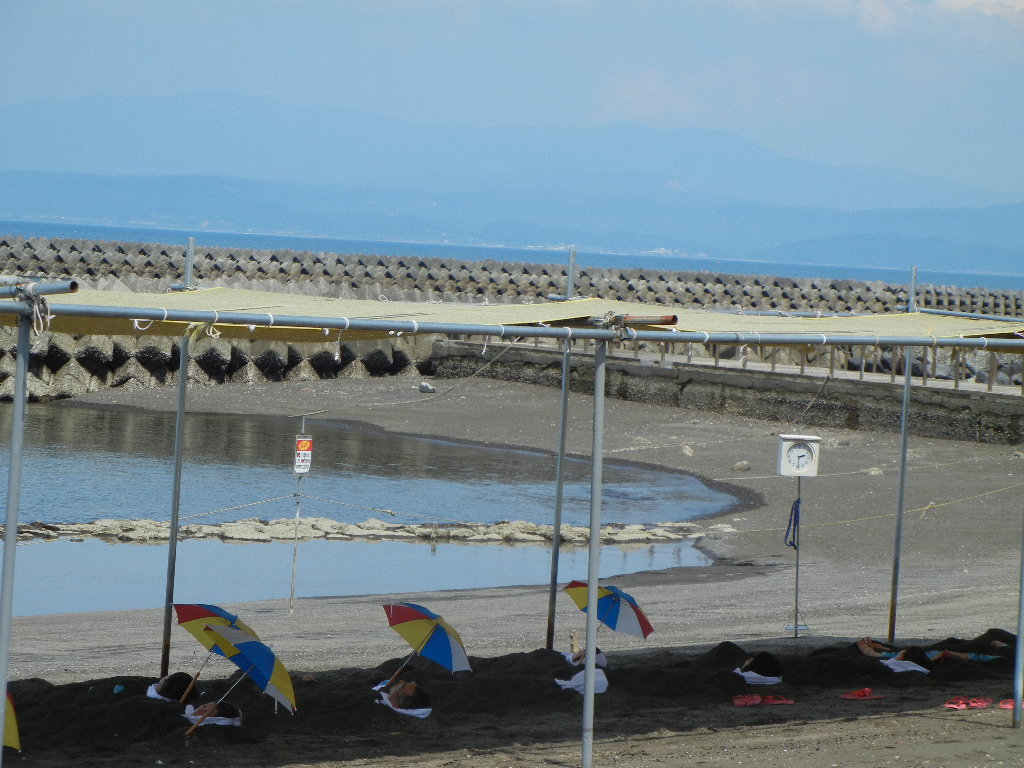
- Being buried to the neck in volcanically heated black sand at Ibusuki, in a yukata, on a beach
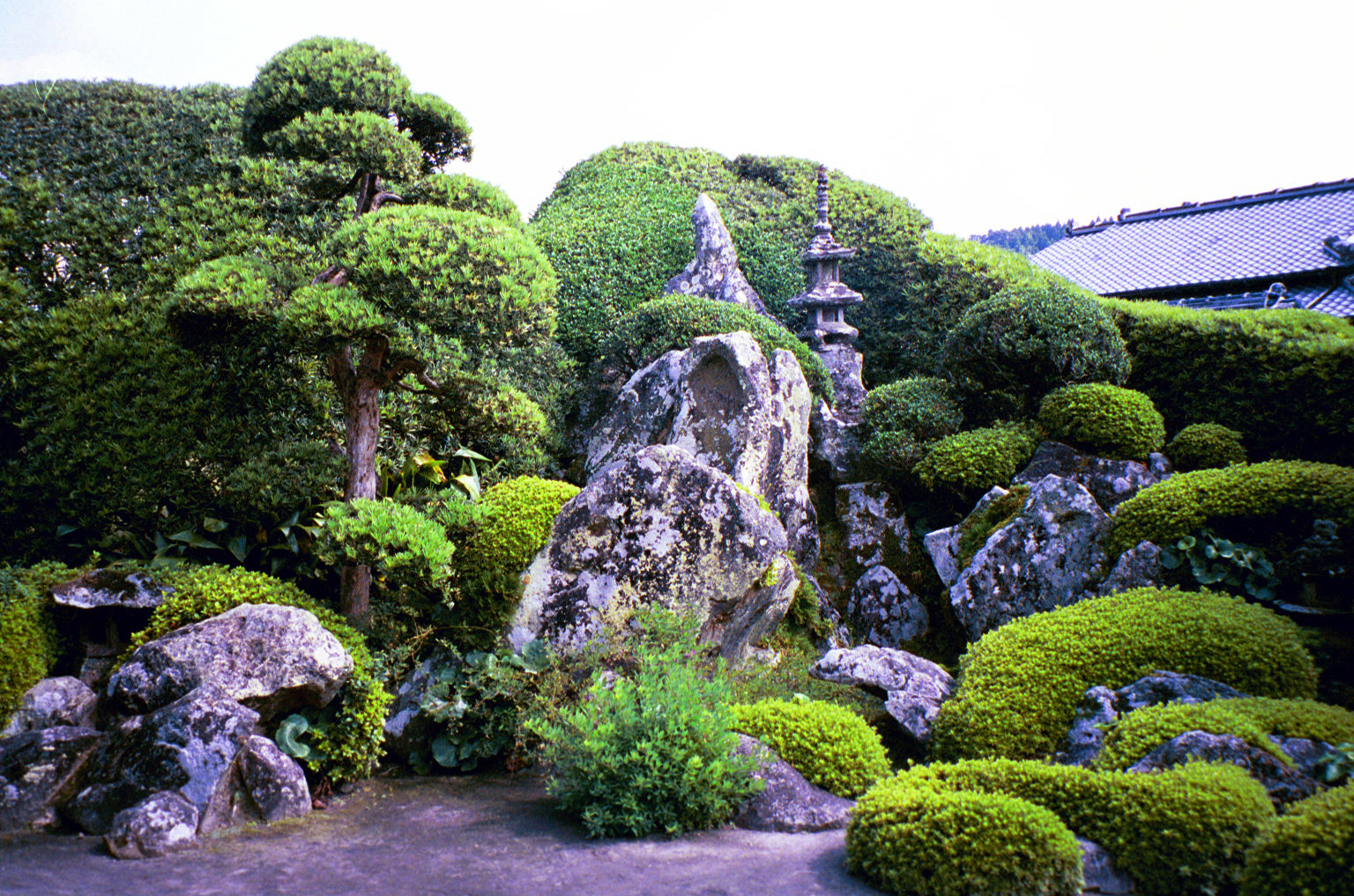
- A samurai street in Chiran where seven private Edo gardens are still maintained by the families who own them
- Ebino Kogen's crater lakes — three volcanic lakes on one 4km loop, and rarely another walker on it
- The Nichinan coast: a shrine inside a sea cave, a tropical island ringed by rock formations, and moai statues facing the Pacific
- Takachiho Gorge from a rowing boat you row yourself, under a waterfall falling into the river
Kagoshima — a city under a volcano
One city, one volcano, and the strange normality of living beside it. A daimyo's garden with the crater as its borrowed scenery, a ferry that runs every fifteen minutes to an active vent, and a shopping arcade where ash is swept up like snow.
- 09:002 hours
Sengan-en Garden
KagoshimaThe Shimadzu clan's 17th-century seaside villa and garden, composed so that Sakurajima across the bay functions as an ornament in it.
Insider noteThis is the best possible introduction to the city, and the reason is the garden's design: everything is arranged to frame the volcano, which makes the point that Kagoshima has never treated Sakurajima as a threat so much as furniture. The combined ticket adds the residence interior and is worth it. Go in the morning — the light is behind you toward the volcano, and it clouds over most afternoons. There is a glass workshop on site making Satsuma kiriko cut glass, which is genuinely worth twenty minutes.
- 11:303–4 hours
Sakurajima Active Volcano
KagoshimaAn active stratovolcano across a 4km strait, erupting several hundred times a year, reachable by a ferry that runs around the clock.
Insider noteThe ferry takes 15 minutes, runs 24 hours, costs ¥200, and you pay on arrival rather than departure. On the island, the Sakurajima Island View bus does a 60-minute loop of the viewpoints for ¥500 and is the efficient option without a car; the Yunohira observatory is the highest point visitors can reach. Do not attempt to approach the crater — there is a permanent exclusion zone and it is enforced. The free foot bath at the visitor centre is 100 metres long, faces the mountain, and is the single best hour on this island. Ash falls unpredictably: locals carry umbrellas on clear days for exactly this reason, and if the wind is toward you, so should you.
- 16:3045 minutes
Shiroyama Observatory
KagoshimaA hilltop lookout over the whole city with the volcano behind it — the postcard view, and the site of the last stand of the Satsuma Rebellion.
Insider noteLate afternoon light puts the sun behind you and the volcano lit, which is the reverse of the morning situation at Sengan-en. City bus or a ¥1,200 taxi from downtown; the walking trail up through the forest takes 30 minutes and is pleasant. This hill is where Saigo Takamori died in 1877, ending the samurai class as a political force — the cave he sheltered in is signposted on the way down, and it is a five-minute detour with real historical weight.
- 18:301.5 hours
Kurobuta Pork
KagoshimaKagoshima's Berkshire black pig, served as tonkatsu, shabu-shabu, or in a clay pot. The prefecture's defining dish.
Insider noteAsk for kurobuta specifically — plain 'pork' on a menu here is not it, and the price difference (roughly double) is the tell. Shabu-shabu is the version worth ordering: the fat renders in seconds and the texture is the whole point. Expect ¥3,000–5,000 for a proper set. Order kurozu (black vinegar) alongside if it appears — it is a Kagoshima product, aged in outdoor clay pots, and it cuts the fat exactly as intended.
- 20:001 hour
Tenmonkan Arcade
KagoshimaThe covered arcade at the centre of the city — shops, bars, and shirokuma shaved ice, invented here.
Insider noteShirokuma ('polar bear') is shaved ice under condensed milk and fruit, and the version at Mujaki is the original — it is enormous and it is not a summer-only thing here. The bars in the lanes off the arcade are where to try shochu, which Kagoshima makes from sweet potato and drinks in preference to sake; ask for it oyuwari (cut with hot water, roughly 6:4) rather than neat, which is how it is actually drunk locally.


- Kagoshima Airport → city centre: airport limousine bus, ~40 min, ¥1,400, to Kagoshima-Chuo station or Tenmonkan.
- Kagoshima-Chuo → Sengan-en: city bus (Kagoshima City View sightseeing loop), ~40 min, or a ¥2,000 taxi.
- Sengan-en → Sakurajima ferry terminal: bus or taxi, ~15 min. Ferry every 10–15 min, 24 hours, ¥200 one way, paid on the Sakurajima side.
- The City View loop bus (¥190 per ride, ¥600 day pass) covers Sengan-en, Shiroyama and the ferry terminal, and is the right ticket for today.
- Pick up the rental car tomorrow morning, not today — central Kagoshima parking is expensive and today needs no car.
Lunch on Sakurajima is limited: the visitor centre café and a couple of roadside places, ¥1,000–1,500. Buy something before you board the ferry if you are particular. Dinner is kurobuta, ¥3,000–5,000, then shirokuma. Kagoshima ramen — lighter and less pungent than the Hakata style — is the late-night option at ¥800–1,000.
Two nights near Kagoshima-Chuo station or Tenmonkan. Chuo is better if you are arriving by shinkansen and leaving by car; Tenmonkan puts you in the middle of dinner. Business hotels here are ¥7,000–12,000 and unusually good value, and several have their own onsen baths — the whole city sits on hot water.
¥7,000–11,000 per person: Sengan-en ¥1,600 combined ticket, ferry ¥400 return, island bus ¥500, city bus day pass ¥600, food ¥4,500–7,000.
The Satsuma peninsula — samurai gardens and a sand bath
South down the peninsula: a preserved samurai street with seven private gardens, tea terraces on the hillsides above it, and the afternoon buried in hot black sand on a beach at Ibusuki. Back to Kagoshima for the night.
- 09:302 hours
Chiran Samurai Gardens
KagoshimaA 700-metre Edo-period samurai street with stone walls, clipped hedges and seven surviving private gardens, all still lived in.
Insider noteOne ¥530 ticket admits you to all seven gardens and they are 100 metres apart; the whole thing is a walk, not a tour. These are working residences — the families maintain the gardens and in several cases you walk past their laundry to reach them. Go slowly and quietly. Six of the seven are dry landscape gardens using the hills behind as borrowed scenery, which is the same trick as Sengan-en at a domestic scale. The Chiran Peace Museum, five minutes away, documents the kamikaze pilots who flew from here; it is not a light stop and does not belong in the same hour, but it is significant and unflinching if you have the appetite.
- 11:4545 minutes
Chiran Tea Fields
KagoshimaTerraced green tea fields on the slopes around Chiran — Kagoshima is Japan's second-largest tea producer and this is where it looks like it.
Insider noteThis is a drive-and-stop rather than a destination: the roads above Chiran run between the terraces and there are pull-offs. The first flush is picked in late April and early May, about two weeks before Uji's, and that is when the fields are at their most vivid. Several producers sell direct at the roadside and will let you taste — Chiran-cha is deeper and less astringent than Kyoto tea, and a 100g bag is ¥800–1,500 and the best souvenir on this route.
- 14:002 hours
Ibusuki Sand Bath
KagoshimaYou put on a yukata, lie down on a black sand beach, and attendants bury you in volcanically heated sand for ten minutes.
Insider noteTen to fifteen minutes is the limit and the attendants will tell you when — do not try to be impressive about it, the heat is around 50°C and it works fast. Yukata rental is included in the ~¥1,100 fee at the municipal Saraku facility; bring nothing but yourself and a towel. Wear nothing underneath the yukata. There is a normal indoor onsen afterwards to wash the sand off and that is part of the process, not optional. Tattoos are generally tolerated at Saraku's sand bath because you are clothed, which makes this one of the few onsen experiences in Japan that sidesteps the issue entirely.
- 16:3045 minutes
Lake Ikeda
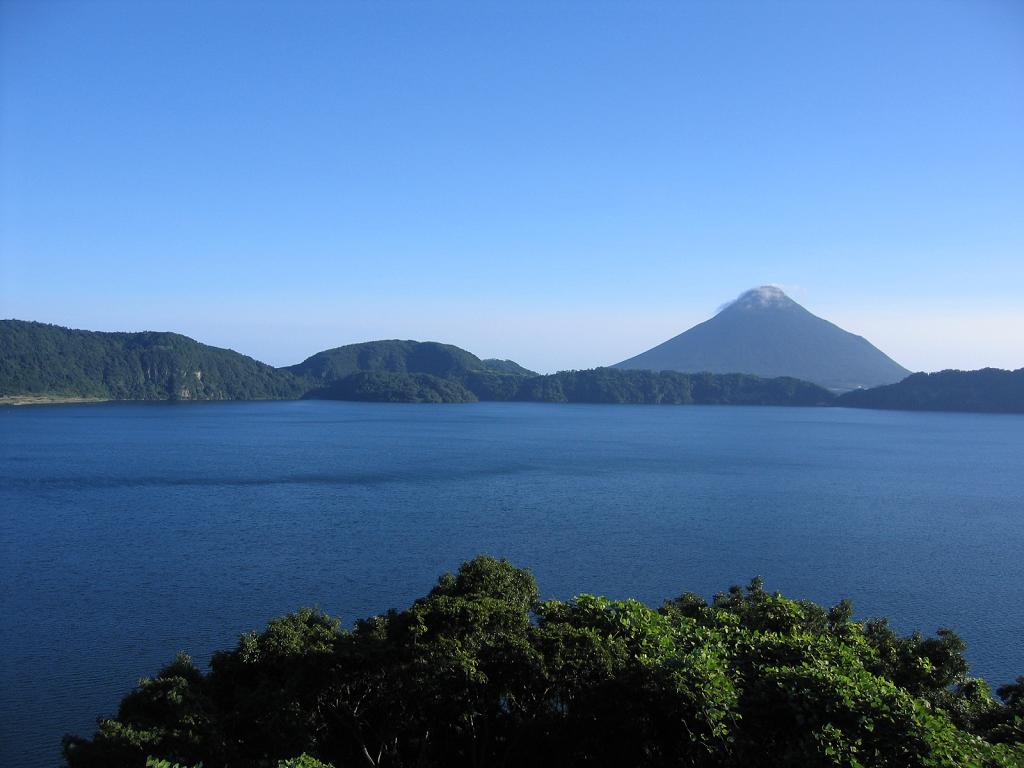
KagoshimaA 233-metre-deep caldera lake with a perfect volcanic cone behind it, and a population of two-metre eels that are the local legend.
Insider noteTwenty minutes inland from Ibusuki and directly on the way back north, so it costs almost nothing to add. The cone behind it is Kaimondake, called Satsuma-Fuji, and the classic composition puts the lake in front of it from the northern shore. The giant eels are real — protected, up to two metres, occasionally displayed at the lakeside centre — and the lake monster stories built on them are entirely not. Sunset here is better than the guidebooks suggest.

- Collect the rental car in central Kagoshima at 08:30. Compact class is ¥6,000–9,000 a day; book ahead in autumn. An international driving permit (1949 Geneva convention) is required and is checked.
- Kagoshima → Chiran: Route 226 then 23, ~50 min, no tolls.
- Chiran → Ibusuki: ~40 min over the hills on Route 232.
- Ibusuki → Lake Ikeda: ~20 min. Lake Ikeda → Kagoshima: Route 226 along the coast, ~1h20.
- Without a car: the Ibusuki no Tamatebako sightseeing train from Kagoshima-Chuo to Ibusuki (~50 min, reserved seats, book ahead) plus a local bus to Chiran makes a version of this day work — but you will do Chiran or Ibusuki, not both.
Lunch in Chiran or on the road to Ibusuki. Ibusuki's speciality is somen nagashi — cold noodles circulating in a spinning bowl of spring water at Tosenkyo, ¥1,000–1,500, which is more fun than it sounds and closes around 17:00. Dinner back in Kagoshima: this is the night for satsuma-age (fried fish cakes) and shochu at an izakaya, ¥3,000–4,500.
Same Kagoshima hotel. Ibusuki has famous onsen ryokan and you could stay there instead — but it adds an hour of driving tomorrow morning in the wrong direction, and the sand bath is a day-use experience regardless.
¥6,000–9,000 per person plus the car: Chiran gardens ¥530, sand bath ¥1,100, fuel ~¥2,000, food ¥4,000–6,000. No tolls today.
Into the Kirishima range
North into a volcanic massif of twenty-three peaks. A shrine at the foot of the mountain where the gods are said to have come down, a plateau of crater lakes almost nobody walks, and a night in a hot spring village fed by the same system.
- 10:001.5 hours
Kirishima Shrine
KagoshimaA vermillion shrine in cedar forest on the slopes of Takachiho-no-mine, marking where the grandson of the sun goddess is said to have descended to earth.
Insider noteThe current buildings are 1715 and the shrine itself has been rebuilt repeatedly because the volcano keeps destroying it — which is the whole story of this range in one sentence. The approach through the cedars is the part to slow down for. Free, open dawn to dusk, and rarely busy outside New Year. There is a viewpoint 200 metres past the main hall looking south over the Kagoshima plain to Sakurajima, and most visitors turn around before it.
- 12:303 hours
Ebino Kogen Plateau
KagoshimaA 1,200-metre plateau with three crater lakes on a single 4km loop — one cobalt, one green, one still. The best short walk in southern Kyushu.
Insider noteThe three-lake loop (Fudoike, Byakushiike, Rokkannonmiike) is 4km, roughly two hours, well signposted and only gently graded — this is a walk rather than a hike. Check the volcanic alert level for Mt. Shinmoedake before you drive up: it has erupted within the last decade and the higher trails close without notice, though the lake loop usually stays open. There is a visitor centre with parking (¥500) and a free foot bath. In late October the plateau's susuki grass turns and the whole plateau goes silver; in May the Kyushu azaleas cover the slopes in red.
- 16:30Overnight
Kirishima Onsen Village
MiyazakiA scattered village of hot spring inns on the mountain's southern flank, fed by the same volcanic system, with several open-air baths facing the range.
Insider noteThe water here is sulphurous and cloudy white — a genuinely different mineral profile from Kagoshima's clear city springs, and the reason to sleep up here rather than drive back down. Ryokan are ¥15,000–28,000 per person with two meals. The rotenburo at the higher inns look out over the mountains and are best at dawn, before the mist burns off; that view is what you are paying for and it is worth setting an alarm. Day-use bathing at most inns is ¥600–1,000 between roughly 11:00 and 15:00 if you would rather sleep in Miyazaki.

- Kagoshima → Kirishima Shrine: Kyushu Expressway to Mizobe-Kagoshima IC then Route 223, ~1h10, tolls ~¥1,200.
- Kirishima Shrine → Ebino Kogen: the Kirishima skyline road, ~40 min of switchbacks with viewpoints. Confirm it is open — it closes for volcanic activity and for ice in midwinter.
- Ebino Kogen → Kirishima Onsen: ~40 min back down the same road.
- Fill the tank in Kagoshima. There is one reliable petrol station on the mountain and it keeps daytime hours.
- Without a car this day does not really work. The alternative is basing in Kirishima-Jingu by train from Kagoshima (~50 min) and taking the limited bus service to the shrine only, dropping Ebino Kogen entirely.
Lunch at the Ebino Kogen visitor centre — simple, ¥900–1,300, and the only option for 20km in any direction. Dinner is at the ryokan and is included: expect local river fish, mountain vegetables and Miyazaki beef, served at a set time you agree at check-in. Confirm dietary restrictions when you book, not on arrival — these kitchens plan a fixed menu.
A Kirishima Onsen ryokan with an open-air bath, booked 3–4 weeks ahead. This is the second of the route's two nights where the accommodation is the attraction. Budget alternative: Kirishima-Jingu town has minshuku at ¥8,000–12,000 with dinner, and the public baths are a short drive.
¥4,000–7,000 excluding the inn: tolls ~¥1,200, Ebino parking ¥500, fuel ~¥2,000, lunch ¥1,000–1,500. The shrine is free.
The Nichinan coast — cave shrine, island, moai
Over the range into Miyazaki and down a subtropical coastline: a shrine built inside a sea cave below a cliff, an island ringed by washboard rock, seven moai statues facing the Pacific, and a preserved castle town inland.
- 10:001.5 hours
Udo Jingu Shrine
MiyazakiA vermillion shrine built inside a sea cave in a cliff face, reached by a cliffside walkway above breaking surf.
Insider noteThe best-sited shrine in Kyushu and it is not close. Descend the cliff stairs and enter the cave — the main hall is genuinely inside it, with the sea audible throughout. The local ritual: buy five clay undama balls (¥200), and throw them left-handed if you are male, right-handed if female, at a rope-marked target on a rock in the sea below. Landing one inside the rope is good luck and almost nobody manages it. Arrive before 11:00; the car park is small and the walkway is single-file. Free entry.
- 12:001 hour
Sun Messe Nichinan
MiyazakiSeven full-size moai replicas on a hillside above the Pacific — the only ones anywhere authorised by the Rapa Nui elders.
Insider noteAbsurd on paper and better than it should be in practice. The permission granted by the Easter Island council in the 1990s came after Japanese engineers helped restore the original statues, which is the detail that makes this a tribute rather than a theme park. ¥1,000, and the site is essentially one hillside with a view — thirty minutes is enough if you are not eating there. Directly on the road between Udo Jingu and Aoshima, so it costs nothing in detour.
- 13:301.5 hours
Aoshima Island
MiyazakiA small subtropical island connected by footbridge, covered in palms, with a shrine at its centre and washboard rock formations around its shore.
Insider noteThe rock shelves around the island are called the Devil's Washboard — parallel ridges of sandstone exposed at low tide, and the whole thing is only visible when the tide is out. Check a tide table before you fix this hour; at high tide you get an island, at low tide you get the geology. The island is a ten-minute walk end to end and the shrine at its centre is free. The beach town behind it has a good surf-café strip and is the right lunch stop.
- 15:301.5 hours
Obi Castle Town
MiyazakiA preserved castle town of stone walls, samurai residences and a restored school hall — 'Little Kyoto of Kyushu', and almost empty.
Insider noteForty minutes inland from Aoshima and the reason to have a car. A combined ticket (~¥600) covers the castle grounds, the Matsuo-no-Maru residence and the Yoshokan. The local snack is obiten, a sweet deep-fried fish cake sold from a handful of shops on the main street, and it is unlike the savoury version elsewhere. Most of the town closes around 17:00 and there is essentially no evening here — this is an afternoon stop, then drive on.
- 18:301 hour
Ogura Honten
MiyazakiThe Miyazaki restaurant where chicken nanban was invented — fried chicken in sweet vinegar under tartare sauce, now a national dish.
Insider noteThis is the original and it is a plain, busy, unfussy restaurant that has been serving the same thing since the 1950s. Queues at peak hours are normal and move fast; go at 18:00 or after 20:00. Around ¥1,200–1,600 for the set. If it is full, Miyazaki's other claim is jidori — charcoal-grilled free-range chicken, served black from the binchotan, at any number of places within a few blocks.


- Kirishima Onsen → Udo Jingu: Route 223 to the Miyazaki Expressway, ~2h15, tolls ~¥1,800. Leave by 07:45.
- Udo Jingu → Sun Messe: 10 min. Sun Messe → Aoshima: ~25 min up the coast road, which is the scenic stretch — the Nichinan coast road is one of the better drives in Japan and there are pull-offs.
- Aoshima → Obi: ~40 min inland. Obi → Miyazaki city: ~50 min on the expressway.
- Parking in central Miyazaki is ¥800–1,200 overnight at hotel lots; confirm when booking.
- Without a car: the JR Nichinan line runs Miyazaki–Aoshima–Obi and is a pleasant local train, but Udo Jingu needs an infrequent bus from Obi station and Sun Messe is not served at all.
Lunch at Aoshima — the beach strip has cafés and a few good seafood places, ¥1,200–2,000. Obi's obiten is a snack, not a meal. Dinner is chicken nanban, ¥1,200–1,600, or Miyazaki beef if you would rather spend: it competes with Kobe and Matsusaka and costs ¥6,000–12,000 for a proper steak course.
One night in central Miyazaki city — business hotels at ¥7,000–11,000, several with parking included. Tachibana-dori is the nightlife street and the hotels around it are convenient. Aoshima also has beachfront places if you would rather wake up on the coast, at the cost of 30 minutes on tomorrow's long drive.
¥7,000–11,000 per person: tolls ~¥1,800, Sun Messe ¥1,000, Obi combined ticket ¥600, fuel ~¥2,500, parking ~¥1,000, food ¥4,000–6,000. Udo Jingu and Aoshima are free.
Takachiho — the gorge where the myth is set
Three hours inland to a basalt gorge you row a boat through, the cave where the sun goddess is said to have hidden, and a shrine that performs the sacred dance every night of the year. Then out via Kumamoto.
- 10:302 hours
Takachiho Gorge
MiyazakiA narrow gorge of columnar basalt cut by the Gokase river, with a 17-metre waterfall dropping straight into it — and rowing boats you take through yourself.
Insider noteThe rowing boats are the thing, and they are the constraint on this entire day. Roughly ¥5,000 for 30 minutes for up to three people, and in high season a same-day numbered-ticket system opens in the morning and sells out within a couple of hours — check the current reservation rules before you set off, because they have changed repeatedly. Boats suspend entirely after heavy rain, which is common. The riverside walking path above the gorge is free, takes 30 minutes, and gives you the waterfall view whether or not you get a boat, so the day survives a cancellation. Go early: by 13:00 the car parks are full.
- 13:001 hour
Amano Yasukawara Cave
MiyazakiA riverside cave where, in the myth, the eight million gods gathered to plan how to lure the sun goddess out of hiding. Visitors stack stones by the thousand.
Insider noteA ten-minute walk downstream from Amano-Iwato Shrine, along the river, and the walk is half the experience — the path is quiet and the stone stacks begin long before the cave. There is no admission and nothing built here; it is a cave, a river, and an accumulation of small cairns left by visitors. Do not knock them over and do not build on the marked paths. This is the least developed and most affecting stop on the route.
- 20:001 hour
Takachiho Yokagura
MiyazakiSacred kagura dance, masked and torch-lit, retelling the sun goddess myth. Performed at Takachiho Shrine every night of the year.
Insider noteThe nightly performance at the shrine is a one-hour, four-dance abridgement, ¥1,000, no reservation, doors around 19:30 and it fills — arrive by 19:00 in season. The real thing is different: from late November to early February, individual farming hamlets host the full 33-dance yokagura through the entire night, in private houses, open to visitors who behave as guests rather than audience. If your dates fall in that window, that is the single most extraordinary thing on this itinerary and it is worth restructuring the trip around. This stop requires an overnight in Takachiho — if you are flying out today, drop it.

- Miyazaki → Takachiho: Route 218 inland, ~2h45, mostly toll-free. Leave by 07:30 to reach the gorge before the boat queue.
- Takachiho → Kumamoto Airport: Route 325 across the Aso caldera's southern rim, ~2h15, and it is a genuinely beautiful drive. Takachiho → Kumamoto city is ~2h30.
- Drop the rental car at Kumamoto Airport or Kumamoto station — one-way drop fees between prefectures are ¥5,000–10,000 and must be arranged at booking, not on the day.
- If you stay for the evening kagura, you are driving to Kumamoto tomorrow morning and need a Takachiho night booked well ahead — the town has very few beds.
- Without a car: the Miyazaki–Takachiho highway bus runs a few times daily (~3h15, ~¥3,000) and there is a Kumamoto–Takachiho bus, but the two connect badly and the gorge is a 30-minute walk from the bus centre.
Breakfast in Miyazaki before the drive. Lunch in Takachiho town: nagashi somen at Chiho-no-ie beside the gorge, or the local speciality of Takachiho beef, ¥1,500–3,000. If you are flying out, eat at Kumamoto Airport — it is small but has decent regional food.
Departure day if you are flying from Kumamoto — aim to be at the airport 2 hours before an ANA/JAL domestic flight to Tokyo or Osaka. If you stay for the kagura, Takachiho's inns are ¥10,000–18,000 with meals and there are perhaps a dozen of them; book two months ahead for the winter festival season.
¥7,000–13,000 per person: boat ¥5,000 split between up to three people, kagura ¥1,000, fuel ~¥3,000, one-way car drop fee ¥5,000–10,000 shared, food ¥3,000–5,000.
Book before you leave home
- 1Rental car for days 2–5, with an international driving permit obtained before you leave home — Japan accepts the 1949 Geneva convention permit only, and rental desks check it. Arrange the one-way drop to Kumamoto at booking time; it cannot be added later.
- 2Kirishima Onsen ryokan (Day 3), 3–4 weeks ahead, longer for autumn weekends. This is the scarcest bed on the route.
- 3Takachiho gorge rowing boats — check the current same-day ticketing or advance reservation rules a week before you travel. The system has changed repeatedly and it is the one bookable item that can decide your whole Day 5.
- 4Flights into Kagoshima and out of Kumamoto (open-jaw). Booking a return to Kagoshima forces a four-hour backtrack on the last day and there is no reason to do it.
- 5If travelling late November–early February: the full overnight yokagura in the farming hamlets. Enquire through the Takachiho tourist association months ahead, and book a Takachiho room the same day you confirm.
- 6Check volcanic alert levels for Sakurajima, Shinmoedake and Aso in the week before you travel. All three affect this route and all three change without much notice.
Where the money goes
| Accommodation (4 nights)Two business-hotel nights in Kagoshima and one in Miyazaki are cheap; the Kirishima ryokan is most of this line. | ¥40,000–75,000 |
| Rental car, fuel, tollsFour days of compact hire ¥24,000–36,000, fuel ~¥9,000, tolls ~¥3,000, one-way drop fee ¥5,000–10,000. Split between two people this is ¥15,000–20,000 each. | ¥28,000–40,000 |
| Admissions & experiencesSengan-en, the sand bath, Chiran's gardens, Ebino parking, Sun Messe, Obi, the gorge boat, kagura. | ¥8,000–13,000 |
| FoodTwo ryokan dinners are inside the accommodation line rather than here. | ¥20,000–30,000 |
| Flights within JapanTokyo–Kagoshima and Kumamoto–Tokyo. Book domestic legs early; walk-up fares are roughly double. | ¥20,000–45,000 |
Per person unless a line says otherwise. Excludes international flights.
Shorter, longer, or a different season
- Cutting to 3 days: Kagoshima and Sakurajima, the Satsuma peninsula, and Kirishima. Drop Miyazaki entirely — it is the half of the route that needs the most driving for the least density.
- Cutting to 4: drop Day 5. Takachiho is three hours from anywhere and it is the stop that most rewards not being rushed, so a half-hearted version of it is worse than no version.
- Extending to 7: add two days for Yakushima — the ancient cedar island, reached by a 2h50 ferry or a 35-minute flight from Kagoshima. It is the single best thing in the prefecture and it does not fit into a day.
- Extending to 8–9: run this route into the northern Kyushu itinerary at Kumamoto, which is where they meet. Aso, Kurokawa Onsen, Beppu and Nagasaki continue naturally from there and no leg is repeated.
- Without a car at all: base in Kagoshima for three nights (Sakurajima, Ibusuki by the sightseeing train, Chiran by bus), then take the Kirishima-Jingu train and the Miyazaki line for two more. You will lose Ebino Kogen, Udo Jingu and Takachiho — roughly the three best landscapes here — which is the honest case for hiring the car.
- In the June rainy season, Takachiho's boats and the Kirishima skyline road are both frequently closed and the coast is grey. This is the one route on the site where the season genuinely decides whether the itinerary works.
Journey times, fares and opening hours come from each spot's access information and are typical rather than guaranteed. Timetables, seasonal closures and volcanic alert levels change — confirm the legs your day depends on. Last revised 2026-07-30.
Related Links
Spots on this route
Other itineraries
- Kansai in 5 Days — The Quiet Side of the Golden Route
- Kyushu in 6 Days — Volcano, Onsen and the Christian Coast
- Japan Alps to the Sea of Japan — 5 Days
- Tohoku in 5 Days — The Quiet North
- The Golden Route in 7 Days — Tokyo, Hakone, Kyoto, Osaka
- 10 Days Beyond the Golden Route — San'in, Setouchi and Shikoku