

The Golden Route in 7 Days — Tokyo, Hakone, Kyoto, Osaka
The classic first trip, sequenced so the famous sights are the quiet part of your day
Late March–early April and late October–early December are the two best windows; May and late September are the safest all-round. Avoid Golden Week (Apr 29–May 5), Obon (mid-August) and New Year — every leg of this route is at its worst in those three periods.
Roughly ¥140,000–230,000 per person for seven days excluding international flights. Accommodation is over half of that, and the Hakone night is the single most variable line.
A first trip to Japan, for travellers who genuinely want the famous sights rather than an alternative to them. Comfortable walking 10–16 km a day and changing hotels three times. Not the route for a second visit — see the 10-day off-the-beaten-path itinerary for that.
Why this route
Almost every first-time visitor ends up on some version of this line, and there is nothing wrong with that: Tokyo, Hakone, Kyoto and Osaka are famous because they are genuinely extraordinary. What goes wrong is the ordering. The default version runs Tokyo for three days, takes the bullet train mid-morning, and reaches Kyoto's east side at exactly the hour every coach tour does.
This version fixes the clock rather than the list. The two hardest-hit sights on the whole route — Fushimi Inari and Kiyomizu-dera — are scheduled at first light and late afternoon respectively. Hakone sits in the middle as a deliberate soft day, because the third day of a first trip is when jet lag actually lands, and a mountain onsen absorbs that far better than another city. Nara is a day trip rather than a night, and Osaka gets the final evening because Osaka is a night city and a poor morning one.
Seven days is the shortest honest version of this route. Six forces you to choose between Hakone and Nara; eight would let you add a second Tokyo neighbourhood or a Kyoto rest morning. The days below are unequal on purpose — Tokyo and Kyoto are dense, Hakone is not, and that rhythm is what stops day five from being the day the trip stops being fun.
The route on a map
Every mapped stop, coloured by day and numbered in visiting order. Tap a pin to open the spot.
What makes it different
- Senso-ji's main hall at 7am, hours before Nakamise-dori becomes a river of people
- Hakone's crater valley, pirate-boat lake and open-air sculpture park as one loop, ending in a hot spring
- Fushimi Inari's upper torii tunnels before the first train of tourists arrives
- Kiyomizu-dera in the last hour of light, when the day trips have gone back to Kyoto Station
- Nara Park early enough that the deer still outnumber the visitors
- Osaka's food districts in the correct order: market at opening, skewers at dusk, neon canal after dark
Old Tokyo — the east side, early
Land-day or first full day, built to survive jet lag: one neighbourhood, walkable, front-loaded. Tokyo's oldest temple at dawn, the tower and the river through the middle of the day, and an early izakaya dinner so you sleep on local time.
- 07:001.5 hours
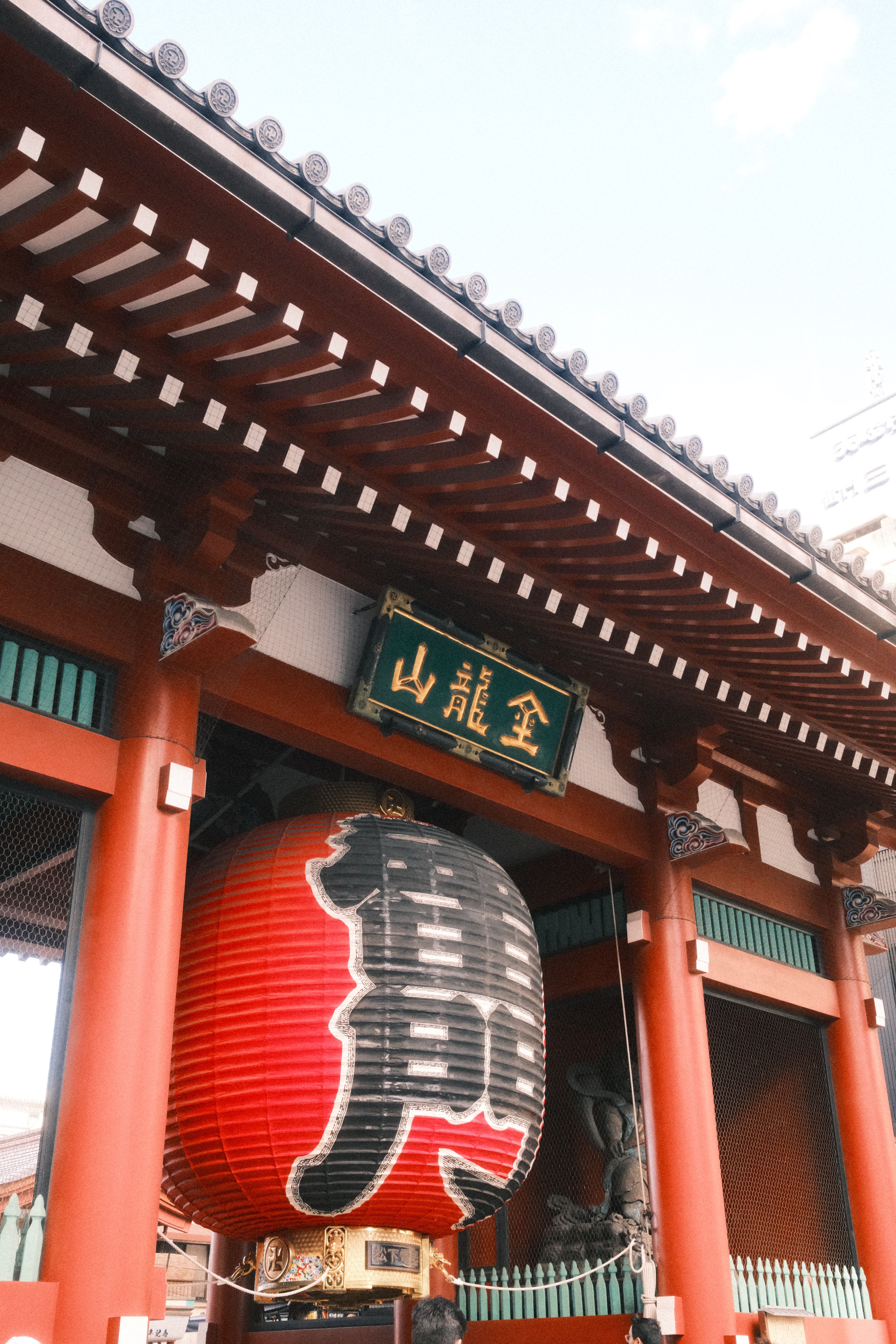
Senso-ji Temple
TokyoTokyo's oldest Buddhist temple, approached through a 200-metre lane of snack and souvenir stalls. Enormous, red, and completely different before and after 9am.
Insider noteThe temple grounds never close, and this is the single most useful fact on the whole route. At 7:00 you can stand under the Kaminarimon lantern with nobody in the frame; by 10:00 Nakamise-dori is a slow-moving crowd you cannot photograph through. The stalls themselves open around 9:00–10:00, so if you want to shop, walk the grounds first, have breakfast nearby, and come back. Also walk two minutes east to the Sumida riverbank for the Skytree-and-temple view most people never find.
- 10:001.5 hours
Tokyo Skytree
TokyoThe world's tallest tower, twenty minutes' walk across the river from Asakusa. Two decks; the lower one is enough.
Insider noteBuy the timed ticket online before you fly — the same-day queue can run over an hour and the date-specified advance ticket is also cheaper. Take the 350m deck only; the 450m upsell adds height and very little else. Weather matters more than time of day here: on a hazy summer afternoon you are paying to look at grey. Winter mornings after rain are the clear ones, and that is when Fuji appears on the south-west horizon.
- 13:002–3 hours
Ueno Park
TokyoA wide green park holding the Tokyo National Museum, a zoo, a pond and several galleries — the most museum-dense square kilometre in Japan.
Insider noteDo not try to do the whole park. The Tokyo National Museum's Honkan (Japanese Gallery) alone is a focused 90 minutes and the best single introduction to Japanese art in the country; skip the other buildings on a first visit. Closed Mondays (Tuesday when Monday is a public holiday) — if your Day 1 lands on a Monday, swap this slot for Yanaka's old streets, ten minutes north.
- 16:301.5 hours
Akihabara Electric Town
TokyoSix floors at a time of anime, retro games, electronics and hobby shops, stacked vertically along one main street.
Insider noteThe interesting stock is upstairs. Ground floors are gachapon and tourist-priced goods; the second-hand floors above are where the actual finds are, and prices are marked, fixed and honest. On Sundays the main street closes to cars in the afternoon. If retro gaming is the draw, Super Potato's upper floors are the reference point — cramped, expensive, and unmatched.
- 18:302 hours
Tokyo Izakaya Culture
TokyoSmall plates, cold beer, loud rooms. The default Japanese evening and the best value meal of your first day.
Insider noteMost izakaya charge a small per-person seating fee (otoshi, ¥300–600) that arrives as a snack you did not order — this is normal, not a scam. Order in waves rather than all at once. The chains around Ueno and Okachimachi have picture menus and are genuinely fine; the standing bars under the Yamanote line tracks are cheaper, better, and require pointing. Do not push past 21:00 on day one — the jet lag you avoid tonight is the morning you gain tomorrow.


- Narita → central Tokyo: Keisei Skyliner to Ueno, ~45 min, ¥2,570; or the N'EX to Tokyo/Shinjuku, ~60–80 min, ~¥3,070. Haneda → central Tokyo: Keikyu or Tokyo Monorail, ~30 min, ~¥500–700.
- Asakusa → Tokyo Skytree: 20-min walk over the Sumida, or one stop on the Tobu Skytree line (~¥150).
- Skytree → Ueno: Tobu line to Asakusa then Ginza subway line, ~20 min; or a direct bus.
- Ueno → Akihabara: JR Yamanote or Keihin-Tohoku, 3 min, ¥150.
- Get a Suica or Pasmo IC card at the airport (or add one to your phone before you fly) — every leg above is tap-in, tap-out, and buying paper tickets each time will cost you more time than money.
Breakfast is whatever is open at 6:30 — a convenience store onigiri and coffee is the honest answer on day one, and it is better than it sounds. Lunch near Ueno: the standing soba shops in the station's Ameyoko side are ¥500–800 and take ten minutes. Dinner izakaya, ¥3,000–5,000 per person with drinks.
Stay in Asakusa or Ueno for these two nights rather than Shinjuku or Shibuya. It is markedly cheaper, both airport routes land near it, and it puts Day 1 entirely on foot. The trade is that the nightlife is quieter — which on jet-lag night is a feature. If you would rather be central for Day 2's west side, Shinjuku is the alternative and costs roughly 30–50% more.
¥7,000–11,000 per person: Skytree ¥2,100–3,100, Tokyo National Museum ¥1,000, trains ¥800–1,200, food ¥4,000–6,000. Senso-ji and Ueno Park cost nothing.
West Tokyo — shrine forest to neon
The other Tokyo, in one arc: a 100-year-old forest planted by hand, the loudest teenage street in Asia, the crossing everyone films, and the alleys behind Shinjuku station after dark. All of it inside three Yamanote stops.
- 08:001.5 hours
Meiji Shrine
TokyoA vast Shinto shrine inside a forest of 100,000 donated trees — planted in the 1920s, and now indistinguishable from ancient woodland.
Insider noteEnter from the Harajuku (south) gate and leave by the Yoyogi (north) one, so the walk is one-way rather than a return. On weekend mornings there is a real chance of seeing a Shinto wedding procession cross the main courtyard — no ticket, no schedule, just be there before 11:00. The Inner Garden (¥500) is skippable except in mid-June, when its iris field is one of the best things in Tokyo.
- 10:001 hour
Takeshita Street
TokyoA 350-metre pedestrian lane of crêpes, thrift shops and teenage fashion, directly across from the shrine's south gate.
Insider noteGenuinely unpleasant after about 13:00 on a weekend — this is a corridor built for a third of the people who use it. Ten o'clock is the window. If the crush is not what you came for, walk the parallel Cat Street south instead: same neighbourhood, adult version, and it delivers you to Shibuya on foot in twenty minutes.
- 12:001 hour
Shibuya Scramble Crossing
TokyoUp to 3,000 people crossing in every direction at once, several times a minute. Short to see, and worth seeing twice.
Insider noteThe free view is the second-floor window of the Starbucks in Tsutaya, if you can get it — arrive off-peak and be patient. The paid views (Shibuya Sky, Mag's Park) are better but need advance tickets, and Shibuya Sky in particular sells out its sunset slots days ahead. Cross it once yourself before you photograph it. It is much more impressive from inside the crowd than above it.
- 13:301.5 hours
Shibuya Parco
TokyoA vertical department store of art, designer fashion and — on the sixth floor — the Nintendo, Pokémon and Jump flagship stores.
Insider noteThe sixth floor is why most visitors come and it is the single busiest floor; go up first and work down. The Nintendo Tokyo store issues numbered entry tickets on busy weekends, so if it is the reason you are here, be at the doors near opening. The rooftop is free, open, and one of the few places in Shibuya you can sit down without buying anything.
- 16:301 hour
Tokyo Metropolitan Building
TokyoA 202-metre observation deck over west Tokyo, with Fuji on the horizon on clear days — and no admission charge at all.
Insider noteFree, and better than several of the paid decks. Take the North tower if both are open; it stays open later. Aim to be up 30 minutes before sunset and stay through it — the transition from daylight to the lit grid is the whole reason to come, and it costs nothing to wait. Bring ID for the security check. Closed the first and third Tuesday of the month (South) and the second and fourth Monday (North).
- 18:302.5 hours
Shinjuku Kabukicho
TokyoThe densest nightlife district in Japan, and next to it the six alleys of tiny bars that are the reason to come at all.
Insider noteKabukicho proper is worth one walk-through and no more. What you actually want is Omoide Yokocho (west of the station) for grilled skewers and smoke, or Golden Gai (east) for six alleys of bars seating five people each. Golden Gai bars commonly charge a ¥500–1,500 cover per person; bars that welcome visitors say so in English on the door, and the ones that do not are not being rude — they are regulars-only rooms. Ignore anyone who approaches you on the street offering a bar or a club. That is the one genuine scam risk in Tokyo and it is entirely avoidable by walking on.


- Ueno/Asakusa → Harajuku: JR Yamanote line, ~25 min, ¥200.
- Harajuku → Shibuya: one Yamanote stop, or a 20-min walk down Cat Street — walk it if the weather is fine.
- Shibuya → Shinjuku: JR Yamanote, 6 min, ¥160. The Metropolitan Building is a 10-min walk from Shinjuku's west exit, or free shuttle from the south side.
- Every leg today is Yamanote line. A day pass is not worth it at these distances — pay per tap.
Breakfast before 8:00 near your hotel. Lunch in Shibuya — the department store basements (depachika) at Tokyu or Hikarie are the best-value good food in the district. Dinner is Omoide Yokocho skewers, ¥2,500–4,000 with drinks, or a proper ramen shop in Shinjuku for ¥1,000–1,500.
Second night at the same hotel as Day 1 — do not move for one night. Tomorrow's departure is from Tokyo or Shinagawa station either way, and repacking to save fifteen minutes of transfer is a bad trade on the second day of a trip.
¥6,000–10,000 per person: trains ¥600–900, admissions ¥0–2,500 (the observatory is free; Shibuya Sky is ¥2,200 if you add it), food ¥4,500–7,000.
Hakone — the soft day, on purpose
Out of the city into a volcanic caldera. A loop of cable cars, a sulphur valley, a lake with a torii gate standing in the water, and a hot spring at the end of it. The lightest day of the week, placed where jet lag actually hits.
- 10:002 hours
Hakone Open-Air Museum
KanagawaSeventy thousand square metres of hillside with sculpture standing in it, plus a Picasso pavilion and a foot bath fed by hot spring water.
Insider noteCome here first, while the weather is whatever it is — this is the one stop on the Hakone loop that works in rain. There is a free foot bath near the café with a towel vending machine beside it; bring your own small towel and skip the ¥100. Discount coupons are printed on the Hakone Free Pass leaflet and on most hotel desks, worth ¥100–200 off the ¥1,600 admission.
- 12:301 hour
Owakudani Valley
KanagawaA steaming sulphur valley 1,000 metres up, reached by ropeway over the crater rim. Black eggs boiled in the springs are the local ritual.
Insider noteCheck the volcanic activity status the morning of — the ropeway and the valley walk suspend without much warning when gas levels rise, and the substitute buses are slow. The black eggs (¥500 for five) are ordinary boiled eggs with a shell blackened by iron sulphide; the local claim is seven extra years of life per egg, which nobody believes and everybody repeats. If you are sensitive to sulphur dioxide or asthmatic, stay on the upper terrace rather than walking down toward the vents.
- 14:001.5 hours
Lake Ashi
KanagawaA caldera lake crossed by absurd replica pirate ships, with Mt. Fuji visible over the far shore when the weather cooperates.
Insider noteSit on the starboard (right) side leaving Togendai — that is the Fuji side. Fuji is visible on roughly one winter day in two and far fewer summer ones; mornings are clearer than afternoons, so if the sky is unusually good, consider running today's loop backwards. The ships are covered by the Hakone Free Pass, so the ride is effectively free if you hold one.
- 15:451 hour
Hakone Shrine
KanagawaA shrine in old cedar forest, with a vermillion torii standing in the lake itself — the most photographed object in Hakone.
Insider noteThere is an official queue for the photo at the lakeside torii and it can run 30–45 minutes on weekends; there is also no rule that you must join it — the shot from the path 50 metres north is nearly identical and empty. The cedar-lined stone staircase up to the main shrine is the better part of the visit and almost nobody walks it. Free.
- 17:302 hours
Hakone Yumoto Onsen
KanagawaThe gateway hot spring town: a river gorge, a street of shops, and the highest density of public baths on the route.
Insider noteIf your inn has its own bath, use that instead and treat Yumoto as a shopping street. If not, the day-use baths here run ¥1,000–2,000 and most stop admitting new bathers around 18:00–19:00, well before they close. Tattoos remain a genuine obstacle at several — call ahead or choose a place with private family baths (kashikiri), which sidestep the question entirely and cost ¥3,000–5,000 for 45 minutes.


- Shinjuku → Hakone-Yumoto: Odakyu Romancecar, ~85 min, ~¥2,470 including the limited-express surcharge. Reserve the seat — this train sells out on weekend mornings.
- Buy the Hakone Free Pass (2 days, ~¥6,100 from Shinjuku) at the Odakyu counter. It covers the train, the mountain railway, both cable cars, the ropeway, the lake ships and the buses. Running today's loop on individual tickets costs more than the pass, so this is one of the few Japanese passes that is unambiguously worth it.
- The loop: Hakone-Yumoto → Chokoku-no-Mori (mountain railway, 40 min) → Gora → Sounzan (cable car) → Owakudani (ropeway) → Togendai (ropeway) → Moto-Hakone (lake ship, 30 min) → Hakone-Yumoto (bus, 40 min).
- Forward your main luggage from your Tokyo hotel directly to your Kyoto hotel (takkyubin, ~¥2,000–2,500 per bag, next-day delivery) and do Hakone with an overnight bag. The mountain railway and the ropeway are not built for suitcases.
Lunch at Owakudani or the museum café — both are captive-audience pricing and neither is memorable; eat lightly and save the appetite. Dinner is the point of today: if you are in a ryokan, it is kaiseki served in your room or a dining hall, included in the room rate. If not, Yumoto's street has soba and river-fish restaurants at ¥2,000–3,500, most closing by 20:00.
A ryokan with its own onsen, and this is the night of the week to spend on it. ¥18,000–40,000 per person with dinner and breakfast is the normal band; Hakone also has ¥10,000–14,000 options that still have a real bath. Book 1–2 months ahead, more for autumn weekends. Staying near Yumoto is convenient; staying up at Gora or Sengokuhara is quieter and better, at the cost of a bus.
¥4,000–7,000 excluding the inn and the pass: museum ¥1,600, black eggs ¥500, lunch ¥1,500–2,500, day-use bath ¥1,000–2,000 if your lodging has none. The Free Pass (~¥6,100) covers all of today's transport.
Bullet train to Kyoto, and the east side at dusk
A morning on the shinkansen, and an afternoon that deliberately arrives at Kyoto's most crowded temple in its emptiest hour. Old streets on the way up, the wooden stage in the last of the light, and the geisha quarter after dark.
- 13:301 hour
Sanjusangen-do
KyotoA 120-metre wooden hall holding 1,001 gilded Kannon statues in ranks, unchanged since 1266. No photography, and no need for any.
Insider noteTen minutes from Kyoto Station, which makes it the right first stop with luggage still on your mind. Photography is banned inside and enforced — this is a rare Kyoto sight you experience only by looking, and it is far more powerful for it. Give it a full hour and walk the hall twice, once in each direction. The light from the west windows in the late afternoon is the reason to come at this hour rather than the morning.
- 15:301.5 hours
Kiyomizu-dera
KyotoA vast wooden stage cantilevered over a wooded hillside on 13-metre pillars, built without nails, with the whole city behind it.
Insider noteThe last admission is around 17:30 (later in the seasonal night-opening periods) and the two hours before it are the best of the day: the coach tours leave around 15:30 for their Osaka hotels, and the light on the stage turns gold. Walk up via Sannenzaka and Ninenzaka — the stone-stepped lanes on the south approach — and come down the northern route to Yasaka Shrine, so you never repeat a street. Check the spring and autumn night-illumination dates before you fix this day; if they land in your window, this stop moves to 18:00 and becomes the best hour of the trip.
- 17:301.5 hours
Gion District
KyotoWooden machiya teahouses along Hanamikoji and the willow-lined Shirakawa canal — the working quarter of Kyoto's geiko and maiko.
Insider noteDusk, roughly 17:30–18:30, is when geiko and maiko actually move between appointments, and it is also when the private lanes off Hanamikoji are legally closed to photography — those signs are enforced with real fines, and the residents are not performers. Walk the public streets, do not follow anyone, do not stop them. The Shirakawa canal stretch north of Shijo is the prettier half and gets a fraction of the crowd.
- 19:002 hours
Pontocho Alley
KyotoOne lantern-lit lane, a person wide in places, running along the Kamo River. The best dinner atmosphere in the city.
Insider notePrices swing wildly between neighbouring doorways. A photo menu in English and a greeter outside marks the tourist tier; a noren, a hand-written board and no greeter marks where the value flips. The riverside platform seating (kawadoko, May–September) is a reservation made days ahead, not a walk-in. Pontocho is a five-minute walk from Gion across Shijo bridge, which is why these two are the same evening.


- Hakone-Yumoto → Odawara: Hakone Tozan line, 15 min (covered by the Free Pass on its second day).
- Odawara → Kyoto: Tokaido shinkansen, ~2h05 with one change at Nagoya or direct on a Hikari, ~¥12,000 unreserved. Nozomi services are faster but not covered by the JR Pass; Hikari is the pass-friendly option and only 15–20 minutes slower.
- Sit on the right (D/E seats) leaving Odawara for the Fuji views between Odawara and Shizuoka — about 20 minutes in, and worth watching for.
- Kyoto Station → Sanjusangen-do: city bus 100 or 206, ~10 min, ¥230. Sanjusangen-do → Kiyomizu-dera: bus 206 to Kiyomizu-michi, then a 10-min uphill walk.
- Drop your bags at the Kyoto hotel before Sanjusangen-do, or use the station's coin lockers — the Kiyomizu approach is stairs and slopes and no place for a suitcase.
Breakfast at the ryokan, which will be substantial and is included. Lunch is an ekiben on the shinkansen — this is a genuine food tradition rather than a compromise, and Odawara's station sells good ones for ¥1,000–1,500. Dinner in Pontocho: ¥3,000–6,000 per person at an izakaya, ¥12,000 and up the moment kaiseki is involved.
Two nights near Karasuma-Oike or Shijo-Karasuma rather than at Kyoto Station. Both sit on the subway crossing point, put you within walking distance of dinner, and remove a 30-minute bus ride from tomorrow morning. Station-front hotels are cheaper and you repay the difference in commuting.
¥17,000–23,000 per person including the shinkansen: rail ~¥12,000, Sanjusangen-do ¥600, Kiyomizu-dera ¥400, buses ¥700, food ¥4,000–7,000.
Kyoto — torii at dawn, bamboo before the buses
The single highest-return early start in Japan, followed by the west side before it fills. Fushimi Inari at first light, Arashiyama's bamboo mid-morning, the gold pavilion at midday, and a market afternoon.
- 06:152 hours
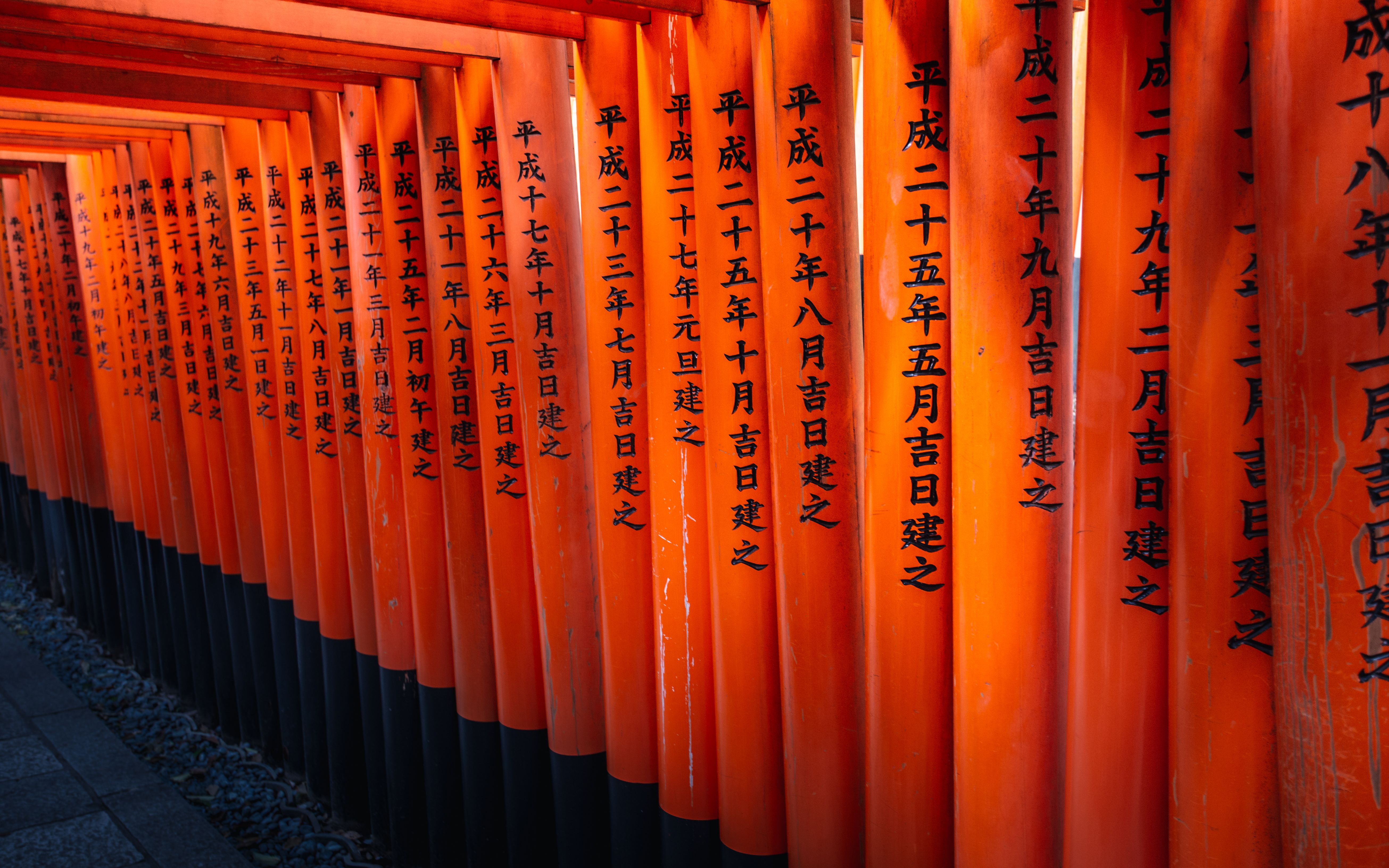
Fushimi Inari Taisha
KyotoThousands of vermillion torii gates in tunnels up a wooded mountain, open every hour of every day, free.
Insider noteThis is the one alarm clock worth setting on the whole trip. The shrine never closes and has no gate; at 6:15 the lower tunnels are empty and silent, and by 9:30 they are a single-file queue. Climb at least as far as the Yotsutsuji junction (about 45 minutes up) — that is where the crowd thins to nothing even later in the day, and where the view over south Kyoto opens. The full summit loop is 2–3 hours and is genuinely optional; the gates are densest in the first twenty minutes.
- 09:3045 minutes
Arashiyama Bamboo Grove
KyotoA few hundred metres of path between towering green bamboo — short, famous, and entirely about when you arrive.
Insider noteThe grove is smaller than every photograph implies: it is one path, walkable in ten minutes. Before 9:00 it is extraordinary; by 11:00 it is a shuffling queue and the photos are of other people's backs. Given today's Fushimi start you will arrive around 9:30, which is workable but tight — go straight to the grove on arrival and do Tenryu-ji afterwards, not before.
- 10:301 hour
Tenryu-ji Temple
KyotoA UNESCO Zen temple whose 14th-century pond garden uses the Arashiyama hills themselves as part of the composition.
Insider noteThe garden and the buildings are separate tickets (~¥500 and ~¥300); the garden alone is the one that matters. The north gate of the garden exits directly into the bamboo grove, which means you can enter the grove from the quiet end if you reverse the usual order. The garden is at its best in early morning and in November, and it opens at 8:30 — earlier than most of Kyoto.
- 13:0045 minutes
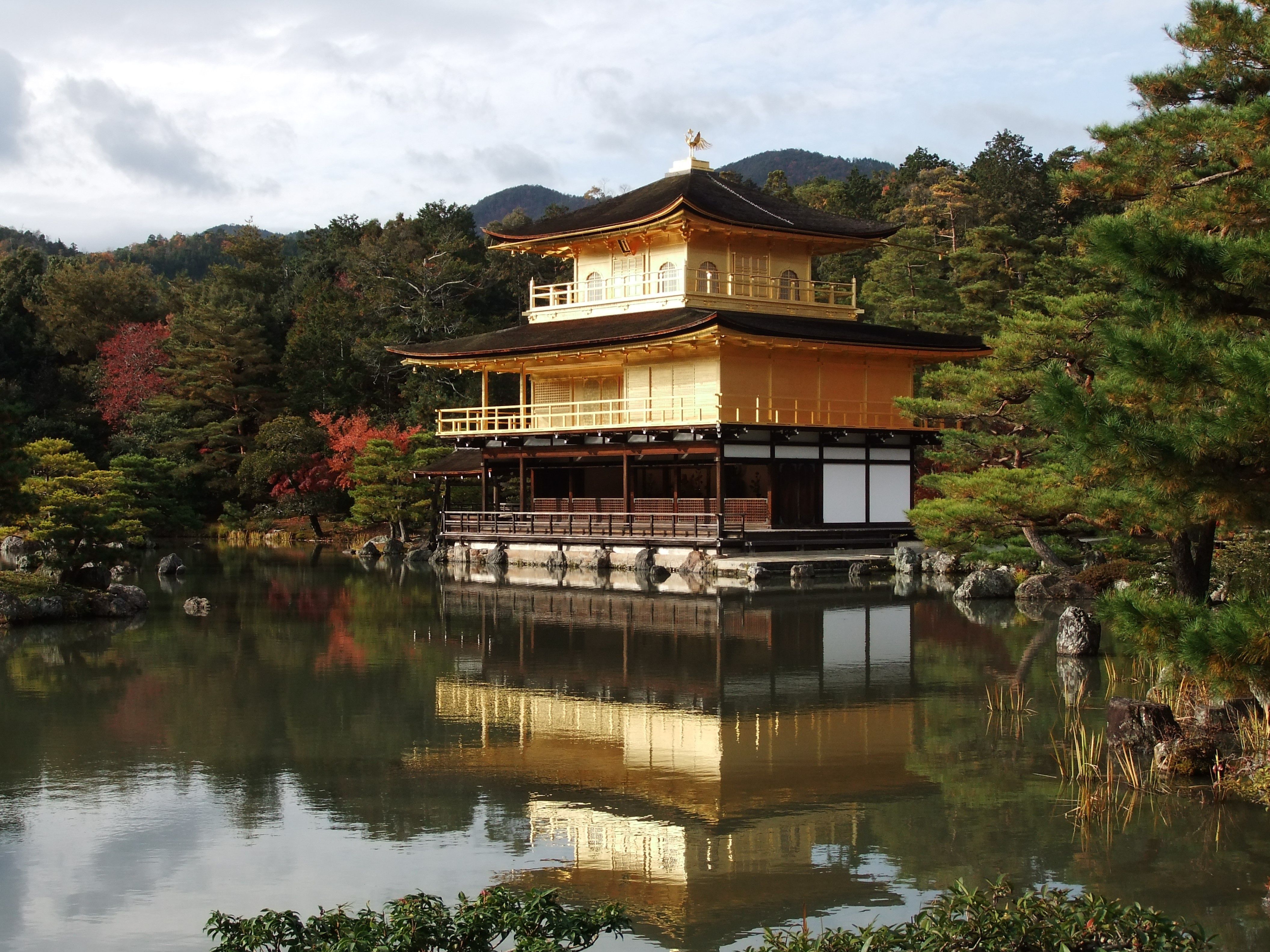
Kinkaku-ji Golden Pavilion
KyotoThe gold-leafed pavilion over its reflecting pond. A one-way loop with a single viewpoint — short by design.
Insider noteThere is no way to make Kinkaku-ji quiet: it is a fixed one-way path with one photo position and no reason to linger. Accept that and give it twenty-five minutes. Early afternoon puts front light on the gold; a late-afternoon visit puts the sun behind it and your photograph becomes a silhouette. This is the one famous Kyoto sight where crowd-avoidance strategy simply does not work, and knowing that in advance is worth more than another early alarm.
- 15:001 hour
Nishiki Market
KyotoFive covered blocks of pickles, tamagoyaki, knives, dashi and sweets — Kyoto's kitchen for four centuries.
Insider noteEating while walking is discouraged and several stalls now post signs saying so: buy, step aside, finish, move on. Enter from the Teramachi (east) end — the western end by Daimaru is where the tour groups start, and the density drops the further east you go. The knife shops here (Aritsugu in particular) are the real thing and will engrave a purchase while you wait, but they are not cheap and they are not souvenirs.
- 18:302.5 hours
Kyoto Kaiseki
KyotoKyoto's multi-course seasonal cuisine — the city's single most distinctive meal, and its most expensive.
Insider noteFull kaiseki is ¥15,000–30,000 per person at dinner and needs booking weeks ahead, often through your hotel. The version worth knowing about: the same restaurants serve a lunch course at roughly a third of the price, with the same kitchen. If tonight is your one splurge, book it before you leave home. If not, a kappo counter (¥6,000–10,000, chef in front of you, no reservation drama) delivers most of the experience. Vegetarian travellers should ask specifically for shojin ryori — the temple version — because standard kaiseki uses dashi in nearly every course.




- Kyoto Station → Inari: JR Nara line, 5 min, ¥150. The shrine is directly outside Inari station.
- Inari → Arashiyama: JR Nara line back to Kyoto, then JR Sagano line to Saga-Arashiyama, ~35 min total, ¥390. The Keihan/Randen route via Shijo takes similar time and is more scenic.
- Arashiyama → Kinkaku-ji: city bus 11 to Nishioji-Sanjo then bus 205, or taxi (~¥2,500, 25 min). This is the awkward leg of the day; the taxi is worth it if there are two or more of you.
- Kinkaku-ji → Nishiki (Shijo-Karasuma): bus 12 or 205, ~35 min, ¥230.
- Kyoto's buses are slow and crowded and the subway is not. Where a subway route exists, take it even if the bus looks more direct.
Breakfast is a convenience-store coffee at Inari station at 6:00 — everything else is shut. Early lunch in Arashiyama: the yudofu (simmered tofu) restaurants near Tenryu-ji are the local speciality, ¥2,000–3,500. Graze Nishiki mid-afternoon rather than eating a full lunch. Dinner is the splurge.
Same Kyoto hotel as last night. Tomorrow is a day trip, not a move.
¥8,000–12,000 per person before dinner: trains and buses ¥1,200–1,600, Tenryu-ji ¥500, Kinkaku-ji ¥500, food ¥5,000–8,000. Fushimi Inari is free. Add ¥15,000–30,000 if you book full kaiseki.
Nara early, Osaka after dark
A day trip that works only if you go early: deer, the largest bronze Buddha in Japan, and 3,000 lanterns, all before the afternoon coaches. Then a train to Osaka and the first night of a completely different city.
- 08:001 hour
Nara Park
NaraTwelve hundred wild sika deer with the run of a 500-hectare park in the middle of the city, considered sacred messengers since the 8th century.
Insider noteAt 8:00 the deer outnumber the people and behave like wild animals; by 11:00 they are surrounded by tour groups and behave like a petting zoo. The ¥200 crackers (shika senbei) are sold from official stands only — the moment you buy a stack you will be followed and occasionally headbutted, so decide in advance whether you want that. Bow to a deer and many will bow back, which is a learned trade for food rather than politeness, and delightful either way. Keep paper maps and tickets out of reach; they eat those.
- 09:001.5 hours
Todaiji Temple
NaraA 15-metre bronze Buddha inside what remains one of the largest wooden buildings on earth — and this hall is a two-thirds-size rebuild of the original.
Insider noteOpens at 7:30 in summer, 8:00 in winter — earlier than almost anything in Kansai, and the first hour is startlingly quiet. Behind the Buddha there is a pillar with a hole at its base said to be the size of the statue's nostril; crawling through it is supposed to grant enlightenment, and there is usually a queue of children and one embarrassed adult. Walk up to Nigatsu-do afterwards: five minutes uphill, free, and the terrace view over Nara is better than anything you paid for today.
- 11:001 hour
Kasuga Taisha
NaraA vermillion shrine at the end of a forest path lined with 2,000 stone lanterns, with another 1,000 bronze ones hanging from its eaves.
Insider noteThe approach through the deer forest is the better half of this stop — allow twenty minutes for the walk in and do not rush it. The inner corridor (¥500) is where the bronze lanterns hang, and a dark room there keeps a few permanently lit, which is the closest you will get outside the February and August lantern festivals. Those two festivals light all 3,000 and are worth planning a trip around if your dates are flexible.
- 13:001.5 hours
Naramachi
NaraThe old merchant quarter south of the park: narrow lanes of latticed wooden townhouses, small shops and quiet cafés.
Insider noteThis is where Nara stops being a day-trip destination and becomes a town. Most visitors never come here, which is exactly why it is on the list. Naramachi Koshi-no-ie is a preserved merchant house you can walk through for free. Look for the red cloth balls hanging by doorways — migawari-zaru, scapegoat monkeys, one per family member, taking on misfortune in their place.
- 18:302.5 hours
Dotonbori
OsakaA canal walled with enormous animated signage, and behind it the densest concentration of cheap, loud, excellent food in Japan.
Insider noteDotonbori itself is the photo; the eating is one street back, on Hozenji Yokocho and the lanes north of the canal, where the same dishes cost a third less and are better. The Glico running-man sign is on the Ebisubashi bridge and there is no bad time to photograph it after dark. Takoyaki here is served scalding — genuinely, painfully so — and locals wait a full minute before the first one. Osaka's rule is kuidaore, eat until you collapse, and the correct strategy is one item per shop across five shops rather than a sit-down meal.


- Kyoto → Nara: Kintetsu limited express, 35 min, ~¥1,280, arriving at Kintetsu-Nara which is a 5-min walk from the park. The JR line is covered by the JR Pass but takes 45 min and leaves you a 20-min walk out.
- Everything in Nara today is on foot — roughly 6–8 km total, mostly flat, one gentle hill at Nigatsu-do.
- Nara → Osaka: Kintetsu Nara line to Osaka-Namba, ~40 min, ~¥680, which puts you three minutes' walk from Dotonbori. This is why Osaka is the last night and not a second Kyoto one.
- Take your luggage to Osaka in the morning and leave it at the hotel, or forward it from Kyoto — do not carry it around Nara.
Breakfast in Kyoto before 7:30. Lunch in Naramachi — kakinoha-zushi (persimmon-leaf-wrapped sushi) is the Nara speciality and travels well, or a soba shop for ¥1,200–1,800. Dinner is Dotonbori, grazed: takoyaki ¥600, okonomiyaki ¥900–1,400, kushikatsu ¥150–300 a skewer. Budget ¥3,000–4,500 and expect to eat standing.
Namba or Shinsaibashi for the final two nights — walking distance to tonight's dinner and on the direct airport line for the departure. Umeda (Osaka Station) is the alternative and better if you fly from Itami rather than Kansai. Osaka runs roughly 20–30% cheaper than Kyoto for equivalent rooms, which is the other reason the trip ends here.
¥8,000–12,000 per person: trains ~¥2,000, Todai-ji ¥800, Kasuga inner corridor ¥500, food ¥5,000–7,000. Nara Park and the deer are free.
Osaka — market, castle, skewers, and out
The last day, built so it works whatever time your flight is. A market breakfast, the castle mid-morning, retro Shinsekai in the afternoon, and a straight run to either airport from where you are standing.
- 09:001 hour
Kuromon Market
OsakaSix hundred metres of covered market — scallops grilled in front of you, tuna cut to order, fruit priced like jewellery. Osaka's kitchen since 1822.
Insider noteGo at opening. By noon it is a slow crowd and the good stalls have sold their best. It has become notably tourist-priced in recent years, so check prices before you order — the ¥3,000 crab leg is real and it is aimed at you. The vegetable and dried-goods stalls at the southern end are still where locals shop and are a fraction of the price. Many stalls close by 17:00 and some shut entirely on Sundays.
- 10:302 hours
Osaka Castle
OsakaA reconstructed keep in concrete, standing on genuinely colossal 16th-century stone walls, inside a large public park.
Insider noteBe honest about what this is: the interior is a 1931 concrete museum with a lift, and it is a fine museum but it is not a castle. The stonework and the moats are the original 1620s engineering, and some of the base blocks weigh over 100 tonnes — walk the outer walls and the Ote-mon approach even if you skip the ¥600 keep entirely. The park is free, open all hours, and is the best cherry-blossom ground in the city in early April.
- 13:302 hours
Shinsekai & Tsutenkaku Tower
OsakaA district built in 1912 to imitate Paris and Coney Island, largely frozen since the 1960s, and the home of deep-fried skewers.
Insider noteThis is the Osaka that Osaka people mean when they talk about Osaka. Kushikatsu is the dish and there is exactly one rule, printed on every wall: no double-dipping in the communal sauce — use the shredded cabbage as a spoon if you want more. Skewers are ¥150–300 each and a full meal is ¥2,000–3,000. Tsutenkaku tower's ¥1,000 deck is skippable; the view is of a district best seen from inside it.
- 16:301.5 hours
Umeda Sky Building
OsakaTwo towers joined at the 39th floor by a hollow ring, with an open-air rooftop deck 170 metres up.
Insider noteOnly if your flight is late enough. The Floating Garden deck is genuinely open to the sky — you feel the wind, which no glass-walled observatory gives you — and it sits directly above Osaka Station, so it works as the last stop before an Itami departure. ¥1,500, open until 22:30, and sunset is the hour. Skip it entirely if you fly from Kansai, which needs a 90-minute run from Namba and no last-minute additions.


- Namba → Nippombashi (Kuromon): one subway stop or an 8-min walk.
- Kuromon → Osaka Castle: Sennichimae then Chuo subway line to Tanimachi-4-chome, ~15 min, ¥240.
- Osaka Castle → Shinsekai: Tanimachi line to Ebisucho, ~15 min, ¥240.
- Shinsekai → Umeda: Midosuji line, ~15 min, ¥280.
- To Kansai Airport (KIX): Nankai Rapi:t from Namba, 38 min, ~¥1,490, or the ordinary Nankai express for ¥970 in 45 min. To Itami: Osaka Monorail or the Umeda airport bus, ~30 min, ~¥650. Leave Namba three hours before an international departure.
- An Osaka Amazing Pass (1 day, ~¥2,800) covers the subways plus free entry to the castle keep, the Umeda deck and Tsutenkaku. On today's exact list it roughly breaks even — buy it only if you add two more paid sights.
Breakfast is the market, eaten in pieces. Lunch is Shinsekai kushikatsu, ¥2,000–3,000. If you want one more proper Osaka dish before you fly, okonomiyaki in Namba is ¥900–1,400 and takes twenty minutes. Do not attempt a sit-down dinner on a departure day.
Departure day. Most Osaka hotels will hold luggage after checkout for free — leave it at the desk rather than paying for station lockers, and collect it on your way to the airport.
¥6,000–10,000 per person plus the airport transfer: subways ¥800–1,000, castle keep ¥600, Umeda deck ¥1,500 if added, food ¥4,000–6,000, airport train ¥970–1,490.
Book before you leave home
- 1Hakone ryokan, 1–2 months ahead and longer for autumn weekends. This is the only night on the route where the accommodation is itself the attraction, and the good rooms go first.
- 2Odakyu Romancecar seat to Hakone (Day 3 morning) — reserved seating, sells out on weekend mornings.
- 3Tokyo Skytree timed-entry ticket, online, before you fly. Same for Shibuya Sky if you want a sunset slot, which sells out days ahead.
- 4Kaiseki dinner in Kyoto (Day 5), weeks ahead through your hotel if you want a serious restaurant. Lunch courses at the same restaurants are a third of the price and easier to get.
- 5Shinkansen seats Odawara→Kyoto if you travel on a weekend, a public holiday or during any festival week; unreserved is fine on a normal weekday.
- 6Decide on the JR Pass before you book anything. On this exact route a 7-day national pass does not pay for itself — the only long legs are Odawara–Kyoto and Kyoto–Osaka. Point-to-point tickets plus the Hakone Free Pass is the cheaper combination for most people.
- 7Luggage forwarding twice: Tokyo hotel → Kyoto hotel on Day 3, and Kyoto → Osaka on Day 6. About ¥2,000–2,500 per bag each time, and it changes the character of both travel days.
Where the money goes
| Accommodation (6 nights)The Hakone ryokan is one night and often a fifth of this total. Tokyo and Kyoto are the next most expensive; Osaka is the cheapest. | ¥70,000–130,000 |
| Rail & local transportRomancecar ~¥2,470, Hakone Free Pass ~¥6,100, Odawara–Kyoto shinkansen ~¥12,000, Kyoto–Nara–Osaka ~¥2,000, city transport ~¥5,000, airport transfers ~¥3,500. | ¥28,000–36,000 |
| AdmissionsSkytree, museums, temples, the castle keep. Several of the best sights here — Meiji Shrine, Fushimi Inari, Nara Park, the Metropolitan Building — cost nothing. | ¥10,000–14,000 |
| FoodAssumes ¥4,000–6,500 a day with one splurge. Kaiseki, if you book it, sits outside this line. | ¥30,000–45,000 |
| Luggage forwardingTwo transfers, one bag. Optional, and the best ¥5,000 on the route. | ¥4,000–5,000 |
Per person unless a line says otherwise. Excludes international flights.
Shorter, longer, or a different season
- Cutting to 5 days: drop Hakone and Nara, keep Tokyo ×2, Kyoto ×2, Osaka ×1. Do not cut a Kyoto night instead — the Fushimi Inari dawn start is the best thing on the route and it needs you to already be in the city.
- Cutting to 6: drop Nara and give Day 6 to Osaka in full, or drop Hakone and add a third Tokyo day. Hakone is the better cut if your trip is short and city-focused; Nara is the better cut if you have already booked a ryokan elsewhere.
- Extending to 9 or 10: add Hiroshima and Miyajima as two nights between Kyoto and Osaka (shinkansen, ~1h40 from Kyoto), or Kanazawa as a two-night detour from Kyoto. Both are stronger additions than another day in Tokyo.
- Travelling with children: cut Sanjusangen-do and Kasuga Taisha, add teamLab and the Osaka Aquarium, and keep the Nara deer — it is reliably the day children remember. The Hakone loop's cable cars and pirate ship also work far better with children than the temple days do.
- Reverse direction (Osaka in, Tokyo out) works identically and is often cheaper on open-jaw flights. The only change: run Hakone on Day 5 instead of Day 3, and accept that jet lag lands on a Kyoto temple day instead of a mountain one.
- In cherry-blossom season this route is at its best and its worst simultaneously. Everything below is 30–50% more expensive and twice as crowded, and it is still worth it — but book accommodation four to six months out or you will not get any.
Journey times, fares and opening hours come from each spot's access information and are typical rather than guaranteed. Timetables, seasonal closures and volcanic alert levels change — confirm the legs your day depends on. Last revised 2026-07-30.
Related Links
Spots on this route
Other itineraries
- Kansai in 5 Days — The Quiet Side of the Golden Route
- Kyushu in 6 Days — Volcano, Onsen and the Christian Coast
- Japan Alps to the Sea of Japan — 5 Days
- Tohoku in 5 Days — The Quiet North
- 5 Days in Kyushu — Volcanoes, Sand Baths and the Myth Coast
- 10 Days Beyond the Golden Route — San'in, Setouchi and Shikoku