
Top Food Experiences in Japan
Japan's food culture runs deeper than sushi and ramen. These 15 experiences span Michelin-starred kaiseki, rowdy izakaya alleys, 5am fish auctions, and street-side yakitori under train tracks. Some require reservations months in advance; others involve pointing at plastic food models. Together, they represent the breadth of Japanese culinary obsession — from the ¥300 convenience store onigiri to the ¥40,000 omakase.
This is the hardest list on the site to hold to the standards the rest of it follows, and the way it handles that difficulty is the main thing to understand about it. Individual restaurants are the most volatile facts a travel site can publish: they close, move, change hands, stop taking walk-ins, and adjust their hours faster than any page can track. The site's own sourcing rules strip unverified opening times and addresses precisely because of that. So this list is weighted towards food *places* and food *situations* — a market, a covered alley of counters, a district, a class of experience — over single addresses whose details would be stale within a season.
Within that, entries are chosen for the width of the picture rather than for a notion of best. The list is meant to span price levels, formality, and the times of day Japanese eating actually happens: something that requires a reservation and something you point at, something you eat standing up and something that takes three hours. A ranking of fifteen restaurants would be a less useful document and a far less durable one.
The ordering favours access over prestige. An experience you can have on the evening you arrive, without a reservation, without a Japanese phone number, and without a language you do not speak, ranks above a more celebrated experience that is functionally unavailable to most readers. That is a choice about who the list is for, and it is not the choice a restaurant critic would make.
Dietary constraints are the list's clearest weakness and it will not be pretended away: several entries are difficult or impossible to use if you are vegetarian, halal or coeliac, because the food cultures they represent are built on dashi, pork and wheat. The entries flag it where it applies, but this list does not currently carry a parallel selection for those readers, and it should.
As always, treat prices and hours on the linked pages as the thing to confirm rather than the thing to rely on — that caution binds hardest here.
Last revised . No visitor numbers, review scores or user votes are used.
Why #1?
Ultra-fresh sushi breakfast at 6am, tamagoyaki stands, and 400+ vendors. Tokyo's food market that actually welcomes tourists.
 Christophe95 / CC BY-SA 4.0
Tsukiji Outer Market
FamousTsukiji Outer Market (築地場外市場, Tsukiji Jogai Shijo) is a 300-meter network of alleys and shops selling fresh seafood, pro…
Why #2?
Multi-course haute cuisine where each dish is a work of art. Kikunoi, Hyotei, or Gion Karyo for the full experience.
 Donatingpictures / CC BY-SA 4.0
Kyoto Kaiseki
FamousWalk into Kikunoi and the room falls silent except for water trickling in the courtyard garden. Your server places a lac…
Why #3?
Takoyaki, okonomiyaki, kushikatsu, and grilled squid along a neon-lit canal. Osaka earned 'Japan's kitchen' for a reason.
 勇寿憲 / CC BY-SA 3.0
Dotonbori
FamousDotonbori (道頓堀) is Osaka's most iconic entertainment district — a neon-lit canal lined with restaurants, bars, and massi…
Why #4?
Ichiran's solo booths, Ippudo's tonkotsu, or Afuri's yuzu shio. Tokyo has 5,000+ ramen shops — these are the legends.
Tokyo Ramen
Well knownTokyo-style ramen (東京ラーメン) is characterized by shoyu (soy sauce) broth — clear, savory, and balanced — served with mediu…
Why #5?
A 400-year-old covered market with pickles, yuba (tofu skin), matcha everything, and free samples at every third stall.
 Nesnad / CC BY 4.0
Nishiki Market
FamousNishiki Market (錦市場, Nishiki Ichiba) is a narrow covered arcade housing 100+ specialist food vendors selling Kyoto's sea…
Why #6?
Narrow alleys packed with tiny izakaya serving yakitori, oden, and local sake. Each bar seats 8, most until 2am.
Tokyo Izakaya Culture
FamousIzakaya (居酒屋) are Japanese gastropubs — casual drinking establishments serving small plates (yakitori, edamame, fried ch…
Why #7?
Sushi Zanmai or Genki Sushi for ¥100-300 plates on a conveyor. High quality, low stress, touchscreen ordering in English.
 JIP / CC BY-SA 4.0
Conveyor Belt Sushi
Well knownKaitenzushi (回転寿司, 'rotating sushi') or conveyor belt sushi was invented in Osaka in 1958 when Yoshiaki Shiraishi create…
Why #8?
A5 wagyu so marbled it's nearly white. Teppanyaki preparation where chefs cook at your counter. Budget ¥10,000-20,000.
 sailko / CC BY-SA 3.0
Kobe Beef Teppanyaki
Well knownWalking into Mouriya's fourth-floor dining room, you hear the sizzle before you see it. The chef slides a 120g cut of ri…
Why #9?
Omoide Yokocho's smoky grilled chicken alleys or Golden Gai's matchbox bars. Order rounds of yakitori and beer.
 Basile Morin / CC BY-SA 4.0
Shinjuku Kabukicho
FamousKabukicho (歌舞伎町) is Tokyo's largest entertainment and red-light district, a neon-soaked maze of narrow alleys packed wit…
Why #10?
Osaka's other market with grilled seafood, Kobe beef skewers, and fruit so perfect it's sold as gifts.
 Choi2451 / CC BY-SA 3.0
Kuromon Market
FamousKuromon Ichiba Market (黒門市場, 'Black Gate Market') is a 580-meter covered arcade with 150+ vendors selling fresh seafood,…
Why #11?
Department store basements with immaculate bento, imported cheese, and desserts too beautiful to eat. Isetan or Takashimaya.
 片割れ靴下 (unpaired sock) / CC BY-SA 4.0
Ginza Shopping District
FamousGinza (銀座, 'silver mint') is Tokyo's premier luxury shopping district, an 8-block grid of flagship stores, department st…
Why #12?
Layered okonomiyaki with yakisoba noodles (unlike Osaka's mixed style). Okonomi-mura has 25 restaurants in one building.
 ノボホショコロトソ / CC BY 4.0
Hiroshima-Style Okonomiyaki
Well knownHiroshima-style okonomiyaki (広島風お好み焼き) is the prefecture's signature comfort food — a multi-layered savory pancake built…
Why #13?
Yudofu (hot tofu) restaurants near temples. Simple, delicate, and showcases Kyoto's perfect water.
 Wolfiewolf from Pontocho street in Nakagyo, Kyoto / CC BY 2.0
Pontocho Alley
FamousPontocho (先斗町) is a narrow 500-meter alley running parallel to the Kamo River, lined with traditional wooden buildings h…
Why #14?
Hokkaido's seafood market with crab, uni, ikura donburi at 6am. The northernmost food pilgrimage.
 bryan... / CC BY-SA 2.0
Hakodate Morning Market
Well knownHakodate Morning Market (函館朝市, Hakodate Asaichi) is a labyrinth of 250+ vendors selling Hokkaido's ocean harvest — live…
Why #15?
No seats, no reservations, just stand at the counter and eat sushi as fast as the chef can make it. Uogashi Nihon-Ichi chain.
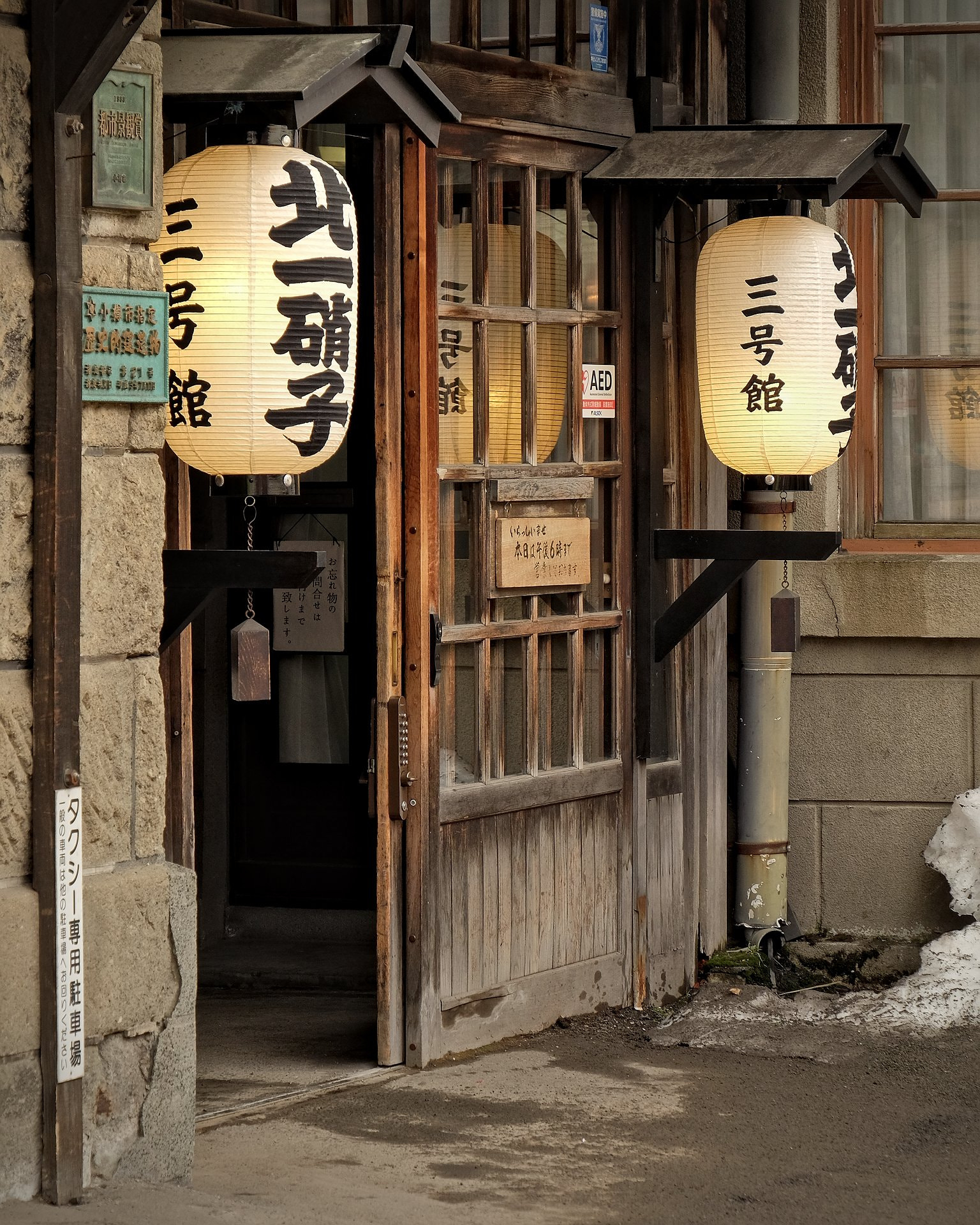 Julien Seguinot / CC BY-SA 3.0
Otaru Sushi Street
Well knownWalk out of Otaru Station and you'll find yourself surrounded by sushi shops—twenty-something of them packed into two bl…
Explore More Rankings
Discover other curated lists to plan your perfect Japan itinerary
View All Rankings